Jack Dorsey’s Bitcoin Hardware Wallet Will Use Fingerprint Authentication
Dorsey’s Block plans to leverage a fingerprint sensor instead of a password or seed phrase to secure your bitcoin.Fingerprints will be the main authentication mechanism of the upcoming Bitcoin hardware wallet from Block,...
Archive context
Older archive item. Useful for background and entity history, but not a fresh market-moving signal.

Dorsey’s Block plans to leverage a fingerprint sensor instead of a password or seed phrase to secure your bitcoin.
Fingerprints will be the main authentication mechanism of the upcoming Bitcoin hardware wallet from Block, the financial services company led by Jack Dorsey and previously-known as Square.
“We believe PINs, passwords, and seed phrases are confusing and often not secure given the workarounds normal people have to create given all the friction,” the company said in a Friday statement. “Instead, to achieve seamless authentication in practice, we plan to incorporate a fingerprint sensor into the wallet hardware.”
Block acknowledges this approach has its own tradeoffs, but claimed that it would increase security against theft or misuse of the hardware wallet.
“We’re aware of limitations we’ll need to design around,” the statement reads. “As we build the product, we'll evaluate additional access methods that customers could opt into. And of course, fingerprint sensor data will never leave the hardware device.”
Block decided to pursue an open solution for a Bitcoin transaction signing device last year as it announced its approach to bitcoin self-custody. The plan involved a mix of hardware and software products, which the user can leverage to reach their own optimal balance of security and convenience.
“Customers will primarily manage their money by interacting with the mobile application we’re building, and will only need to interact with the hardware in combination with the mobile app to authorize larger, less frequent transactions above an amount of their choosing,” per the statement.
Block will prioritize the mobile application as the main interface for customer interaction, meaning it won’t pack a lot of features into the hardware wallet as other industry participants have done. The company’s device will not come with a display and will use a rechargeable lithium polymer battery and a USB-C port for power.
“We don’t want to force new behaviors on customers with a novel interface on the hardware component of the wallet we’re building,” Block said. “Instead, making the mobile application the center of the experience will lead to familiar, intuitive interactions.”
The company asked the Bitcoin community to give feedback on its design decisions as it attempts to build an intuitive bitcoin self-custody setup. It is unclear when Block’s hardware wallet will be released.
Why this matters
This bitcoin story adds another data point to the current market tape and is useful when read alongside nearby source coverage.
Original source
Read on Bitcoin MagazineRelated market context
Jack Dorsey’s Block Launches Campaign To Get People Spending Bitcoin
Bitcoin Magazine Jack Dorsey’s Block Launches Campaign To Get People Spending Bitcoin Jack Dorsey’s Block continues the push to ma...

OpenWorld Begins Nasdaq Trading As VerifyMe Deal Creates Public Tokenization Company
TL;DR OpenWorld and VerifyMe have completed their business combination, with the combined company trading on Nasdaq under OPNW fro...
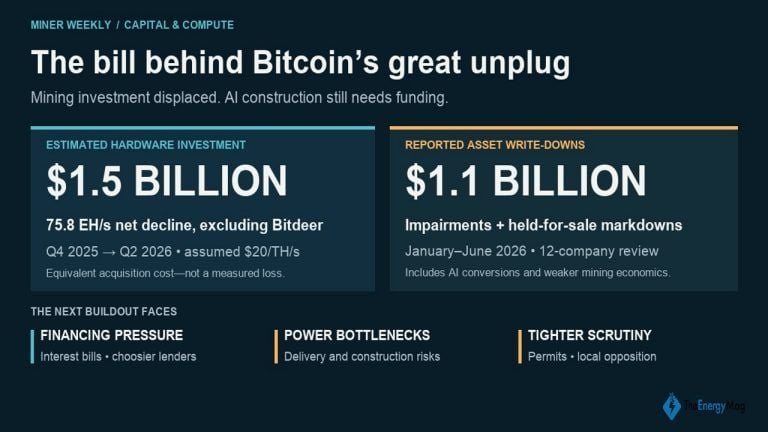
Bitcoin’s Great Unplug: $1.5 Billion in Hardware Behind the AI Pivot
The hashrate public bitcoin miners shed in the first half of 2026 carries an uncomfortable price tag: roughly $1.5 billion in equi...

Chainlink And Swift Demo Automated Tokenized-Equity Dividends Across Four Blockchains
TL;DR Chainlink built a Swift Hackathon solution that automated a cash-dividend workflow for tokenized equities across four blockc...

Nico Lechuga: Bitcoin Will Revolutionize the $4T Private Equity Industry
Bitcoin Magazine Nico Lechuga: Bitcoin Will Revolutionize the $4T Private Equity Industry Traditional private equity is always on...

Philippine court freezes 25 crypto wallets and 86 bank accounts in flood control probe
The freeze highlights the growing scrutiny on digital assets in corruption cases, potentially reshaping regulatory approaches to c...