Law Commission of England Proposes New Form of Property For Bitcoin
The proposal from England’s Law Commission outlines a new form of property for digital assets, custodial operations, and a framework for legal proceedings.The Law Commission of England and Wales, an independent consultan...
Archive context
Older archive item. Useful for background and entity history, but not a fresh market-moving signal.

The proposal from England’s Law Commission outlines a new form of property for digital assets, custodial operations, and a framework for legal proceedings.
The Law Commission of England and Wales, an independent consultant firm for legal reform originally commissioned by the parliament, has proposed a new category of property to encompass digital assets such as bitcoin in a 549 page proposal.
How could this change the way the United Kingdom interacts with and recognizes bitcoin, and why was it necessary?
Reforming Legal StructureIn the UK there are currently two recognized forms of property: things in possession, and things in action.
Property belonging to the category of things in possession simply refers to tangible objects that can be held or touched, such as a gold bullion, whilst property categorized as a thing in action is a concept or idea that is upheld through legal actions or proceedings.
However, bitcoin cannot meet any of this criteria. Bitcoin cannot be held in possession in a tangible way, nor can legal action dictate bitcoin’s existence. Thus, the Law Commission proposed the addition of data objects as a form of property.
Data objects are composed of data which is represented in an electronic medium. This designation can include computer code, as well as electronic or analogue systems. Additionally, data objects must exist independently of persons and the legal system, meaning the data object must be separable from both the individual and legal rights.
Moreover, the data object must also be “rivalrous,” meaning no two persons can simultaneously use the same data object. While two people cannot both use the same computer to write a book at the same time, so too those individuals can not spend the same unspent transaction output (UTXO), or bitcoin.
Not only does the Law Commission outline this new understanding of property, the proposal also proposes how it should be enforced.
Owning Data ObjectsThe Law Commission states the owner of a data object should hold “control” over the asset.
Control is classified as being able to exclude others from the property (private keys), being able to execute its use (control spending), capacity to identify oneself as capable of the previously mentioned criteria.
Indeed, the Law Commission goes on further to set a framework for operating as a custodian, but more importantly, the criticality of taking custody of one's own data object, or private keys.
In fact, the proposal warns against current practices plaguing the broader ecosystem concerning the incentives of staking, or providing a custodian access to private keys in exchange for a return.
“Additionally, the custodian could use the tokens and entitlements for direct or indirect participation in transaction and block validation activities to support the operation of Proof of Stake consensus- based crypto-token networks,” reads the proposal. “There are no general common law principles that would prevent the custodian from retaining for its own benefit any portion — or indeed all — of the revenue generated by such activities.”
Additionally, the Law Commission details consumer risk can become high due to events “where a custodian enters insolvency proceedings and where users rank as unsecured creditors,” leading to funds being indefinitely locked up by the custodian.
Thus, the Law Commission states that it hopes self-custody will remain a core foundation of data objects through its proposed framework:
“Indeed, the disintermediation of traditional communication and payment systems and the ability to control exclusive access to one’s own data objects (that can persist through transactions in some modified form) is one of the core foundational tenets of decentralized crypto-token systems.”
In ConclusionThe Law Commission’s 549 page proposal is embedded with prominent Bitcoin phraseology such as “not your keys, not your coins,” cites many thought leaders throughout the ecosystem, and empathetically offers a rigorous and philosophical take on the evolution of property.
As the UK looks to embolden its presence within the bitcoin and greater digital asset ecosystem, this proposal seeks to mark a stepping stone for the future of digital assets.
Why this matters
This bitcoin story adds another data point to the current market tape and is useful when read alongside nearby source coverage.
Original source
Read on Bitcoin MagazineRelated market context

Polymath And CineCity Explore Regulated Tokenized Film Investment Platform
TL;DR Polymath and Chicago-based CineCity Studios are exploring a platform for financing independent film through regulated digita...
SEC Proposes Letting Advisers and Funds Hold Client Crypto When No Custodian Can
The Securities and Exchange Commission proposed rules on Thursday that would let registered investment advisers and regulated fund...
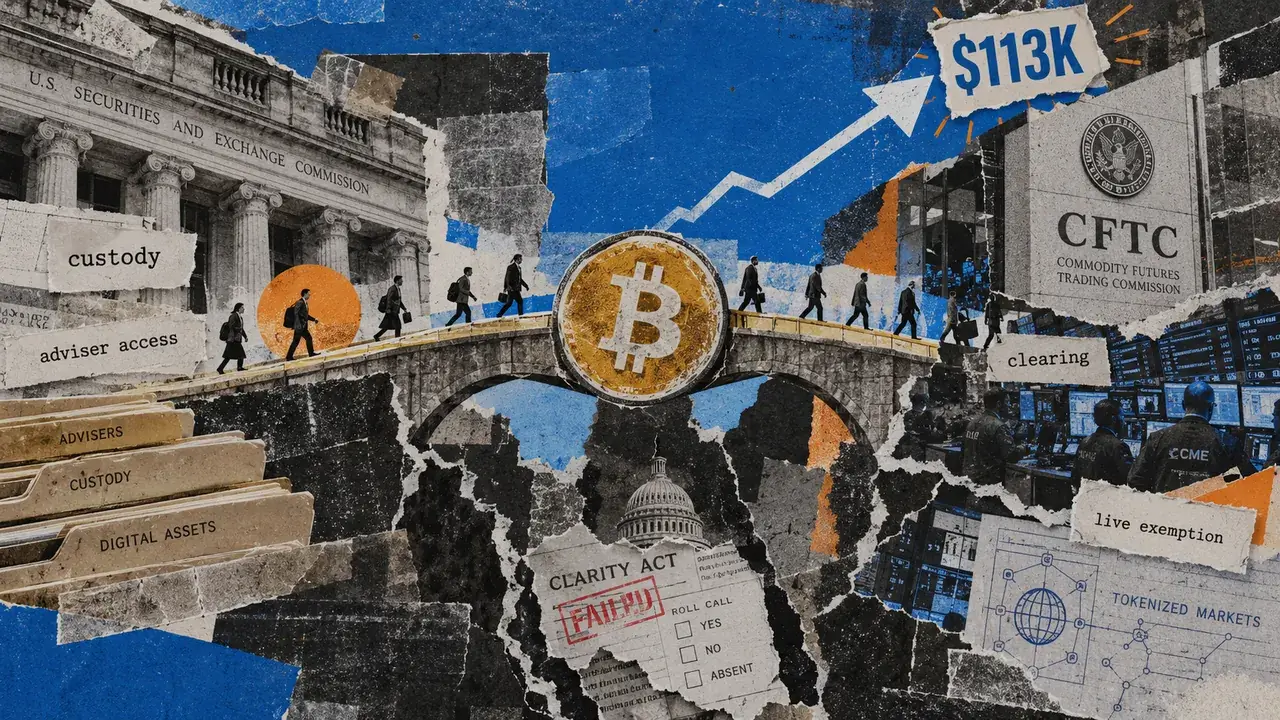
Bitcoin’s $113,000 case strengthens as US regulators push 9 crypto actions
The US Securities and Exchange Commission (SEC) proposed a custody framework on Oct. 1 that would let investment advisers and regu...
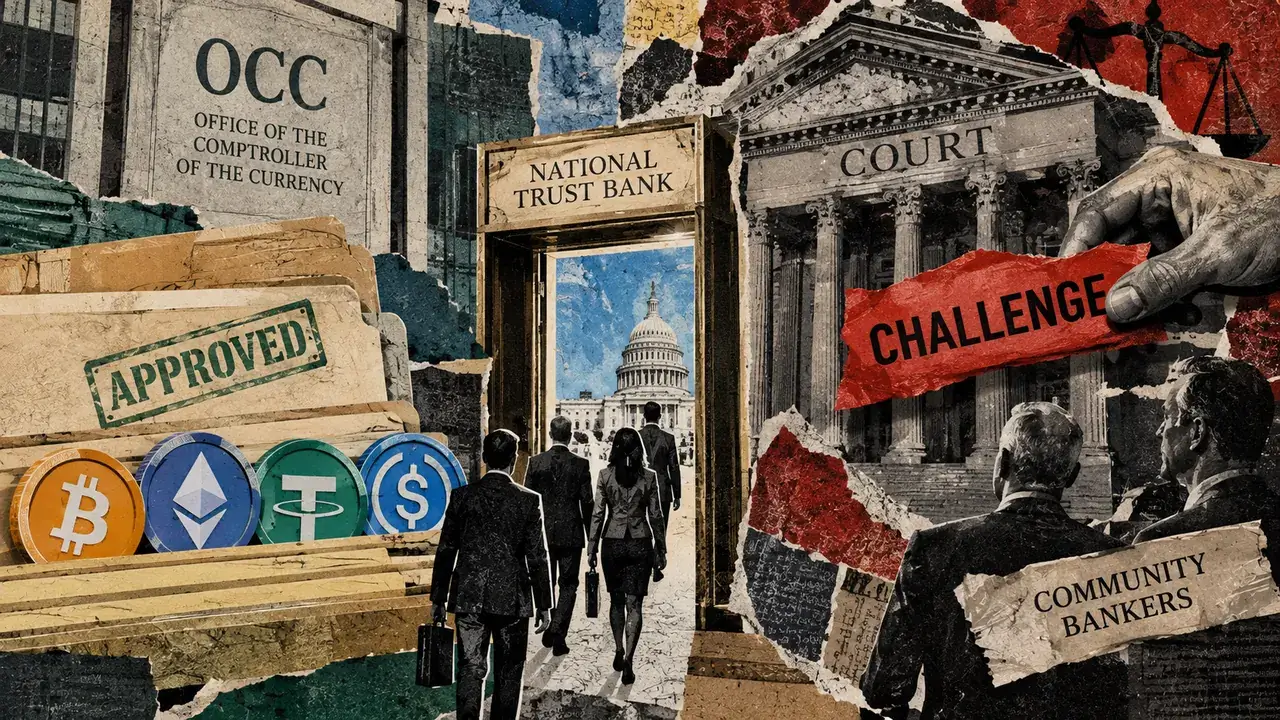
Bankers sue to overturn OCC trust-bank rule used by crypto firms
The Independent Community Bankers of America sued the OCC in federal court in Washington on Oct. 2, two weeks after the agency app...

Fiserv Puts Stablecoin Banking Platform Live With North Dakota Roughrider Coin
TL;DR Fiserv says its digital-asset platform is now live with financial-institution clients. Bank of North Dakota’s dollar-backed...

SEC Commissioner Hester Peirce exits after eight years as crypto’s most prominent regulatory ally
Peirce's departure may slow crypto regulation progress, impacting SEC's ability to swiftly implement clear digital asset guideline...