Pakistan Built Its Crypto Regulatory Regime Using Just 8% of Its Budget, Minister Bilal Bin Saqib Reveals at Bitcoin Asia
Bitcoin Magazine Pakistan Built Its Crypto Regulatory Regime Using Just 8% of Its Budget, Minister Bilal Bin Saqib Reveals at Bitcoin Asia Pakistan has launched its virtual asset regulatory regime in less than six months...
Archive context
Older archive item. Useful for background and entity history, but not a fresh market-moving signal.
Bitcoin Magazine
Pakistan Built Its Crypto Regulatory Regime Using Just 8% of Its Budget, Minister Bilal Bin Saqib Reveals at Bitcoin Asia
Pakistan has launched its virtual asset regulatory regime in less than six months while using just 8% of the budget allocated to build it, according to Bilal Bin Saqib, the country’s Minister of State and Chairman of the Pakistan Virtual Assets Regulatory Authority (PVARA).
Speaking at Bitcoin Asia in Hong Kong on August 28, Saqib said approximately $200,000 was used to build and operationalize the new regulatory framework, leaving roughly 92% of the approved budget unspent.
“We used only 8% of our approved budget to get this done,” Saqib announced. “Government should not measure success by how much money it spends. It should measure success by how much it delivers.”
Pakistan moved from primary legislation to notified regulations and a live licensing regime in under six months, establishing a formal pathway for companies operating in the digital asset sector.
The framework covers activities including exchanges, custody, brokerage, asset management, lending and settlement, while introducing requirements around governance, anti-money laundering and counter-terrorism financing, customer asset safeguarding, cybersecurity and market conduct.
For Pakistan, the regulatory rollout represents a significant shift toward bringing Bitcoin and digital asset activity into the formal financial system and providing companies with a defined framework for operating in the country.
Rethinking How Governments BuildSaqib framed the PVARA rollout as more than a regulatory achievement, arguing that it demonstrates how governments can operate differently in an environment where technology is developing rapidly.
Rather than building a large bureaucracy, the authority focused on smaller teams, technology-driven workflows and delivering a functioning regulatory framework.
“Technology is moving at machine speed. Government has to learn how to move much faster without compromising structure, accountability or consumer protection,” Saqib stated.
Saqib argued that governments need to balance speed with institutional credibility as emerging technologies continue to develop.
“Speed without structure can be dangerous. But structure without speed can become irrelevant.”
The approach reflects a broader vision for how Pakistan intends to compete in financial technology. Rather than simply adopting technologies developed elsewhere, the country is positioning itself to participate in the development of new financial infrastructure.
Beyond Crypto: The Agentic EconomySaqib said Pakistan’s regulatory ambitions extend beyond today’s digital asset market.
The country is looking toward an economy increasingly shaped by tokenized markets, programmable payments, stablecoins, machine-to-machine commerce and artificial intelligence agents.
AI agents could eventually transact on behalf of individuals, companies and other machines, creating new questions around financial authority, identity, compliance and consumer protection.
Among the questions governments may need to address are who is responsible when an AI agent executes a financial transaction, how delegated authority should work and how anti-money laundering controls can function when machines transact directly with one another.
“Today we are regulating virtual asset service providers,” Saqib stated. “Tomorrow we will need regulation around agentic payments and the agentic economy.”
Saqib described the country’s virtual asset framework as an initial building block for this broader financial system.
Pakistan Wants to Build at the FrontierThe strategy represents an attempt to compress the traditional timeline for emerging markets, which often adopt financial and technological innovations after they have already matured in larger economies.
“Emerging markets do not have to spend the next decade catching up. We can build at the frontier,” Saqib said.
With a population of more than 240 million, Pakistan represents a potentially significant market for emerging financial technologies.
For PVARA, the immediate test will be whether the new regulatory regime can attract legitimate digital asset businesses while maintaining the consumer protections and oversight built into the framework.
But Saqib’s vision extends beyond regulation itself.
Pakistan’s rapid transition from legislation to live licensing — accomplished with only 8% of its approved budget — is being presented as a model for how governments can approach the next generation of financial infrastructure.
The country now wants to apply that same philosophy to an economy where digital assets, artificial intelligence and programmable finance increasingly converge.
You can watch Saqib’s full appearance at Bitcoin Asia 2026 below.
This post Pakistan Built Its Crypto Regulatory Regime Using Just 8% of Its Budget, Minister Bilal Bin Saqib Reveals at Bitcoin Asia first appeared on Bitcoin Magazine and is written by Nik.
Why this matters
Bitcoin is showing up inside the Regulation theme, so this story is worth tracking for follow-through rather than treating it as a one-off headline.
Original source
Read on Bitcoin MagazineRelated market context
SEC adds crypto assets to its November 19 compliance seminar for advisers
The inclusion of crypto assets in the SEC seminar signals increased regulatory focus, potentially shaping future compliance and ma...

IMF warns tokenized markets could amplify financial risks
Tokenized markets' rapid growth could exacerbate financial instability, necessitating robust regulatory frameworks to mitigate sys...
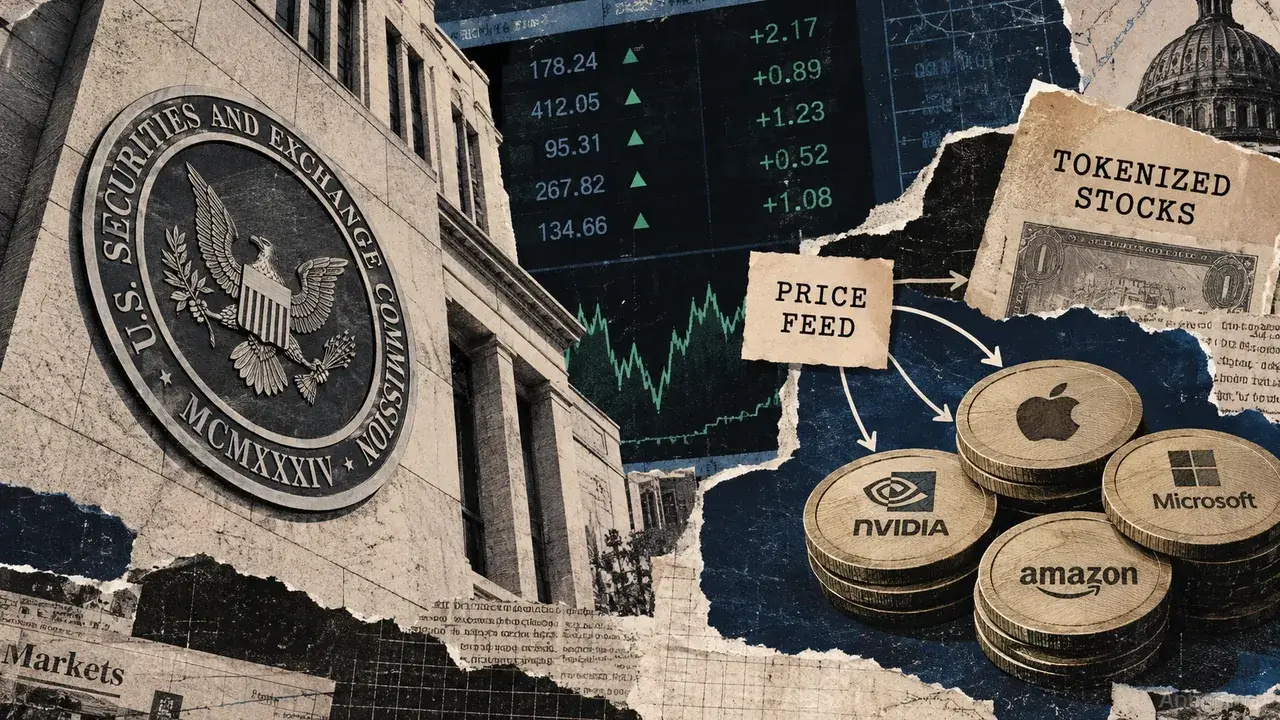
Tokenized stocks can carry the same rights without the same trading protections
Tokenized stocks eligible for the SEC’s September exemption must carry equivalent shareholder rights, yet their trading venues can...

Brazil’s BRL 22T CSD BR Moves Fund Records to XRP Ledger in Live Tokenization Push
Key Takeaways: CSD BR is leveraging the XRP Ledger to reflect real-time fund holdings. Over BRL 22 trillion in registered assets i...

Stealing $1.5B in crypto is easy, cashing out is the trap
North Korean hackers stole around $1.5 billion from Bybit in February 2025. While the hack itself has been widely covered and anal...

Bitcoin Life Insurer Meanwhile Raises $37.5M as Wealthy Families Look to Pass On Their BTC
Bitcoin Magazine Bitcoin Life Insurer Meanwhile Raises $37.5M as Wealthy Families Look to Pass On Their BTC Meanwhile, the first l...