Project 11 is offering 1 BTC to whoever cracks the longest Bitcoin key
Quantum computing research firm Project Eleven has launched a competition to see just how much of a threat quantum computing currently poses to Bitcoin.Launching the competition on April 16, Project Eleven said it is off...
Archive context
Older archive item. Useful for background and entity history, but not a fresh market-moving signal.

Quantum computing research firm Project Eleven has launched a competition to see just how much of a threat quantum computing currently poses to Bitcoin.
Launching the competition on April 16, Project Eleven said it is offering 1 Bitcoin (BTC) to whoever cracks the biggest chunk of a Bitcoin key using a quantum computer within the next year.
Project Eleven said the purpose of the “Q-Day Prize” is to test “how urgent the threat” of quantum is to Bitcoin and to find quantum-proof solutions to secure Bitcoin over the long term.
“10 million+ addresses have exposed public keys. Quantum computing is steadily progressing. Nobody has rigorously benchmarked this threat yet,” Project Eleven wrote on X on April 16.
More than 6 million Bitcoin — worth around $500 billion — could be at risk if quantum computers become powerful enough to crack elliptic curve cryptography (ECC) keys, Project Eleven said.
Participants can register as individuals or as a team and have until April 5, 2026, to complete the task. The prize winner will win 1 Bitcoin, currently worth $84,100.
Source: Project Eleven
The aim is to run Shor’s algorithm on a quantum computer to crack as many bits of a Bitcoin key as possible, acting as a proof-of-concept that the technique could scale to crack a full, 256-bit Bitcoin key once the necessary compute is available.
“The mission: break the largest ECC key possible using Shor's algorithm on a quantum computer. No classical shortcuts. No hybrid tricks. Pure quantum power,” Project Eleven said.
“You don’t need to break a Bitcoin key. A 3-bit key would be big news,” it added.
No ECC key used in real-world applications has ever been cracked, noted Project Eleven, adding that the winner could “go down in cryptography history.”
Project Eleven noted that several online platforms offer quantum computing access, such as Amazon Web Services and IBM.
Source: Jameson LoppRelated: Bitcoin’s quantum-resistant hard fork is inevitable — It’s the only chance to fix node incentives
Current estimates suggest that around 2,000 logical qubits (error-corrected) would be enough to break a 256-bit ECC key, Project Eleven noted.
IBM’s Heron chip and Google’s Willow can currently do 156 and 105 qubits — significant enough to cause concern, according to Project Eleven, which believes a 2,000-qubit quantum system could be developed within the next decade.
Quantum threat to Bitcoin is real, but there’s time, Bitcoiners sayBitcoin cypherpunk Jameson Lopp recently said the question of how concerned the industry should be about quantum computing is currently “unanswerable.”
“I think it’s far from a crisis, but given the difficulty in changing Bitcoin it’s worth starting to seriously discuss,” Lopp said in a March 16 post.
In February, Tether CEO Paolo Ardoino said the concern is well-founded but is confident that quantum-proof Bitcoin addresses will be implemented well before any “serious threat” emerges.
Source: Paolo ArdoinoMagazine: Bitcoin vs. the quantum computer threat: Timeline and solutions (2025–2035)
Why this matters
This bitcoin story adds another data point to the current market tape and is useful when read alongside nearby source coverage.
Original source
Read on CointelegraphRelated market context

Strive preferred stock trades enough to buy 1,400 Bitcoin worth $117M
Strive's innovative use of perpetual preferred stock for Bitcoin acquisition could reshape corporate treasury strategies, minimizi...

Crypto Hacks: Three Projects Hacked in One Day as Losses Hit Over $11M
Three crypto projects were attacked on September 24, suffering combined losses of more than $11M. Attackers drained around $1.8M f...
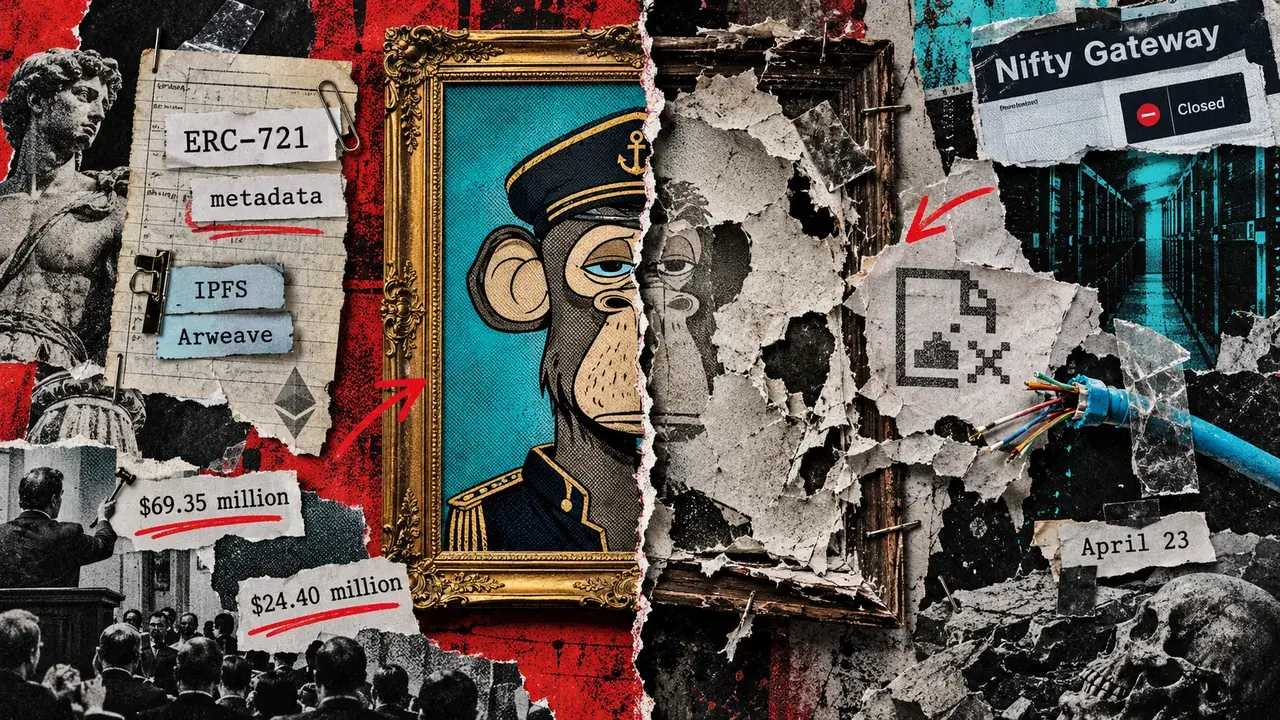
The NFT party is over and everybody now owes storage rent
In 2021, Christie's sold a Beeple NFT for $69.35 million, and Sotheby's took another $24.40 million for 101 Bored Ape Yacht Club N...

Ethereum evolves into a cryptographic world computer, says Buterin
Ethereum's evolution into a cryptographic world computer could redefine decentralized computing, enhancing privacy, scalability, a...
Quant Crypto Blasts 3x in a Week Following Huge US Bank Deal
Quant crypto has exploded roughly +178% over the last seven days, including an extraordinary +72% daily surge. Quant is quickly be...
Buterin Maps Ethereum's Post-Hegota 'Cryptographic World Computer'
Ethereum’s upgrades after Hegota should make cryptographic proof-checking and distributed offchain work central to the network, re...