Putin Talks Bitcoin
Putin advocated for redirecting these reserves towards domestic investments in infrastructure, logistics, science, and education, suggesting that such allocations would be more secure and beneficial for Russia’s economic...
Archive context
Older archive item. Useful for background and entity history, but not a fresh market-moving signal.

Putin advocated for redirecting these reserves towards domestic investments in infrastructure, logistics, science, and education, suggesting that such allocations would be more secure and beneficial for Russia’s economic development. He criticized the current U.S. administration for leveraging the U.S. dollar as a political tool, arguing that this practice undermines its status as a global reserve currency and prompts other nations to explore alternative assets, including cryptocurrencies.
“Who Can Prohibit Bitcoin? No One”Highlighting Bitcoin as a prominent example, Putin remarked, “For example, Bitcoin, who can prohibit it? No one.” He acknowledged the growing interest in cryptocurrencies as countries seek more reliable and politically neutral financial instruments. Additionally, Putin noted the inevitable advancement of new payment technologies, attributing their appeal to lower costs and increased reliability.
Source: X
This perspective aligns with Russia’s recent legislative actions concerning digital assets. In August 2024, Putin signed a law legalizing cryptocurrency mining, officially recognizing it as a legitimate economic activity. The legislation defines key concepts such as digital currency mining, mining pools, and mining infrastructure operators, and permits only registered Russian legal entities and individual entrepreneurs to engage in large-scale mining operations. Individual miners are allowed to participate without registration, provided their energy consumption remains within government-set limits.
Furthermore, the law allows for the trading of foreign digital financial assets on Russian blockchain platforms, with the Central Bank retaining the authority to prohibit certain assets if deemed a threat to financial stability. Putin emphasized the importance of Russia “seizing the moment” to establish a legal framework for digital currencies, highlighting their potential to contribute to the nation’s economic development.
These developments reflect Russia’s strategic shift towards embracing digital assets and reducing reliance on traditional financial systems susceptible to geopolitical tensions. By fostering a regulated environment for cryptocurrencies, Russia aims to enhance its financial sovereignty and adapt to the evolving global economic landscape.
Why this matters
This bitcoin story adds another data point to the current market tape and is useful when read alongside nearby source coverage.
Original source
Read on Brave New CoinRelated market context

Hester Peirce departs SEC after years of advocating for digital assets
Peirce's departure leaves the SEC with a narrowed perspective, potentially impacting future crypto regulation and innovation initi...

BNY weighs digital asset infrastructure deal with Kraken parent Payward: CoinDesk
A potential BNY-Payward partnership could significantly enhance crypto infrastructure, fostering greater integration with traditio...
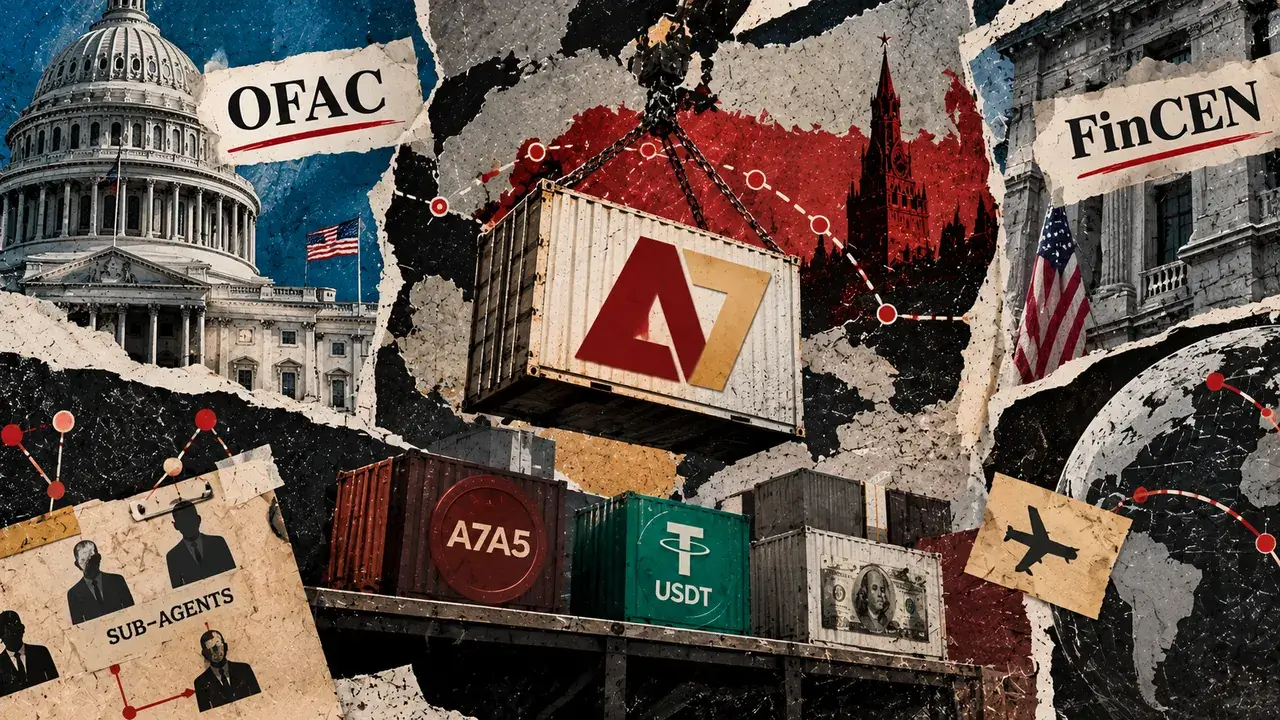
US targets $17 billion Russia-linked crypto payment network using USDT as an escape route
The US sanctioned the Russia-linked A7 Network and proposed new restrictions to cut its crypto intermediaries off from global mark...

RWA Foundation report tracks 10,322 tokenized real-world assets
The growing tokenization of real-world assets signifies a shift towards more integrated and accessible financial markets, enhancin...
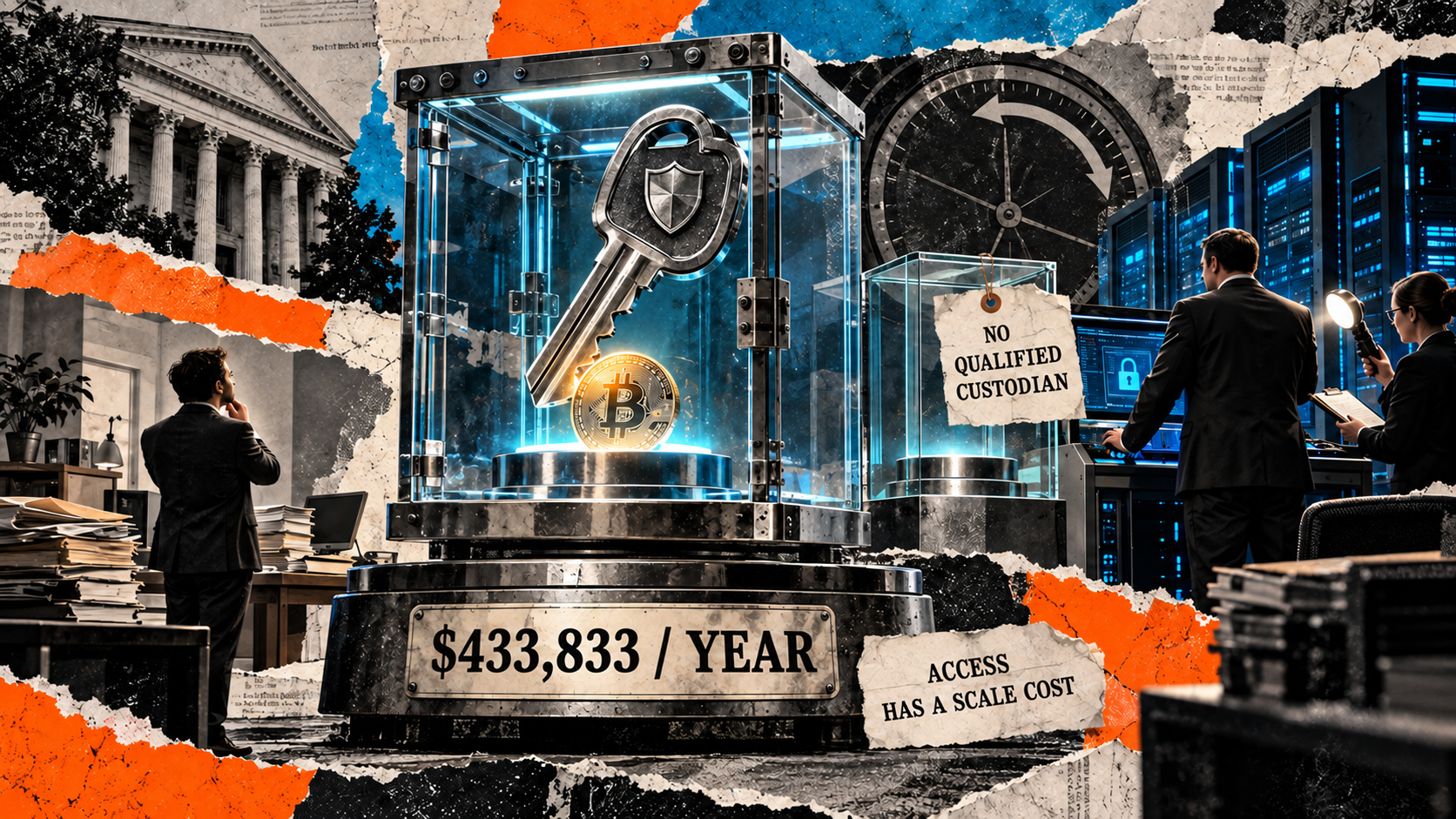
New SEC crypto rules threaten small advisers, but big firms win
The US Securities and Exchange Commission’s proposed crypto custody fallback could broaden investment choices while making them ea...

Polymath And CineCity Explore Regulated Tokenized Film Investment Platform
TL;DR Polymath and Chicago-based CineCity Studios are exploring a platform for financing independent film through regulated digita...