Silk Road Hacker Accidentally Reveals Feds $70,000,000 Worth of BTC on His Laptop
It looks like a Silk Road hacker played a joke on himself with the latest move just before he was arrested. Check out the latest reports about a more or less funny event below. Silk Road hacker revealed his BTC to the Fe...
Archive context
Older archive item. Useful for background and entity history, but not a fresh market-moving signal.

It looks like a Silk Road hacker played a joke on himself with the latest move just before he was arrested. Check out the latest reports about a more or less funny event below.
Silk Road hacker revealed his BTC to the FedsThe Silk Road hacker, James Zhong, unintentionally incriminated himself during a police investigation when he opened up his laptop in front of federal investigators, revealing thousands of Bitcoin (BTC) stored on it.
He was charged by the US government last year for stealing over 50,000 BTC from the illicit online marketplace, Silk Road, in 2012. In 2019, after a break-in at his house, Zhong called the police to report the incident.
However, he revealed over the phone that he was an investor in Bitcoin and had incriminating evidence lying around in his home, putting himself on the radar of investigators.
IRS Criminal Investigation was working to solve the 2013 Silk Road hack. They traced the on-chain paper trail and hired a blockchain analytics firm named Chainalysis.
The firm noticed that an address associated with the Silk Road hacker accidentally performed a KYC routine with a crypto exchange, revealing Zhong’s name and home address months after his 911 call.
With the help of Shaun MaGruder, CEO of a cyber intelligence company named BlockTrace, the IRS created a plan to enter Zhong’s home. They talked to him under the guise of investigating the break-in that he had reported earlier.
The hacker made the mistake of telling investigators he was a “Bitcoin OG” and that he had 1,500 BTC sitting on one laptop alone.
MaGruder of BlockTrace stated the following:
“Lo and behold, he had $60 or $70 million worth of Bitcoins right there next to us…”
It has been revealed that Zhong was among the first contributors to the development of Bitcoin. He regularly shared his advice and suggestions on online forums to enhance the Bitcoin protocol.
However, the investigators returned the next day, pretending to help him, but instead executed a search warrant.
With the help of a computer hardware-trained dog, the agents found the wallets that contained the addresses to the 50,000 BTC, which were once worth over $3 billion. These wallets were found in a safe that was buried in concrete underneath Zhong’s basement floor.
The hacker will have to spend one year and a day in prison.
The story was originally reported by the online publication the Daily Hodl.
Why this matters
This bitcoin story adds another data point to the current market tape and is useful when read alongside nearby source coverage.
Original source
Read on CryptoGazetteRelated market context

Former NCA officer Paul Chowles ordered to repay $2.4M for Bitcoin theft during Silk Road 2.0 probe
The case highlights the need for enhanced oversight and security measures in law enforcement's handling of digital assets to preve...
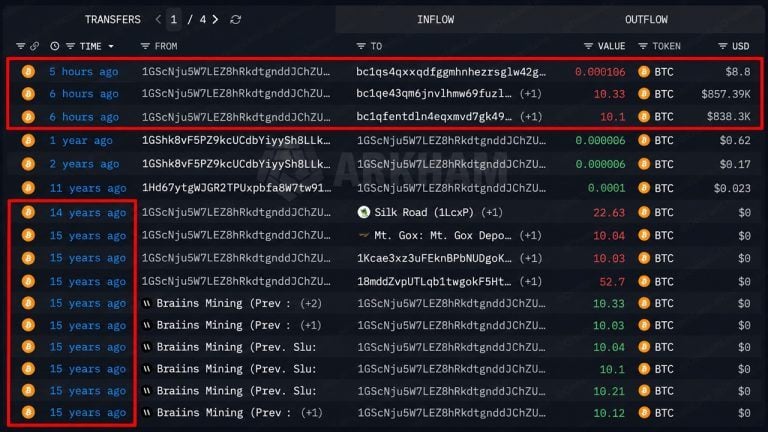
Bitcoin Price at $83,000 Turns a Silk Road-Era Whale’s $70 Into $1.7M
A Bitcoin address whose coins had not moved since May 2011 shifted 20.43 BTC worth about $1.7 million earlier today, ending a 15.4...

Hunter Biden on Bitcoin, Operation Chokepoint 2.0, and $LAPTOP
Bitcoin Magazine Hunter Biden on Bitcoin, Operation Chokepoint 2.0, and $LAPTOP Hunter Biden’s $LAPTOP token dropped more than 98%...
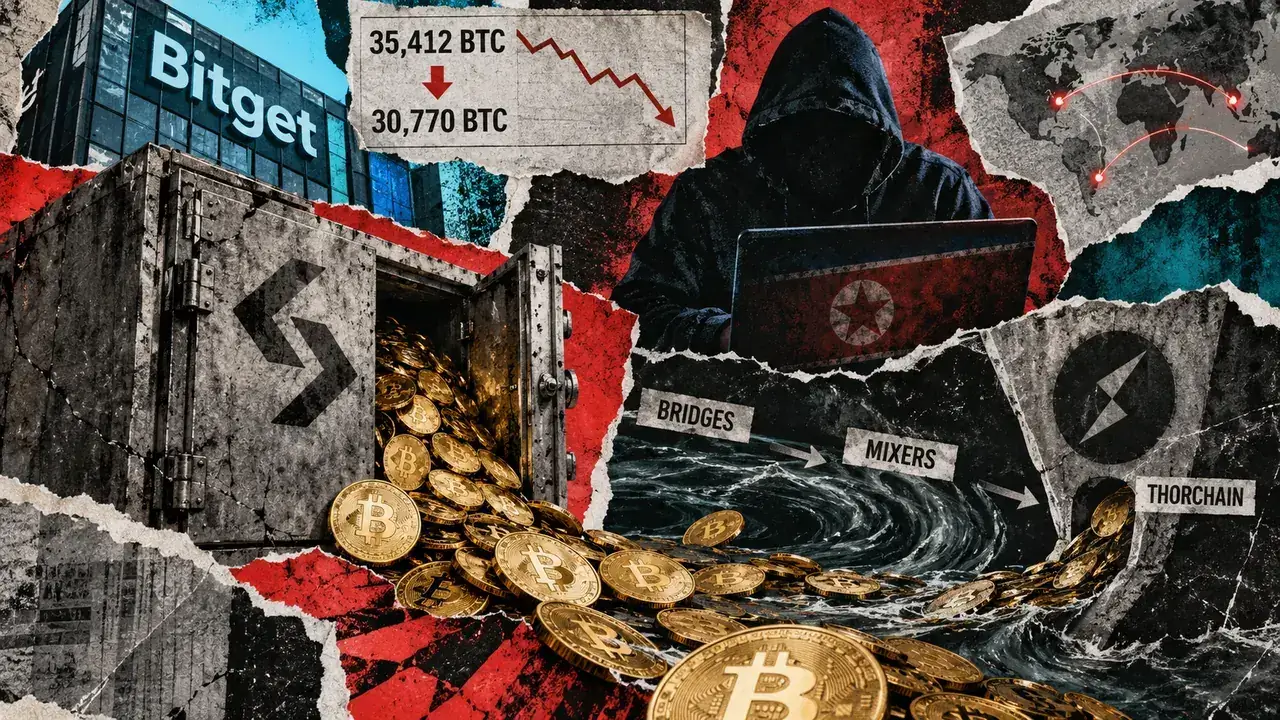
Nearly 5,000 BTC leaves Bitget as hackers begin laundering $387 million haul
Nearly 5,000 Bitcoin has left Bitget’s tracked reserves after the crypto exchange reopened withdrawals following its $387.5 millio...

BlackRock ETF clients buy $15M worth of Ethereum
BlackRock's Ethereum ETF success highlights growing institutional interest in crypto, potentially boosting market legitimacy and a...

Tether says it helped freeze $550M in Iran-linked USDT this year
The disclosure came as Senate Democratic investigators alleged USDT had become a key part of Iran’s shadow banking network.