Steve Hanke Is Wrong About the Strategic Bitcoin Reserve
Steve Hanke is wrong about something Bitcoin related once again. He’s recently taken aim at the idea of the U.S. creating a Strategic Bitcoin Reserve (SBR).In the video embedded in the X post below, Hanke claimed that co...
Archive context
Older archive item. Useful for background and entity history, but not a fresh market-moving signal.

Steve Hanke is wrong about something Bitcoin related once again.
He’s recently taken aim at the idea of the U.S. creating a Strategic Bitcoin Reserve (SBR).
In the video embedded in the X post below, Hanke claimed that converting government savings into bitcoin would be a "drag on the economy" because those savings wouldn't be invested in "real capital assets that produce things."He even doubled down, saying bitcoin doesn't build factories, create jobs, or drive innovation.
A US BITCOIN STRATEGIC RESERVE = A STUPID IDEA.
Savings funneled into Bitcoin aren't building factories, creating jobs, or driving innovation. pic.twitter.com/VaH0p7Y835
I couldn't disagree more—and I think his argument completely misses the point.
Let's get honest about what a SBR is supposed to do. It's not about building factories or creating jobs directly. It's about protecting a country's economy, hedging against risk, and ensuring long-term economic stability.
Does Hanke think the U.S. should sell its gold and oil reserves or food and weapons stockpiles because they aren't "driving innovation"? Of course not. Those reserves exist to provide security and stability, not to act like venture capital investments.
A SBR would work in the same way. It wouldn't directly create jobs, but it would provide the U.S. with a hedge against inflation, dollar debasement, and geopolitical risks.
Let's face it—the dollar isn't as strong as it used to be, and holding bitcoin would give the U.S. a safety net as the world shifts toward decentralized money. It's about preparing for the future, not clinging to outdated economic models.
Hanke also forgets how reserves can provide leverage. If bitcoin becomes the world's most valuable asset and the U.S. has established a Strategic Bitcoin Reserve, it will be ahead of the game. That's not just a hedge—it's a massive geopolitical advantage. It would strengthen confidence in the U.S. financial system.
His take shows he doesn't understand what reserves are for. They're about risk management and long-term strategy, not short-term job creation. A Strategic Bitcoin Reserve isn't a "drag on the economy." It's an innovative, forward-thinking move.
The idea of an SBR isn't stupid. What's stupid is dismissing it with outdated arguments.
This article is a Take. Opinions expressed are entirely the author's and do not necessarily reflect those of BTC Inc or Bitcoin Magazine.
Why this matters
This bitcoin story adds another data point to the current market tape and is useful when read alongside nearby source coverage.
Original source
Read on Bitcoin MagazineRelated market context

Kalshi traders predict US added over 90,000 jobs in September
Kalshi's job predictions highlight economic uncertainty, influencing Federal Reserve policy and potential rate adjustments amid ma...
Federal Reserve’s Waller embraces AI, stablecoins, and tokenization as future of payments
Waller's embrace of AI and stablecoins signals a shift towards modernizing payment systems, potentially reshaping regulatory and f...

UK chancellor uses bitcoin to mock Nigel Farage
UK Chancellor of the Exchequer John Healey has compared Nigel Farage’s fiscal policies to a “BTC account” handled by one of the UK...
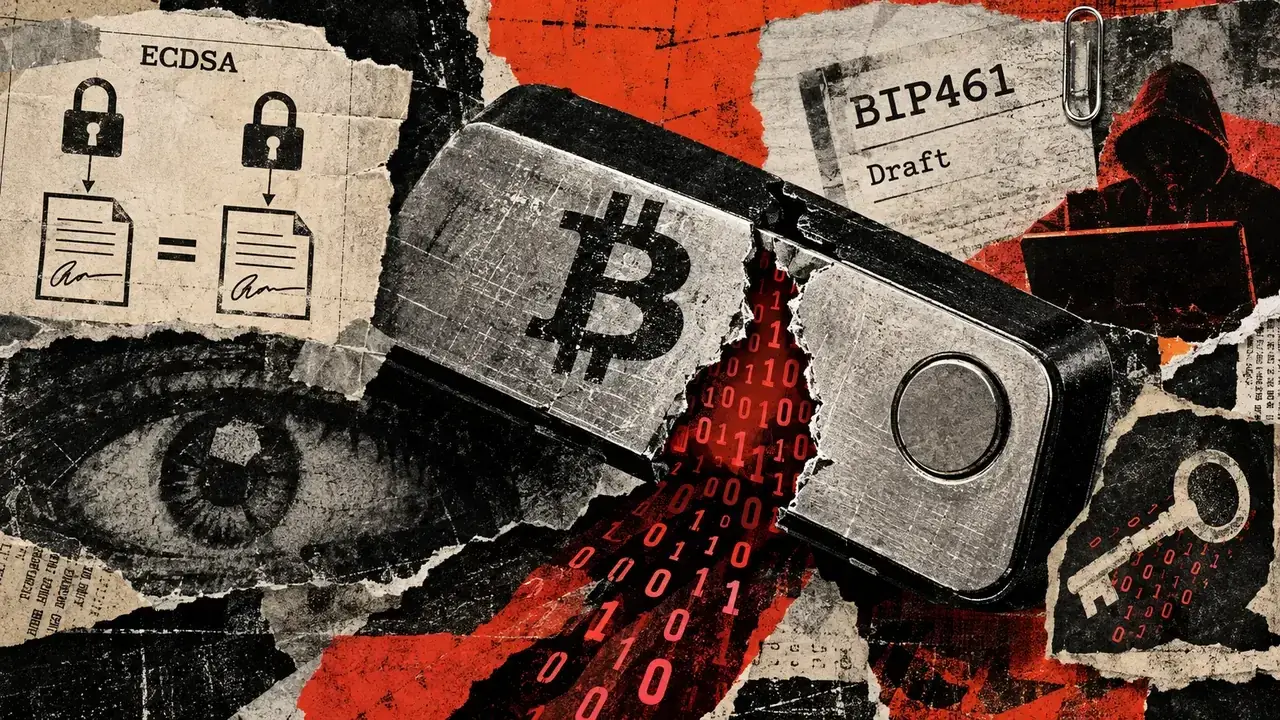
New Bitcoin upgrade catches hidden key leaks hiding the exact fix
Bitcoin improvement proposal BIP461 could make a hidden route for leaking wallet secrets easier to detect. The draft defines a com...

Mark Moss: The Bitcoin Endgame – BTC to $1 Million by 2030
Bitcoin Magazine Mark Moss: The Bitcoin Endgame – BTC to $1 Million by 2030 The Fed just raised rates, yet Bitcoin keeps climbing....
XRP Price Battling Resistances as BlackRock Rumors Pop
XRP price is trading near $1.51 after falling about 5% in a week, while BlackRock rumors of a spot XRP ETF resurface. The immediat...