The Quantum Computing Threat for Satoshi Nakamoto’s 1 Million Bitcoins
Key Takeaways: Quantum Threat to Early Bitcoin Transactions: The 1 million Bitcoins associated with Satoshi Nakamoto are particularly vulnerable due to the Pay-to-Public-Key (P2PK) format, which exposes public keys and c...
Archive context
Older archive item. Useful for background and entity history, but not a fresh market-moving signal.

Key Takeaways:
- Quantum Threat to Early Bitcoin Transactions: The 1 million Bitcoins associated with Satoshi Nakamoto are particularly vulnerable due to the Pay-to-Public-Key (P2PK) format, which exposes public keys and could be exploited by advanced quantum computers.
- Freezing Bitcoin Sparks Debate: Proposals to freeze Satoshi’s Bitcoins to prevent exploitation are contentious, as they challenge Bitcoin’s principle of immutability and decentralization, potentially setting a dangerous precedent.
- Preparing for Quantum Advancement: The rapid progress in quantum computing necessitates proactive measures, such as developing post-quantum cryptography and upgrading Bitcoin’s security infrastructure, to safeguard the cryptocurrency ecosystem.
Quantum computing has introduced some security vulnerabilities to Bitcoin, particularly for the 1 million Bitcoins believed to be owned by Satoshi Nakamoto, due to the use of the Pay-to-Public-Key transaction format in early Bitcoin transactions. Unlike in the modern format, the Pay-to-Public-Key-Hash, when using P2PK, the public key is exposed on the blockchain. That is to say, theoretically, a sufficiently powerful quantum computer could work out the private key from the public key and, therefore, access and spend such Bitcoins. Emin Gün Sirer, founder and CEO of Ava Labs, was one of the first to raise this vulnerability.
Freezing Satoshi’s 1 Million Bitcoins: Solution or Challenge?Some even go as far as to propose freezing those Bitcoins so they cannot be exploited anymore. It would be changing Bitcoin’s consensus rules in such a way that certain P2PK vulnerable UTXOs (Unspent Transaction Outputs) can no longer be spent. It requires huge community consensus, though—something that has often turned out to be very tough for Bitcoin.
Satoshi Nakamoto
Of course, such an act would require an implementation through Bitcoin Improvement Proposal, clearly defining UTXOs with the exact vulnerability of P2PKs and gaining public consensus. Freezing can also be done by a non-mandatory soft fork (an all-node software upgrade) or a more complex hard fork (an actual migration to an entirely new chain version). Either of these pathways would potentially lead to an extremely contentious and divisive development within the community.
More News: The Evolution of Bitcoin: A Journey Through its History
Results of FreezingFreezing Satoshi’s Bitcoins would be a severe violation of the immutability aspect of Bitcoin. It was designed to have an immutable ledger wherein no man, group of people, or entity can alter network history. Intervening to change old transactions would set a very dangerous precedent and could undermine the decentralization and trust of Bitcoin.
Some would counter that Satoshi’s 1 million Bitcoins is a special case, not to be compared with all others, due to the vulnerability and market impact. The debate is complex, and no easy answers exist.
Advantages of Freezing- Preventing the loss of 1 million Bitcoins.
- Ensures the security integrity of the Bitcoin ecosystem.
- Violates Bitcoin’s principle of immutability.
- Could undermine decentralization of Bitcoin.
- It would set a bad precedent by opening the door to similar interventions in the future.
- Difficult to achieve widespread community consensus.
Google’s release of the Willow quantum chip raised more concerns about how the development of quantum technology was gaining speed. Even now, quantum computing is nowhere near being powerful enough to break into the encryption algorithms of Bitcoin. However, the rate at which this form of computing is improving is considered a great potential threat.
Most experts say that to break both of Bitcoin’s encryption algorithms, ECDSA 256 and SHA-256, a quantum computer would have to be in the millions of qubits—something Willow has not accomplished. But none can be absolutely sure when this will be on par with that capability. Some say it could be within 5-10 years, and that’s a reality.
For example, some members of the cryptocurrency community have raised red flags that, if quantum computers become powerful enough, they might break the encryption of Bitcoin wallets and transactions, which would put trillions of dollars in cryptocurrency assets at risk. This is quite a grim scenario that the Bitcoin community should timely prepare preventative measures for.
The post The Quantum Computing Threat for Satoshi Nakamoto’s 1 Million Bitcoins appeared first on CryptoNinjas.
Why this matters
This bitcoin story adds another data point to the current market tape and is useful when read alongside nearby source coverage.
Original source
Read on CryptoNinjasRelated market context
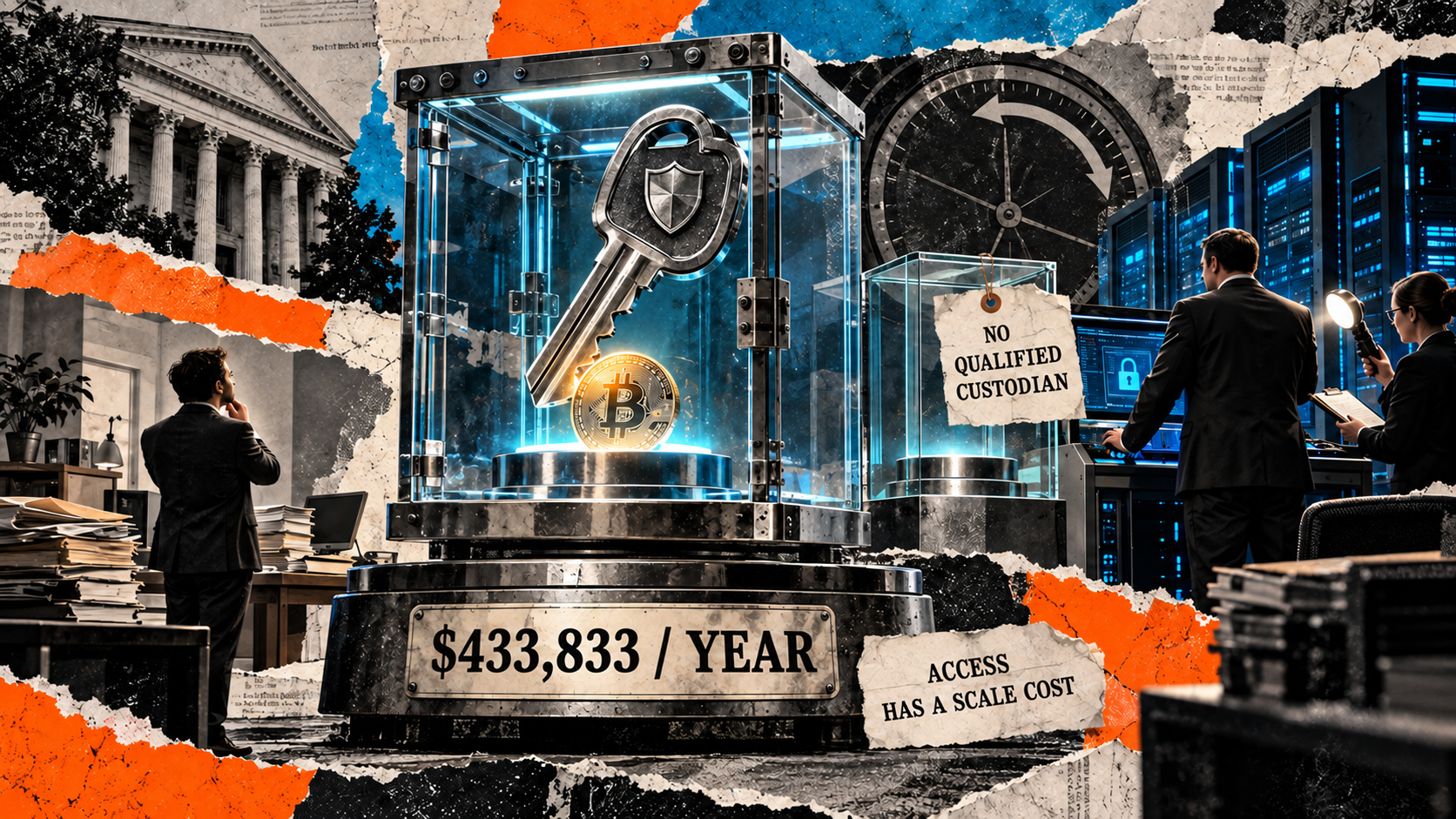
New SEC crypto rules threaten small advisers, but big firms win
The US Securities and Exchange Commission’s proposed crypto custody fallback could broaden investment choices while making them ea...
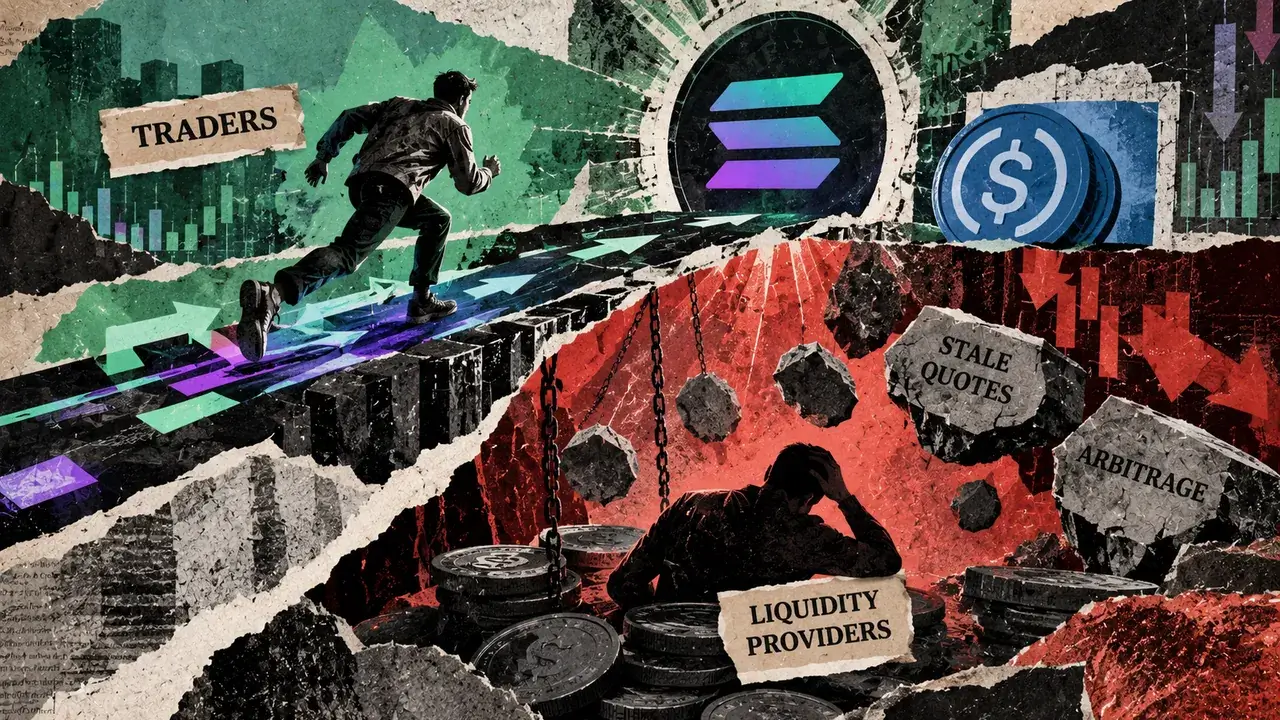
PropAMMs lower Solana trade costs, and public pool returns crash
A trader can get a better Solana (SOL) swap price while a passive pool depositor remains exposed to traders picking off stale quot...

Republican Senator Steve Daines Releases Text of Proposed Crypto Tax Plan
Bitcoin Magazine Republican Senator Steve Daines Releases Text of Proposed Crypto Tax Plan Republican senator Steve Daines has rel...

Powerus went public Thursday. By Friday, its shares were on Solana
Powerus' rapid transition to tokenized shares on Solana highlights the growing shift towards blockchain-enabled financial democrat...

Whale stakes $1 million in SOL to a new Solana validator
The shift towards organic delegations may challenge decentralization, potentially concentrating power among well-funded validators...

Community bankers sue OCC over crypto trust charters
The lawsuit could reshape regulatory landscapes, impacting how digital asset firms integrate into traditional banking systems and...