Why Bitcoin initially held its gain as rate traders put September hike odds at 85%
August’s inflation report left the Federal Reserve with a mixed signal: gasoline drove much of the headline increase, but monthly core inflation accelerated. That combination kept Governor Christopher Waller’s conditiona...
Archive context
Older archive item. Useful for background and entity history, but not a fresh market-moving signal.
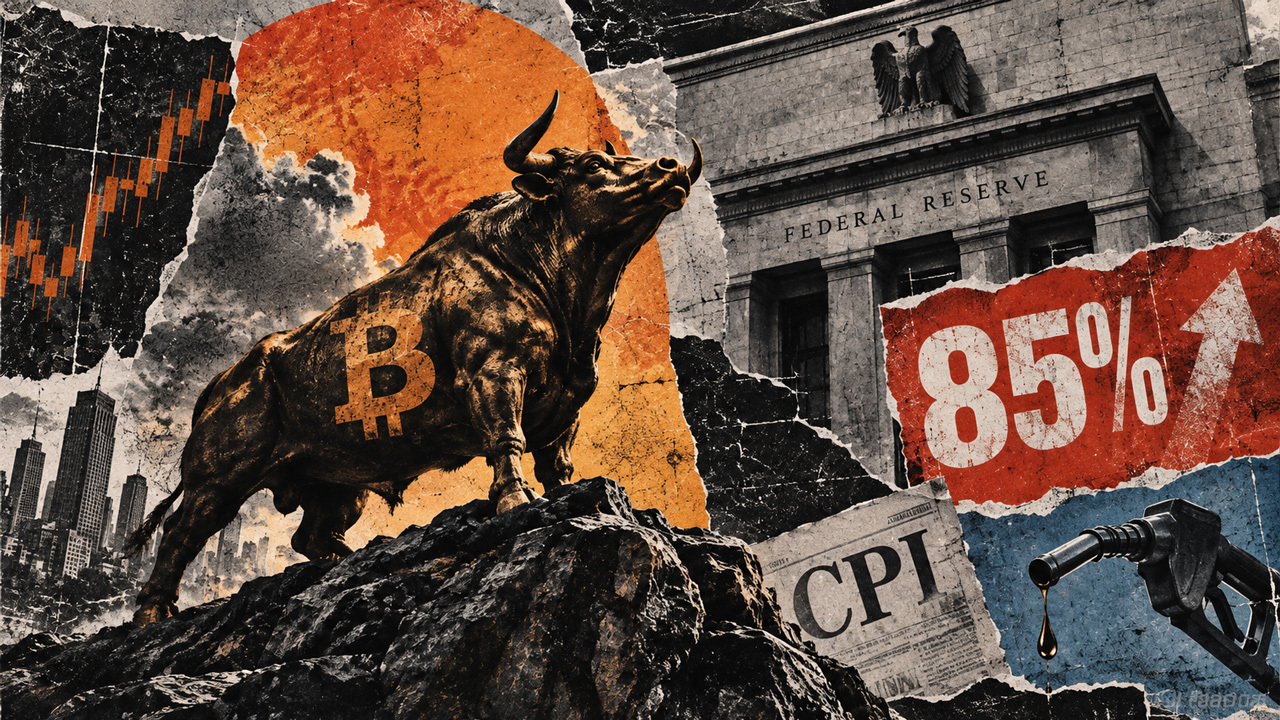
August’s inflation report left the Federal Reserve with a mixed signal: gasoline drove much of the headline increase, but monthly core inflation accelerated. That combination kept Governor Christopher Waller’s conditional case for a rate hike in play even as Bitcoin held its daily gain.
CryptoSlate's live Bitcoin market data had BTC at $78,683, up 2.08% over 24 hours, when trading closed in the US for the week. In contrast, Reuters reported that futures had moved to about an 85% probability of a quarter-point increase at the Fed's September 15-16 meeting, from about 70% before the inflation report. CME says its FedWatch probabilities are derived from 30-Day Fed Funds futures.
The policy tension lay inside the inflation report: annual core inflation eased, while its latest monthly pace picked up.
Related Reading Bitcoin holds near $78K as markets confront the macro shocks they may have underpriced this week CPI composition cut both waysThe Bureau of Labor Statistics said the consumer price index increased 0.4% in August on a seasonally adjusted basis after a 0.1% rise in July. The unadjusted 12-month rate stayed at 3.4%.
Gasoline supplied the clearest reason to look beneath the headline. Its index rose 3.9% and accounted for more than one-third of the monthly all-items increase, while the broader energy index gained 2.1%.
That composition could support a limited relief case for Bitcoin. An outsized contribution from a volatile component does not carry the same policy signal as a similarly broad increase across the basket.
The report did not, however, deliver an energy-only inflation story. Core CPI, which excludes food and energy, rose 0.3% in August after a 0.2% increase in July. Its annual rate eased to 2.4% from 2.5%, creating the central split: the longer-run measure improved while the latest monthly pace accelerated.
Other parts of the basket showed pressure too. Shelter rose 0.3% in August, and services excluding energy services were up 3.0% over 12 months. Gasoline explained a large share of the headline move, but not the entire report.
Federal Reserve Governor Christopher Waller had made August inflation central to his next decision. In a September 3 speech, Waller said continued progress toward the Fed's 2% goal would incline him to support holding the policy rate steady. He also said a hot report, or evidence that progress had reversed, could lead him to consider a hike at the September 15-16 meeting.
Waller described that view as a reaction function, not a commitment. His comments do not determine how he or the committee will vote. They do show why the monthly core acceleration cannot be dismissed simply because annual core inflation edged lower.
Waller also said core inflation was useful for seeing through energy volatility and that broader spillovers from earlier energy increases had not appeared so far. At the same time, he identified renewed energy pressure and a possible rise in longer-term inflation expectations as risks the Fed should watch.
The August report therefore landed between the two sides of his test. Annual core inflation moved closer to target, but the latest monthly core reading moved away from the pace seen in July. The futures response showed that traders gave substantial weight to the latter risk.
Related Reading Bitcoin dips below $80,000 as a hot August jobs report shifts Fed policy expectations September’s energy risk lies beyond August CPIBitcoin's 24-hour move still needs careful handling. During Saturday trading, Bitcoin has fallen to around $77,500 into thin weekend liquidity.
Also, Friday's release describes August, so it cannot include the sharper oil-price move that developed in September.
CryptoSlate's pre-CPI analysis highlighted that timing gap. The new energy shock is not evidence inside August CPI, and it would be premature to say it has already spread into broader prices. It can still matter through future inflation data and expectations, the channels Waller identified as policy risks.
Related Reading Bitcoin faces a two-week Fed trap as inflation rewrite threatens to upend rate cutsAugust CPI gave policymakers a reason to look through part of the gasoline-led jump, but faster monthly core inflation complicated the case for a hold. Whether September’s energy pressure persists or spreads remains a separate risk for subsequent data and inflation expectations.
The post Why Bitcoin initially held its gain as rate traders put September hike odds at 85% appeared first on CryptoSlate.
Why this matters
Bitcoin is showing up inside the Market Structure theme, so this story is worth tracking for follow-through rather than treating it as a one-off headline.
Original source
Read on CryptoSlateRelated market context

Fed Rate Cut Prediction Odds: Polymarket Zero 2026 Fed Cuts Priced
Polymarket priced zero Fed rate cut prediction odds for the remainder of 2026 at 95.9%, or about 96%, as prediction markets and an...

Bloomberg Terminal integrates 24/7 Hyperliquid prices for enhanced market data
The integration may boost Hyperliquid's market visibility and valuation, potentially attracting more institutional interest and pa...

Crypto Licensing Enters a New Era as Global Regulations Accelerate in 2026
The global digital asset industry is entering a defining chapter as governments and financial regulators continue to introduce com...

Hyperscale Data Says Bitcoin And Cash Reserves Reach $56.4M
TL;DR Hyperscale Data says it held about $56.4 million in Bitcoin, cash and restricted cash as of October 4. That total included 2...
ZachXBT Infiltrates Crypto Syndicate Tied to $1.5B Bybit Hack
The blockchain sleuth revealed that he infiltrated a Chinese crypto money laundering group following the theft of over $1.5 billio...

The Real Estate Market Is Dead in Spain. Long Live Bitcoin.
Bitcoin Magazine The Real Estate Market Is Dead in Spain. Long Live Bitcoin. Spain has just shown every property owner in Europe t...