$18 Billion in Crypto Moves to New Risky Re-Staking Platforms
More than $18 billion worth of cryptocurrency has shifted to a new platform type offering rewards for locking up tokens, a scheme that analysts warn poses significant risks for users and the broader crypto market.The inc...
Archive context
Older archive item. Useful for background and entity history, but not a fresh market-moving signal.

More than $18 billion worth of cryptocurrency has shifted to a new platform type offering rewards for locking up tokens, a scheme that analysts warn poses significant risks for users and the broader crypto market.
The increasing popularity of "re-staking" highlights the rising risk appetite in crypto markets as prices surge and traders chase higher yields. Bitcoin, the leading cryptocurrency, is nearing all-time highs, while ether, the second largest, has risen over 60% this year.
EigenLayer Expands Re-Staking Practice
At the forefront of the re-staking trend is Seattle-based startup EigenLayer. The company, which secured $100 million in February from US venture capital firm Andreessen Horowitz's crypto arm, has attracted $18.8 billion worth of crypto to its platform, up from less than $400 million just six months ago.
EigenLayer pioneered re-staking to extend the traditional crypto practice known as staking, explained its founder, Sreeram Kannan. Staking involves crypto token owners locking up their assets to participate in blockchain validation processes, earning yields in return but losing immediate access to their tokens.
Re-staking takes this a step further, allowing owners to stake new tokens—created to represent staked cryptocurrencies—again with various blockchain-based programs and applications, aiming for higher returns.
More than $18 billion worth of cryptocurrency has moved into a new type of platform which offers investors rewards in exchange for locking up their tokens, in a complex scheme that analysts warn poses a risk for users and the crypto market https://t.co/dZeZ2TtE3v
— Reuters (@Reuters) May 31, 2024Debate Emerges Within Crypto Community
The crypto community is divided over re-staking's risks. Some insiders argue it is too early to fully assess the practice, while analysts express concerns. They warn that using new tokens from re-staked cryptocurrencies as collateral in extensive crypto lending markets could create cycles of borrowing based on limited underlying assets.
"When there's anything that has collateral on collateral, it's not ideal. It adds a new element of risk that wasn't there," said Adam Morgan McCarthy, a research analyst at crypto data provider Kaiko.
The appeal for investors lies in the yield. Staking on the Ethereum blockchain typically offers returns between 3% and 5%. Analysts suggest that re-staking could yield higher returns, as investors can earn multiple yields simultaneously.
Re-staking is a recent innovation in decentralized finance (DeFi), where cryptocurrency holders invest in experimental schemes seeking significant returns without selling their assets.
EigenLayer has yet to pay out staking rewards directly, as the mechanism is still under development. Users join in anticipation of future rewards or giveaways known as airdrops. Currently, EigenLayer distributes its newly-created token, EIGEN, to users, who hope it will gain value.
New re-staking platforms, such as EtherFi, Renzo, and Kelp DAO, have emerged, re-staking clients' tokens on EigenLayer and creating new tokens to be used as collateral elsewhere. Kannan clarified that EigenLayer's goal is to empower users to choose staking locations and support new blockchain services, not incentivize more crypto-backed borrowing.
Institutional Interest in Re-Staking
Some experts downplay the risks, noting that re-staking's scale is small compared to the global crypto market's $2.5 trillion in assets. Regulators have expressed long-standing concerns about potential losses in the crypto sector affecting wider financial markets.
"For now, we do not see any meaningful risk of contagion from re-staking issues to traditional financial markets," said Andrew O'Neill, digital assets analytical lead at S&P Global Ratings.
However, the intertwining of crypto and mainstream finance continues to grow, and re-staking is attracting institutional interest. Zodia Custody, Standard Chartered's crypto arm, has seen significant institutional interest in staking but remains cautious about re-staking due to the difficulty in tracking assets and apportioning rewards.
Nomura's crypto arm, Laser Digital, has partnered with Kelp DAO for re-staking some of its funds, and Swiss crypto-focused bank Sygnum expects a new ecosystem around re-staking to emerge.
This article was written by Tareq Sikder at www.financemagnates.com.Why this matters
This blockchain story adds another data point to the current market tape and is useful when read alongside nearby source coverage.
Original source
Read on Finance MagnatesRelated market context
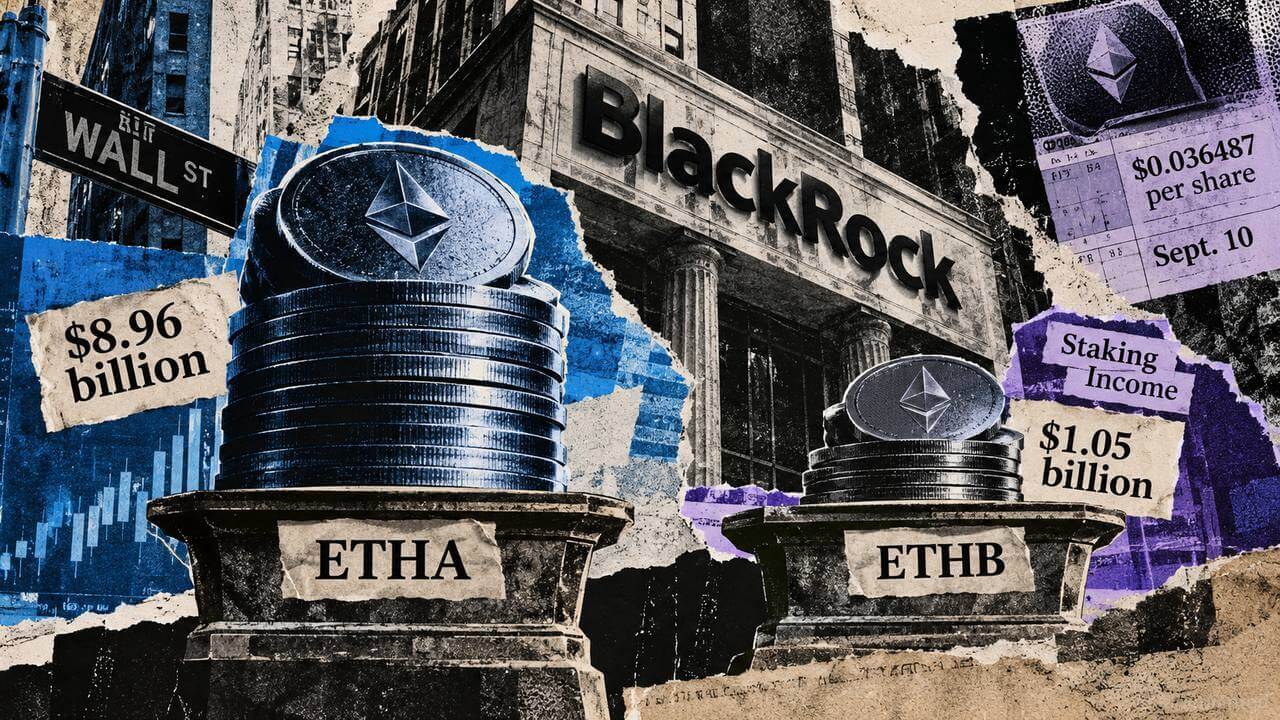
BlackRock’s staking Ethereum ETF pays yield but investors still prefer its $9 billion ETHA fund
Staking was supposed to strengthen Ethereum exchange-traded funds (ETFs), but BlackRock’s early results show investors still favor...

Kraken Lets Users Earn DeFi Yield on Nvidia and ETF xStocks
Kraken has launched on-chain yield vaults for three tokenised securities, enabling qualified clients to earn variable rewards from...

XRP holders could earn new yield, but getting out may take up to 60 days
Firelight is preparing to turn XRP-linked assets into capital that backs protection for DeFi users, offering holders a new source...

Blackrock Ether Staking ETF Draws $308M Over 20 Days as Assets Top $1B
Blackrock’s ether staking ETF has attracted $307.72 million across 20 inflow days since late July without recording a single day o...

Bitcoin Price Signal Upside as Rally Meets Fed Risk
Bitcoin price has clawed back to above $70,000 from $60,000 in late August, and traders are now assigning an approximately 85% pro...

Fed data shows hedge funds added $400 billion before Bitcoin’s September rate test
Newly released Federal Reserve data show domestic hedge funds expanded their gross balance sheets during the second quarter, month...