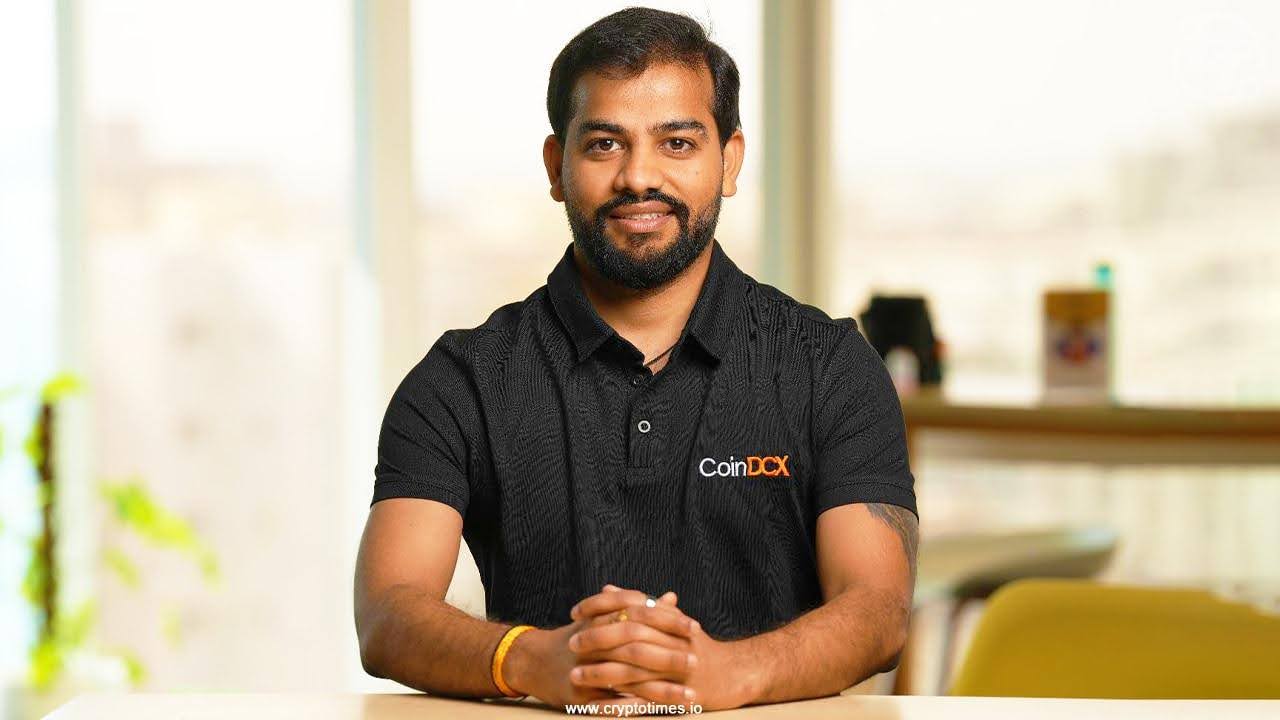
CoinDCX CEO Pushes for INR-Backed Stablecoins to Cut India’s $125B Remittance Costs
Key Takeaways: CoinDCX CEO Sumit Gupta calls for a regulated INR-backed stablecoin to accelerate India’s digital economy. He argues such stablecoins could reduce remittance costs by up to 90%, boosting household incomes....
Archive context
Older archive item. Useful for background and entity history, but not a fresh market-moving signal.
Key Takeaways:
- CoinDCX CEO Sumit Gupta calls for a regulated INR-backed stablecoin to accelerate India’s digital economy.
- He argues such stablecoins could reduce remittance costs by up to 90%, boosting household incomes.
- Gupta points to global models where fully reserved and audited stablecoins support innovation without destabilizing financial systems.
India is racing toward becoming a $10 trillion economy, but according to CoinDCX CEO Sumit Gupta, one critical gap remains: the absence of an INR-backed stablecoin. In a detailed series of posts on X, Gupta wrote on why India has to act fast, where it is beneficial and what notions have been reserving the progress until now.
Read More: India’s $1 Trillion Crypto Opportunity: CoinDCX CEO Calls for Bold Web3 Action Now
Stablecoins and India’s Digital PotentialThe international stablecoin market is already over 150 billion with such market leaders as Tether (USDT) and Circle USDC. These tokens find application in the trade, the payment, as well as middle ground between the traditional and digital finance.
Despite India’s scale and rapid fintech adoption, the country has yet to roll out its own rupee-linked version. Gupta see this as an unrealized potential, given that India already has resilient payment networks via the UPI, which recorded 12 billion transactions in June 2025 alone.
“Stablecoins can lower costs, speed up payments, and expand financial access,” Gupta wrote. “The rupee should lead the digital future.”
Clearing Misconceptions Around Stablecoins Fully Reserved, Transparent, and RegulatedGupta addressed fears that stablecoins might resemble the chaos of 19th-century “wildcat” banking, when unregulated currencies circulated without proper reserves.
He countered that today’s leading stablecoins are not only backed one-to-one by safe assets but also undergo frequent audits. As an example, USDC is cash-reserved and cash-based with attestations daily and a third-party audit on a monthly basis.
Gupta postulated India could establish a even superior practice:
- 100% reserves held in rupees
- Daily transparency reports
- Direct oversight by the Reserve Bank of India (RBI)
Such measures, he argued, would make INR stablecoins safer than banks operating on fractional reserve models, where only a portion of deposits are held in reserve.
Cutting Remittance Costs by 90%India is the biggest remittances receiver in the world with remittances peaking above $125 billion in 2024. Nonetheless, the mechanism of transferring the money home is costly. Conventional procedures tend to be referred to SWIFT transactions, where the amount obtained by the families is affected by fees and spreads in currencies.
Gupta emphasized that blockchain-based stablecoin transfers could slash costs by up to 90%, while also enabling instant payouts directly into UPI-linked wallets.
“More money in Indian hands, less lost in intermediaries’ fees,” he stated.
It can revolutionize the remittances industry, keeping billions of dollars in the homes of families sending money instead of paying the payment providers and banks.
Addressing Concerns Over Financial StabilityCertain policymakers fear that since stablecoins can settle important markets, they may also threaten government securities markets and fragment the monetary system. Gupta, though, discounted these fears:
- Stablecoin issuers currently hold over $120 billion in short-term U.S. Treasuries, acting as reliable buyers of safe assets.
- During the 2023 Silicon Valley Bank crisis, Circle redeemed billions of USDC without losing its peg, proving the resilience of regulated stablecoins.
- India already manages multiple digital payment instruments: UPI, Paytm, Amazon Pay, and mobile wallets without destabilizing the rupee. Stablecoins would simply be another interoperable tool in the system.
Instead of undermining government bonds, stablecoins would lead to a rise in demand for safe assets, which would serve as a consistent buyer for Indian short-term securities, Gupta argued.
Read More: MEXC Sparks Massive Web3 Surge in India with Title Sponsorship of 2025 Blockchain Tour
Global Precedents Show the WaySome countries such as Singapore, UK, EU have already outlined strict regime for stablecoins:
- Full reserves held in safe assets
- Regular audits
- Strong disclosure requirements
Far from causing instability, these frameworks have fostered both trust and innovation. Gupta noted that India has all the ingredients to follow suit: fintech leadership, digital infrastructure, and regulatory experience.
Why INR Stablecoins Matter for IndiaFor Gupta, the issue is not just about technology but about strategic advantage. An INR-backed stablecoin could:
- Cut remittance fees dramatically
- Provide exporters with faster settlement options
- Drive financial inclusion by reaching unbanked populations
- Strengthen the rupee’s position in global digital finance
“Regulation turns risk into opportunity,” Gupta wrote, urging policymakers to shape the future rather than resist it.
The post CoinDCX CEO Pushes for INR-Backed Stablecoins to Cut India’s $125B Remittance Costs appeared first on CryptoNinjas.
Why this matters
This blockchain story adds another data point to the current market tape and is useful when read alongside nearby source coverage.
Original source
Read on CryptoNinjasRelated market context
Circle Says 59 Cents of Each Revenue Dollar Went to USDC Partners and Transaction Costs
Circle said it paid about $819 million of its roughly $1.4 billion in first-half 2026 revenue to USDC distribution partners and tr...

Mastercard Taps 17B Endpoints With BVNK Stablecoin Platform Across 200+ Markets
Key Takeaways: Global Money Platform For Fiat and Stablecoin Payment by Mastercard and BVNK. Mastercard Move links to 17B+ devices...

CONNECT recap: Liquidity is tokenization’s next challenge, everyday stablecoins
Panelists at Cointelegraph’s Singapore CONNECT event explored opportunities in tokenized markets, the future of everyday stablecoi...
US Hoovers up Bitcoin While the World Runs on Its Digital Dollars: Report
Bitcoin Magazine US Hoovers up Bitcoin While the World Runs on Its Digital Dollars: Report America is accumulating bitcoin while e...
Episode Six Launches Real-Time Stablecoin Backing Checks Across 50+ Global Markets
Key Takeaways: As part of Episode Six, it has introduced Verified Backing for bank-issued stablecoins and tokenized deposits. The...

Ripple Brings RLUSD to Cross River Bank as Garlinghouse Backs Evernorth’s XRP Strategy
Announced on October 15, the Cross River partnership integrates Ripple USD (RLUSD) into the bank’s proprietary Core Operating Syst...