DeFi lending TVL is outpacing DEXs due to more sustainable yield — VC
Crypto users could be looking for a more sustainable yield this cycle, as total value locked in decentralized finance (DeFi) lending continues to hit new highs while decentralized exchanges (DEXs) have lagged in comparis...
Archive context
Older archive item. Useful for background and entity history, but not a fresh market-moving signal.

Crypto users could be looking for a more sustainable yield this cycle, as total value locked in decentralized finance (DeFi) lending continues to hit new highs while decentralized exchanges (DEXs) have lagged in comparison.
DeFi lending protocols are currently the leading DeFi vertical in TVL at $53.6 billion, representing 43% of the $124.6 billion locked across all DeFi protocols. The figure also surpasses liquid staking.
Multichain lending protocol Aave currently holds $25 billion of locked value, accounting for nearly half of the DeFi lending market.
Change in crypto lending protocol TVL since 2019. Source: DeFiLlama
In stark contrast, DEXs, which once held nearly double the TVL of their closest competitor, have dropped from $85.3 billion in November 2021 to $21.5 billion today.
Explaining the rise in DeFi lending and fall in DEX TVL, the founder of crypto fund Apollo Capital, Henrik Andersson, told Cointelegraph that lending is arguably the “only sustainable way to produce yield” in DeFi, as DEX liquidity pooling has largely become unprofitable due to impermanent loss.
He also argued that the industry-leading DEX Uniswap v3’s more “capital efficient” design, relative to Uniswap v2, may have contributed to the DEX TVL fall, as liquidity providers can now earn more rewards with less upfront capital.
Andersson also pointed out that the rise of intent-based swaps — a relatively new crosschain trading mechanism — may have further reduced the DEX TVL, as market makers typically source liquidity from centralized exchanges to facilitate these swaps.
DeFi lending protocols like Aave and Compound Finance enable crypto users to lend assets to earn interest or borrow against collateral. Smart contracts manage deposits, loans and interest rates to ensure trustless transactions.
DeFi users who supply Ether (ETH) and Tether (USDT) on Aave, for example, currently earn an annual percentage yield of 1.86% and 3.17%, respectively.
Providing stablecoins and Ether to DEX pools such as Uniswap’s can offer higher rewards; however, as Andersson pointed out, they’re far less sustainable, fluctuating by the day.
DeFi now dominates CeFi in crypto lending marketDeFi-based crypto lending accounted for around 65% of the total market by the end of 2024 and has increased or maintained its market share against centralized lenders every quarter since Q4 2022, an April report from crypto investment firm Galaxy Digital showed.
The fall started occurring around the time several centralized crypto lenders such as Genesis, Celsius Network, BlockFi and Voyager fell bankrupt, causing TVL to fall massively.
Related: Bitcoin hits $103K but DeFi is a mixed bag: Finance Redefined
Their collective downfall led to an estimated 78% collapse in the size of the crypto lending market from the 2022 peak to the bear market trough, Galaxy noted.
Change in market share between centralized and decentralized crypto lending protocols between Q3 2018 and Q4 2024. Source: Galaxy Digital
However, it was DeFi lending protocols that led the resurgence in crypto lending activity, Galaxy noted, pointing to a near 960% increase in DeFi open borrows between Q4 2022 and Q4 2024.
Galaxy said the strong recovery of the DeFi lending market is a testament to the design and risk management practices adopted by DeFi lending protocols while showcasing the benefits of algorithmic, overcollateralized and supply-and-demand-driven borrowing models.
Galaxy expects increased institutional participation and clearer regulations to drive the next wave of crypto lending adoption.
Magazine: Crypto wanted to overthrow banks, now it’s becoming them in stablecoin fight
Why this matters
This blockchain story adds another data point to the current market tape and is useful when read alongside nearby source coverage.
Original source
Read on CointelegraphRelated market context

Kraken Lets Users Earn DeFi Yield on Nvidia and ETF xStocks
Kraken has launched on-chain yield vaults for three tokenised securities, enabling qualified clients to earn variable rewards from...

Audited DeFi protocols lost $885M to attacks that occurred completely outside their audit scopes
In decentralized finance, “audited” is often presented as a verdict on an entire project. In practice, an audit usually covers nam...

BlackRock’s staking Ethereum ETF pays yield but investors still prefer its $9 billion ETHA fund
Staking was supposed to strengthen Ethereum exchange-traded funds (ETFs), but BlackRock’s early results show investors still favor...
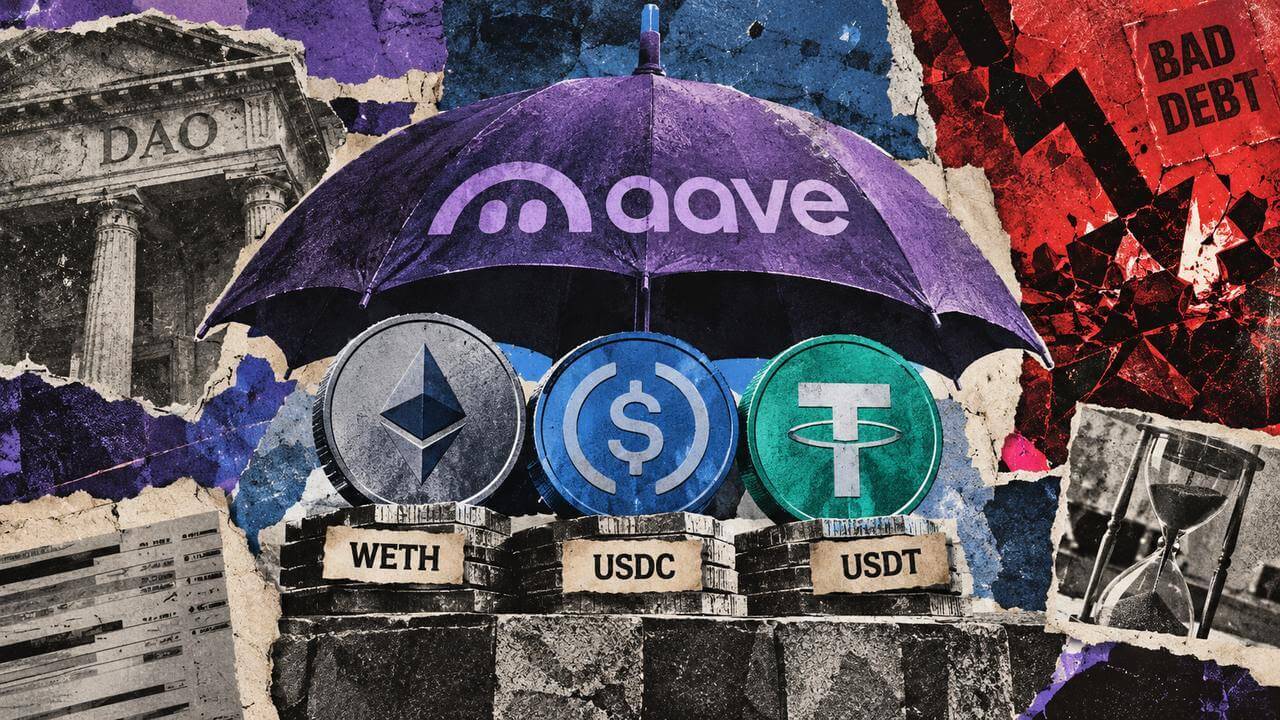
Aave V4 proposal would put DAO funds first in line to absorb lending losses
Aave V4 lenders supplying wrapped Ether (WETH), USDC or USDT to its Core liquidity Hub on Ethereum would receive a bad-debt backst...

Kraken launches xStocks Vaults for tokenized equities yield generation
Kraken's xStocks Vaults could revolutionize tokenized equities by integrating DeFi yield, potentially reshaping investment strateg...

Fed data shows hedge funds added $400 billion before Bitcoin’s September rate test
Newly released Federal Reserve data show domestic hedge funds expanded their gross balance sheets during the second quarter, month...