DeFi vs CeFi 2025: Why Smart Money Picks DeFi Despite Risk
The cryptocurrency landscape in 2025 has undergone a dramatic shift. While centralized finance (CeFi) platforms once dominated, their vulnerabilities were exposed in the 2022 collapses, where billions vanished from CeFi...
Archive context
Older archive item. Useful for background and entity history, but not a fresh market-moving signal.

The cryptocurrency landscape in 2025 has undergone a dramatic shift. While centralized finance (CeFi) platforms once dominated, their vulnerabilities were exposed in the 2022 collapses, where billions vanished from CeFi firms. In contrast, decentralized finance (DeFi) protocols demonstrated resilience, transparency, and operational continuity. Today, institutional investors are increasingly looking to DeFi, signaling a fundamental rethinking of risk and safety in crypto.
Total Value Locked: DeFi Shows ResilienceDeFi’s growth in 2025 has been remarkable. The total value locked (TVL) across major protocols surpassed $159 billion as of August 2025, an 84% increase over the prior four months. Leading platforms include Aave ($40B) and Lido ($42B), reflecting renewed investor confidence and the so-called “DeFi summer.”
Source: DeFiLlama
By contrast, CeFi lending platforms experienced a sharp decline following the collapses of major firms like Celsius and BlockFi. Their total loan book fell from a peak of approximately $34.8 billion in early 2022 to around $6.4 billion at the trough, representing an 82% drop.
Recovery has been partial, with the market rebounding to roughly $11–13 billion by early 2025, underscoring ongoing operational and trust challenges for centralized platforms.
Source: Galaxy Research
Security: DeFi Survives While CeFi Faces Major LossesIn 2025, DeFi protocols faced 92 security incidents with total losses of $470 million. A notable case was the Moby hack on Arbitrum, where a leaked private key enabled a $2.5 million theft although a whitehat recovered $1.5 million of the stolen funds.
Source: SlowMist
Centralized platforms suffered fewer breaches but far greater losses, totaling $1.9 billion. The largest was the Bybit hack in February 2025, attributed to North Korea’s Lazarus Group, which stole $1.46 billion in Ethereum, over 61% of all crypto losses in the first half of the year.
Transparency: Open Source vs Central ControlDeFi protocols operate on open-source, auditable smart contracts. Platforms like MakerDAO, Uniswap V4, and Aave allow investors to verify how funds are used and assess risks in real time.
CeFi platforms, by contrast, rely on centralized management. Past collapses, including FTX, highlighted how this opacity can enable fraud, mismanagement, or misuse of customer deposits. This difference in transparency is a key factor attracting sophisticated institutional investors to DeFi.
Institutional Adoption: DeFi Gains TractionRegulatory clarity is increasingly favoring DeFi. The EU Markets in Crypto-Assets (MiCA) regulation, fully implemented in 2024, aligns with DeFi protocols’ automated, transparent operations. U.S. initiatives like Project Crypto distinguish between decentralized protocols and centralized platforms, reducing compliance hurdles for DeFi adoption.
Institutional participation is rising. For example, former Commerzbank CEO Manfred Knof recently joined DeFi Technologies as a strategic adviser, highlighting growing confidence among traditional financial leaders. CeFi, meanwhile, continues to face regulatory uncertainty, limiting institutional engagement.
Yield and Liquidity AdvantagesDeFi’s decentralized structure eliminates intermediaries, allowing higher yields and better liquidity. Liquid staking protocols like Lido, which now secure over $42 billion, offer institutional investors yield opportunities while maintaining liquidity.
Automated market makers (AMMs), pioneered by Uniswap, provide deeper and more predictable liquidity compared to traditional order books, supporting institutional-sized transactions with minimal slippage. Even major CeFi players are getting in on the DeFi act, evidenced by Coinbase’s integration of DeFi trading into its BASE app.
The Verdict: DeFi as the Safer ChoiceFor investors with technical resources or professional custody solutions, DeFi now represents the safer option:
-
Transparency: Funds governed by auditable code instead of opaque executive decisions.
-
Operational continuity: Protocols like Aave and Compound have survived multiple market cycles.
-
Regulatory clarity: MiCA and U.S. distinctions reduce compliance uncertainty.
-
Superior yields and liquidity: Efficient capital utilization without intermediaries.
CeFi still offers a user-friendly experience and customer support, making it suitable for small retail allocations. However, for substantial crypto allocations, smart money is moving toward DeFi, where risks are auditable, and returns can be optimized.
Comparative Summary Aspect DeFi CeFi TVL Growth $159B+ (Aug 2025) $12B loan book, significantly below its peak Security Incidents 121 in H1 2025; $470M losses Bybit hack: $1.5B; $2.37B total in 2025 Institutional Adoption Growing; regulatory clarity Limited; regulatory hurdles persist Transparency High; open-source smart contracts Lower; centralized control Regulatory Clarity Emerging; MiCA in EU, SEC guidance in US Uncertain; ongoing enforcement actions ConclusionDeFi protocols in 2025 combine resilience, transparency, and yield efficiency, making them increasingly attractive to sophisticated investors. While CeFi retains convenience for smaller users, the trend is clear: decentralized finance has inverted traditional risk assumptions, now offering a safer and more efficient environment for serious crypto allocations.
Why this matters
This blockchain story adds another data point to the current market tape and is useful when read alongside nearby source coverage.
Original source
Read on Brave New CoinRelated market context

Audited DeFi protocols lost $885M to attacks that occurred completely outside their audit scopes
In decentralized finance, “audited” is often presented as a verdict on an entire project. In practice, an audit usually covers nam...
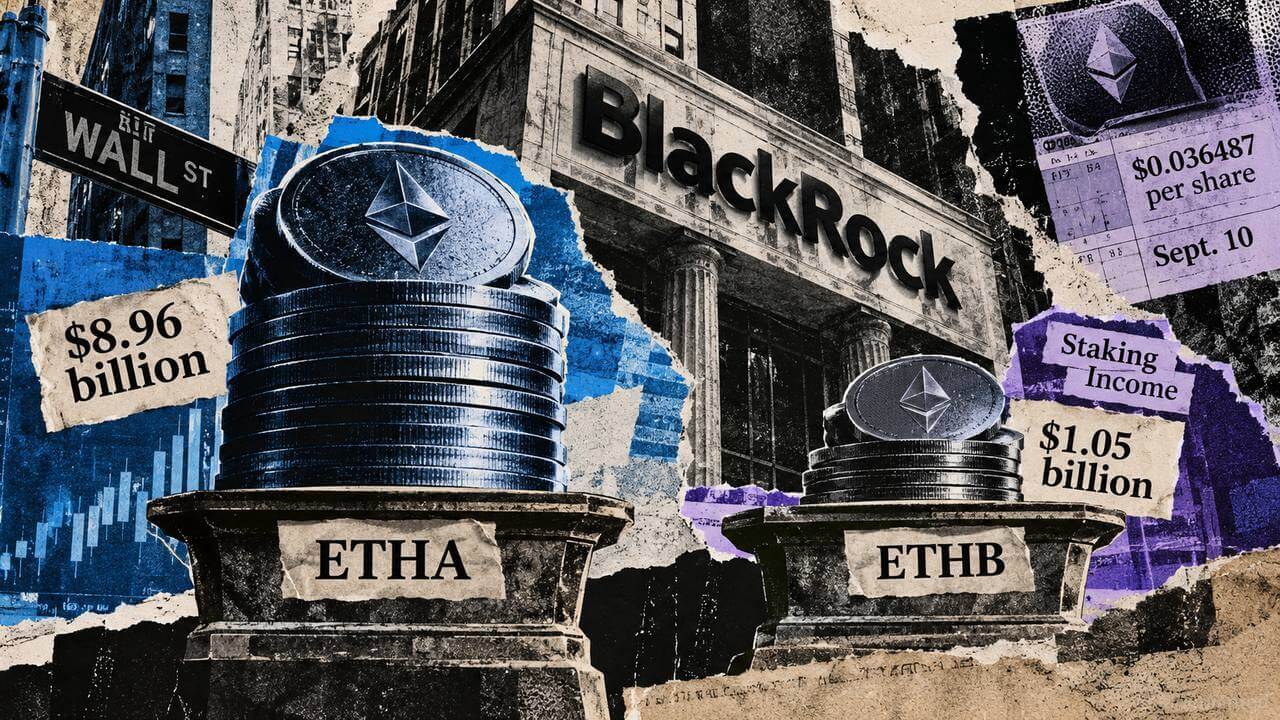
BlackRock’s staking Ethereum ETF pays yield but investors still prefer its $9 billion ETHA fund
Staking was supposed to strengthen Ethereum exchange-traded funds (ETFs), but BlackRock’s early results show investors still favor...

CLARITY Act Nears Senate Showdown: Crypto’s Long Wait for US Rules Reaches a Critical Vote
For cryptocurrency businesses waiting for Washington to settle how their industry should be regulated, the next hurdle comes down...

AAVE’s Stani Kulechov calls CLARITY Act a big deal for DeFi
The CLARITY Act could significantly reshape DeFi by providing a clear regulatory framework, potentially increasing institutional p...
Fed data shows hedge funds added $400 billion before Bitcoin’s September rate test
Newly released Federal Reserve data show domestic hedge funds expanded their gross balance sheets during the second quarter, month...

Kraken Lets Users Earn DeFi Yield on Nvidia and ETF xStocks
Kraken has launched on-chain yield vaults for three tokenised securities, enabling qualified clients to earn variable rewards from...