Guatemala’s largest bank integrates blockchain for cross-border payments
Guatemala’s largest bank, Banco Industrial, has integrated crypto infrastructure provider SukuPay into its mobile banking app, allowing locals to more easily receive remittances powered by blockchain technology. SukuPay’...
Archive context
Older archive item. Useful for background and entity history, but not a fresh market-moving signal.

Guatemala’s largest bank, Banco Industrial, has integrated crypto infrastructure provider SukuPay into its mobile banking app, allowing locals to more easily receive remittances powered by blockchain technology.
SukuPay’s infrastructure has been fully embedded inside the Zigi payment app, allowing Guatemalans to receive funds from the United States instantly for a $0.99 flat fee, the company disclosed on May 21.
Users of the Zigi app do not need a crypto wallet or an International Bank Account Number (IBAN) to receive the funds, the company said.
SukuPay CEO Yonathan Lapchik told Cointelegraph that the “key to mainstream adoption of blockchain technology is making it invisible to the end-user” so that there are no technical barriers.
“That’s the only way we’ll scale blockchain to billions of people — by building the rails, not forcing people to learn how they work,” said Lapchik.
Established in 1968, Banco Industrial has more than 1,600 service locations throughout Guatemala. As of 2023, it had over 150 million Guatemalan quetzals in assets, equivalent to roughly $20 million US. SukuPay said its integration with Zigi marks one of the first crypto-native protocols to be used inside a major Latin American retail bank.
Banco Industrial has a long-term issuer default rating of BB. Source: Fitch RatingsThe bank also has operations in Honduras, Panama and El Salvador and is a key player in local remittance markets.
Related: Bitcoin treasury adoption grows in LATAM, mirroring US strategic BTC reserve plan
Remittances are lifelines for Latin AmericaRemittances, or money sent by migrants to their home countries, play a vital role in Guatemala and the broader region.
The Inter-American Development Bank projected that remittances to Latin America and the Caribbean would total approximately $161 billion in 2024. Monthly remittances typically range from $131 to $648, representing between 6% and 23% of the sender’s average income.
“Remittances are lifelines in this region, but they’re broken,” Lapchik told Cointelegraph.
“Guatemala alone sees $21 billion in remittances every year, and families are losing 6% to 10% of that to fees and delays. These are people sending $300, $400 a month, and they can’t afford to wait days or pay that much just to get money home,” he said, adding:
“Crypto solves this when it’s used the right way. It lets us move money instantly and at a fraction of the cost, integrated into the bank apps people already use.”Latin America is the second-fastest growing region in terms of crypto adoption, though Guatemala lags behind regional leaders Argentina, Brazil, Mexico, Venezuela and Colombia, according to a 2024 Chainalysis study.
The study cited stablecoins as a primary adoption driver in the region.
Crypto adoption in Latin America by total value received. Source: ChainalysisLapchik said stablecoins facilitate cross-border transactions more easily, but that “people don’t wake up saying, I need a stablecoin.’”
“Stablecoins are just the best way to make that happen,” he said.
Magazine: Crypto wanted to overthrow banks, now it’s becoming them in stablecoin fight
Why this matters
This blockchain story adds another data point to the current market tape and is useful when read alongside nearby source coverage.
Original source
Read on CointelegraphRelated market context
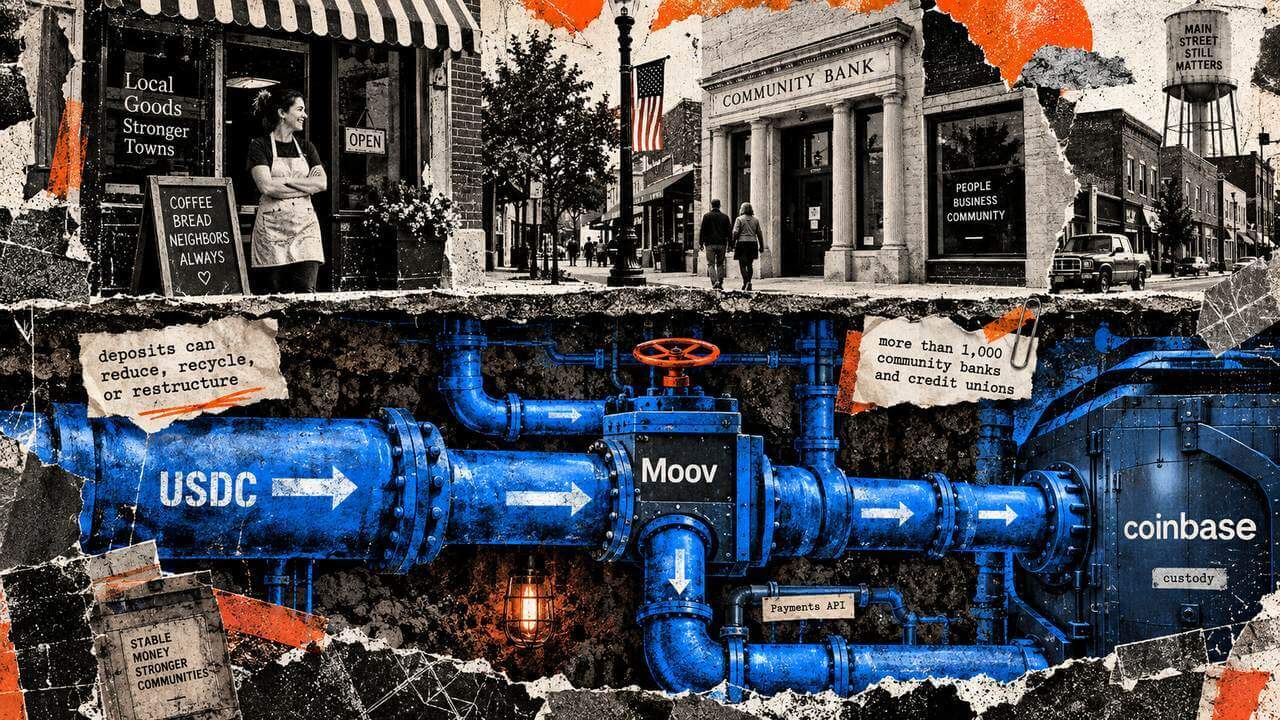
Coinbase gives community banks a stablecoin bridge while supplying infrastructure underneath
Coinbase’s new partnership with payments platform Moov gives community banks and credit unions a route to offer stablecoin service...

Thailand’s stablecoin proposal would block transfers to other people’s wallets
Thailand’s Securities and Exchange Commission has proposed a same-owner requirement for stablecoin transfers that would sharply na...

Banks get cross-exchange crypto hedge relief under Canada’s new 2027 capital rule
Canada’s banking regulator has finalized a narrow change to its crypto capital rules that should reduce capital overstatement for...

Banks escalate stablecoin rewards fight as Senate prepares for a Clarity Act vote
Eight banking groups on Monday said they want tighter limits on stablecoin rewards, keeping the ongoing banks-versus-crypto disput...

White House crypto advisor fires back at banking lobby over stablecoin deposit flight fears
White House crypto advisor Patrick Witt challenges 134 banking executives over stablecoin yield fears, calling deposit flight clai...

Trump backs crypto bill, faces bank opposition over stablecoin provisions
Trump's support for the crypto bill may boost Bitcoin's outlook, but bank resistance underscores ongoing regulatory challenges in...