Is DeFi Going To Be The End Of FinTech?
For the most part of recorded human history, finance has been constantly evolving and adapting to the needs of human culture and lifestyle. Fintech (financial technology) has changed the face of the financial industry. F...
Archive context
Older archive item. Useful for background and entity history, but not a fresh market-moving signal.

For the most part of recorded human history, finance has been constantly evolving and adapting to the needs of human culture and lifestyle.
Fintech (financial technology) has changed the face of the financial industry. From mobile payments to lending and personal finance management, fintech has completely changed how we interact with our money. Importantly, fintech is not just limited to banking and credit. It has also made things like saving, investing and credit scoring easier for the average consumer.
Nevertheless, fintech today is largely centralized and is thus unable to accommodate Web 3.0 and other blockchain-based innovations such as DeFi.
What Is DeFi?According to many proponents, DeFi or decentralized finance is an evolution of fintech set to take financial markets by storm. With a steadily growing market cap that is currently estimated to be USD 115 billion, DeFi applications are already demonstrating that they can accomplish the objectives of legacy financial systems but in a manner that is faster, cheaper, and better by leveraging blockchain.
This has made it an attractive space for investments and funding from venture capitalists. The sector boasts a total locked value (TVL), a metric to denote the value of assets currently locked in, of USD 92.3 billion in January 2022 and a record high funding of USD 17 billion from VCs.
DeFi aims to bring the convenience of peer-to-peer (P2P) transactions to its users by harnessing the power of smart contracts (self-executing pieces of code written in a programming language native to the respective blockchain). By removing intermediaries users are able to remain in absolute control over their assets while also accessing a range of powerful financial products and platforms without the involvement of traditional bureaucracy.
For instance, Aave, a decentralized shared liquidity platform allows P2P lending and borrowing of money and also earns unparalleled yields on deposits. There also exist decentralized exchanges (DEXs) like Uniswap and Project Serum which let users buy and provide liquidity directly from crypto wallets at minimal costs.
Fintech vs DeFi?While many argue that DeFi ushers an end to traditional fintech or that DeFi could never replace the convenience of fintech, the reality is that both industries have qualities that are beneficial to the end-user.
Both resolve issues that have long plagued traditional financial markets and they seek to develop applications with easy-to-use user interfaces. Fintech ventures have enabled the sanction of loans in a relatively easier manner and perhaps even send money to anyone across the world with lower fees.
But fintech companies still suffer from the centralization of authority in the hands of a few, creating certain qualities of censorship or control that users do not want. DeFi, on the other hand, enables disintermediation and digitization but lacks the safety that comes with knowing someone oversees all the activity going on, therefore reducing the chance of fraudulent activity.
Taking out collateralized loans worth millions of dollars in a matter of seconds, trading tokenized stocks 24×7, across 365 days, or sending money instantly to anyone sitting on the opposite end of the world for no fee becomes easier with DeFi applications.
Baanx is a UK-based fintech integrating DeFi, digital assets and the utility they provide to bring the best of fintech and blend it with the capabilities of DeFi to formulate a smarter, more efficient, and trustless financial order. Baanx has formed partnerships with crypto industries leaders such as Ledger and Tezos to bring to DeFi all the qualities fintech has to offer along with a strong framework and regulatory approval to ensure that customers are getting a secure product. With DeFi leaders partnering with well-established companies like Baanx, it seems to be a sign of which way the industry is going.
Finding The Middle GroundThe adoption of DeFi will only increase as trust issues in the traditional financial space persist and yield potential remains stagnant. But with fintechs like Baanx now adopting and building for DeFi, the future seems to look a little more clear: DeFi and fintech can and will co-exist. Despite the crypto and DeFi industry being brand new relative to the history and establishment of fintech, the road ahead seems to be one of cooperation rather than total exclusion.
DeFi will enable an alternative financial system that is built bottom-up, completely decentralized, censorship-free, low-fee, and fully automated. When brought together, fintech and DeFi can rapidly accelerate the adoption of Web 3.0 applications and transform financial access forever with more efficient products and services to the end-user.
Why this matters
This blockchain story adds another data point to the current market tape and is useful when read alongside nearby source coverage.
Original source
Read on NewsBTCRelated market context

Arc Mainnet Goes Live With 190+ Partners, BlackRock and Visa Back New Network
Key Takeaways: Arc Mainnet officially launched and brought together over 190 ecosystem partners to cover finance, payments, DeFi,...

Ripple Joins Velocity, Targets Payment Back End With $10 Million Extension
London-based Velocity has raised an additional $10 million, extending its Series A to $48 million at a $200 million post-money val...
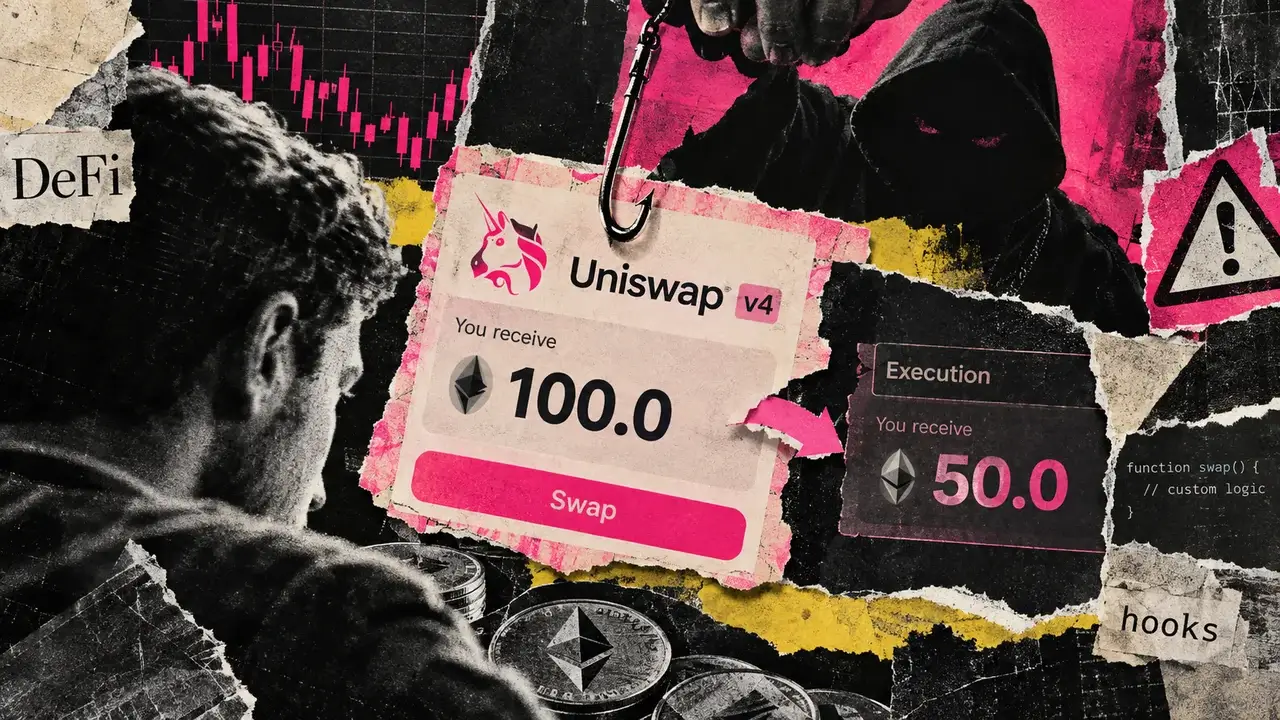
Malicious Uniswap v4 hooks are baiting DeFi traders with fake swap quotes
Liquidity aggregator 0x said on Sept. 14 that it had seen an alarming increase in malicious Uniswap v4 hooks over recent weeks, de...

Robinhood Crypto Engineers Face Charges After $100K+ Hyperliquid Trading Scheme
Key Takeaways: Robinhood’s two engineers face fraud charges for alleged trading in cryptocurrencies about to be listed. Both were...
Circle Switches On Arc Blockchain and Mints 10 Billion Tokens It Has Not Promised to Sell
Circle switched on the public mainnet of Arc, its Layer 1 blockchain, on Wednesday, and said it had minted the entire opening supp...
Deutsche Bank Confirms Bitcoin and Ether Custody Launch, Still Subject to Regulators
Deutsche Bank said on Wednesday that it will hold bitcoin, ether and selected stablecoins for European institutional and corporate...