Nigeria’s Federal Executive Council Approves Blockchain Policy
The Nigerian government has just approved a blockchain policy that will facilitate the development of a regulatory framework for the technology. The approval occurred in a May 3 Federal Executive Council meeting. Blockch...
Archive context
Older archive item. Useful for background and entity history, but not a fresh market-moving signal.

The Nigerian government has just approved a blockchain policy that will facilitate the development of a regulatory framework for the technology. The approval occurred in a May 3 Federal Executive Council meeting.
Blockchain Adoption Could Impact The Economy PositivelyNotably, the Minister of Communications and Digital Economy, Professor Isa Ali Ibrahim, had presented a memo about the regulatory framework earlier.
While announcing the approval, the FMCDE cited a PricewaterhouseCoopers (PwC) report predicting the increasing blockchain adoption and how it will boost the global gross domestic product by 2030. It noted that the global GDP could gain an additional $1.76 trillion from various industries representing about 1.4% of the world’s GDP.
In October 2020, the country released a draft of the blockchain adoption strategy. The document mentioned decentralized ledger and blockchain technology would support the growth of the Nigerian digital economy.
The FMCDE developed the national policy by consulting stakeholders in the private and public sectors. The creation of the policy conforms to the seventh pillar of the national digital economy policy and strategy, with the major focus of the policy being on growing global innovative technologies and digital society.
Importance Of The New National PolicyThe main purpose of the new policy is to create a blockchain-based economy suitable for digital activities in the country. It will ensure secure transactions, value exchange, and data sharing among individuals, companies, and the government. Also, the policy will impact the public and private sectors in the country positively.
Blockchain adoption strategy in Nigeria cuts across several pathways and initiatives. These include the establishment of a consortium for blockchain, fostering digital identity, and developing a national blockchain sandbox for piloting and testing.
Also, the strategy will involve the creation of blockchain business incentive programs, advancing digital awareness and literacy of blockchain technology, and building a robust regulatory and legal framework.
While FMCDE will supervise the policy initiatives, the coordinating responsibility lies on the National Information Technology Development Agency (NITDA). A multisectoral committee has also been created to oversee policy implementation.
Further, several regulatory bodies will be putting in some regulatory regimes for implementing blockchain technology in many sectors of the economy.
The Federal Executive Council appointed some bodies, such as the Central Bank of Nigeria, NITDA, the Securities and Exchange Commission, the Nigerian Communications Commission, and the National Universities Commission for using blockchain technology in different sectors for the betterment of the economy.Featured image/Pexels and chart/Tradingview
Why this matters
This blockchain story adds another data point to the current market tape and is useful when read alongside nearby source coverage.
Original source
Read on NewsBTCRelated market context

Will the Clarity Act Pass the Senate? | Connor Brown, Bitcoin Policy Institute
Bitcoin Magazine Will the Clarity Act Pass the Senate? | Connor Brown, Bitcoin Policy Institute The Clarity Act reaches a make-or-...

KULR Technology sells remaining 764 Bitcoin for $59M, fully exits crypto treasury strategy
KULR's exit from crypto reflects a strategic pivot towards core business investments, highlighting the volatility and risk of cryp...

Strategy copycat Satsuma crashed 99%, liquidated treasury
British Strategy copycat, Satsuma Technology, which raised £168.9 million ($227.6 million) from noteholders at the height of the 2...
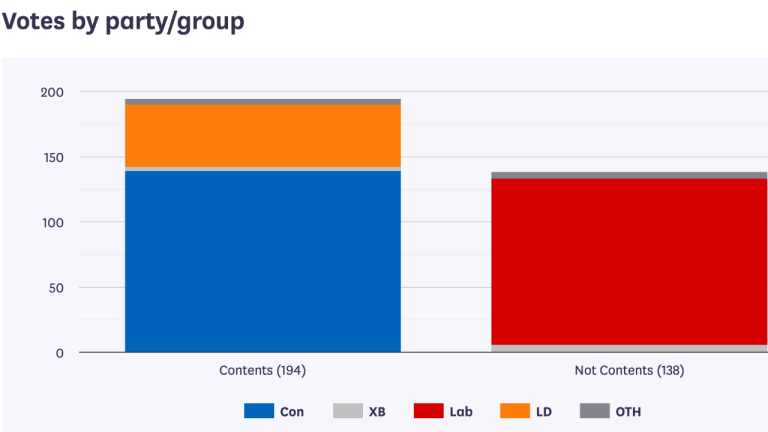
UK Lords Defeat Government 194-138 Over Crypto Strategy
The United Kingdom government has suffered a House of Lords defeat after peers voted 194-138 to require the Treasury to produce a...

Coinbase criticizes senators for opposing Clarity Act, warns US risks losing digital finance race
The US risks falling behind in digital finance innovation, potentially ceding leadership to regions with clearer regulatory framew...

Strategy prioritizes $950 million STRC buyback over expanding its Bitcoin treasury
Strategy’s latest $139.3 million repurchase of STRC variable-rate preferred shares has brought its spending on buybacks to about $...