Sam Altman’s Eye-scanning Crypto Project “World” Launches in Six U.S. Cities
Key Takeaways: World launches in Atlanta, Austin, Los Angeles, Miami, Nashville, and San Francisco. The project also collaborates with Visa and Match Group to increase real-world use cases. Privacy issues notwithstanding...
Archive context
Older archive item. Useful for background and entity history, but not a fresh market-moving signal.
Key Takeaways:
- World launches in Atlanta, Austin, Los Angeles, Miami, Nashville, and San Francisco.
- The project also collaborates with Visa and Match Group to increase real-world use cases.
- Privacy issues notwithstanding, some 12 million users around the world have been verified by World.
Sam Altman’s World, the digital identity network created by OpenAI’s former President, has officially launched in the US. The project, previously known as Worldcoin, is designed to help verify that users are human by scanning their biometric data, as human identity comes into focus amid growing concerns about bots and deepfakes in the AI era. Launched in six cities — Atlanta, Austin, Los Angeles, Miami, Nashville, and San Francisco — residents can now access World’s identity verification technology and get paid in its native token, Worldcoin (WLD).
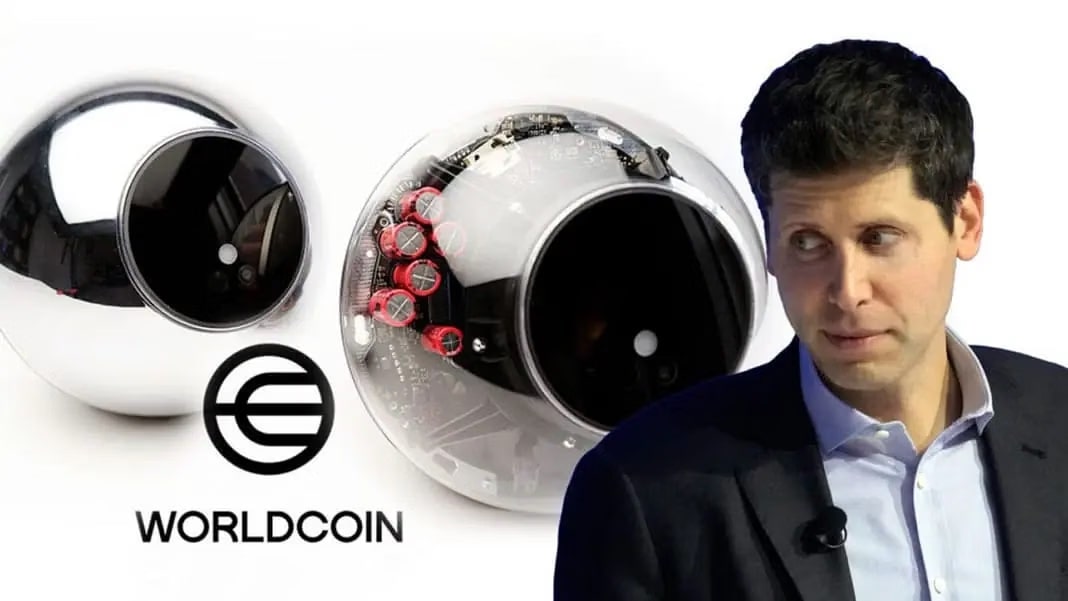
The device at the heart of World’s system is the Orb, a spherical scanner that takes about 30 seconds to read a person’s face and another 20 to read their iris. Once the scan is completed, the user gets a unique IrisCode number to prove they are not a robot and that they have not already registered. Certified users are rewarded with WLD tokens along with a World ID, which one can use as a single sign-in choice for platforms like Minecraft, Reddit, Telegram, Shopify, Discord, and more.
The project’s co-founder, Sam Altman, said World aims to create a place to “keep humans special, and as the central, special type of content, even as we live more and more of our lives in an internet populated with primarily AI-driven content.” Speaking during a keynote at the company’s San Francisco event on April 30, his comments positioned the technology as a defence against a changing digital canvas.
Strategic Partnerships Add Value to Usefulness in Real WorldIn conjunction with its U.S. debut, World announced a range of new partnerships intended to embed the World ID in daily life. Visa will introduce a World Visa card in late 2025, available to only users who have conducted an Orb scan. The card will be available for payments with WLD tokens as well as with other cryptocurrencies and will allow verified users to spend their crypto effortlessly.
In a shift for online dating, Match Group (MTCH, the parent company of Tinder, Hinge, Match. com, and Plenty of Fish—will test World ID integration. The feature will roll out first in Japan, helping those who use Tinder there find other users who are legitimate daters, not fake bots or scammers.
Outside of those high-profile joint ventures, World is now also bringing in its ecosystem partners in the form of Kalshi, a regulated prediction market platform, and Morpho, a decentralized lending protocol. The purpose of these partnerships is to provide services —such as receiving crypto-backed loans and participating in prediction markets — directly within the World app, expanding its use beyond identity verification.
Regulatory Oversight and Privacy Concerns Continue to Hinder World’s GrowthWhile World promised that personal information would be kept safe, the project has drawn criticism worldwide on its biometric data collection practices. The company says it uses iris data only to verify uniqueness and does not retain it centrally. Sensitive data is instead fragmented and encrypted at several institutions to mitigate the risk of breaches.
But some regulators in other nations aren’t so sure. Germany requested that biometric data be deleted on the grounds of GDPR infringement, and the company has appealed against the decision. Kenyan authorities raided World’s warehouses in 2023 with similar concerns, and Hong Kong regulators told the company to stop all data collection last year. Challenges remain with restrictions in place in Brazil despite efforts at compliance, though World maintains limited operations focused on public education.
World’s Rapid Growth Meets Market VolatilitySince rebranding from Worldcoin in 2024, World has expanded to 26 million users globally, including 12 million verified through Orb scans. Following its U.S. launch, the WLD token surged 15% on investor excitement but fell over 5% within 24 hours, trading just above $1 — still more than 90% below its all-time high of $11.74 in March 2024.
World’s Goals and Next StepsWorld plans to deploy 7,500 Orbs across the U.S. by the end of 2025 and open an assembly line in Richardson, Texas. Co-founder Alex Blania called the surge in identity verification a “wake-up moment for proof of personhood” amid rising AI-generated content.
Backed by Andreessen Horowitz, Coinbase, and LinkedIn co-founder Reid Hoffman—with over $140 million raised and a $1 billion valuation in 2021—World also eyes future collaborations with OpenAI. As it targets one billion users, the project is navigating the balance between innovation and privacy to build a global blockchain-based identity system.
More News: SEC Closes Investigation Into PayPal’s PYUSD as Stablecoin Gains Momentum in Crypto Market
The post Sam Altman’s Eye-scanning Crypto Project “World” Launches in Six U.S. Cities appeared first on CryptoNinjas.
Why this matters
This blockchain story adds another data point to the current market tape and is useful when read alongside nearby source coverage.
Original source
Read on CryptoNinjasRelated market context
Episode Six Launches Real-Time Stablecoin Backing Checks Across 50+ Global Markets
Key Takeaways: As part of Episode Six, it has introduced Verified Backing for bank-issued stablecoins and tokenized deposits. The...

Ripple Prime launches 24/7 swaps on real-world assets via Hyperliquid platform
Ripple Prime's 24/7 swaps could boost institutional blockchain adoption, potentially enhancing Hyperliquid's market value and appe...
Strategy dips on bad MSCI World Index news
Strategy’s stock price dipped 4% in after-hours trading yesterday as traders speculated about its removal from the MSCI World Inde...
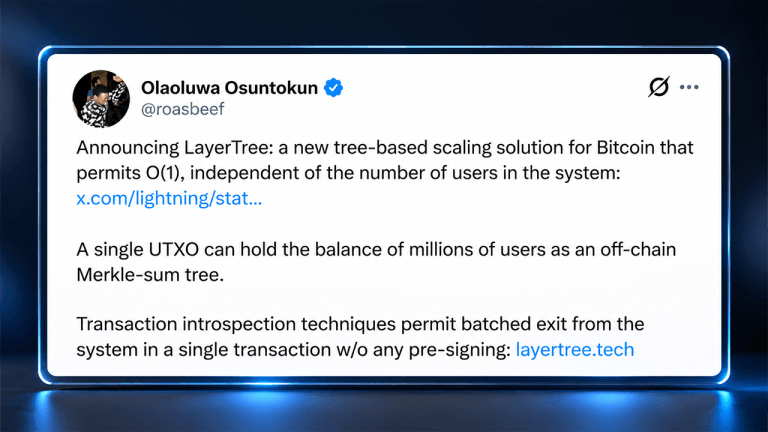
New Tree-Based Bitcoin Scaling Proposal Targets Millions of Users
Bitcoin developer Olaoluwa Osuntokun has unveiled Layertree, a proposal that could squeeze millions of bitcoin owners into a singl...

Mastercard Taps 17B Endpoints With BVNK Stablecoin Platform Across 200+ Markets
Key Takeaways: Global Money Platform For Fiat and Stablecoin Payment by Mastercard and BVNK. Mastercard Move links to 17B+ devices...

Orbs – DeFi’s Next Big Users Are Banks and Bots
Why you should listen Ran came to crypto the way many lawyers of his generation did. In 2015 a university friend and future Orbs c...