Senate to Fast-Track Landmark Stablecoin Reform
Key Takeaways: Bipartisan leaders have agreed to expedite a vote on the Stablecoin Trust and Transparency Act (STTA) within days. The STTA would mandate full dollar‑equivalent reserves, Treasury registration, and indepen...
Archive context
Older archive item. Useful for background and entity history, but not a fresh market-moving signal.
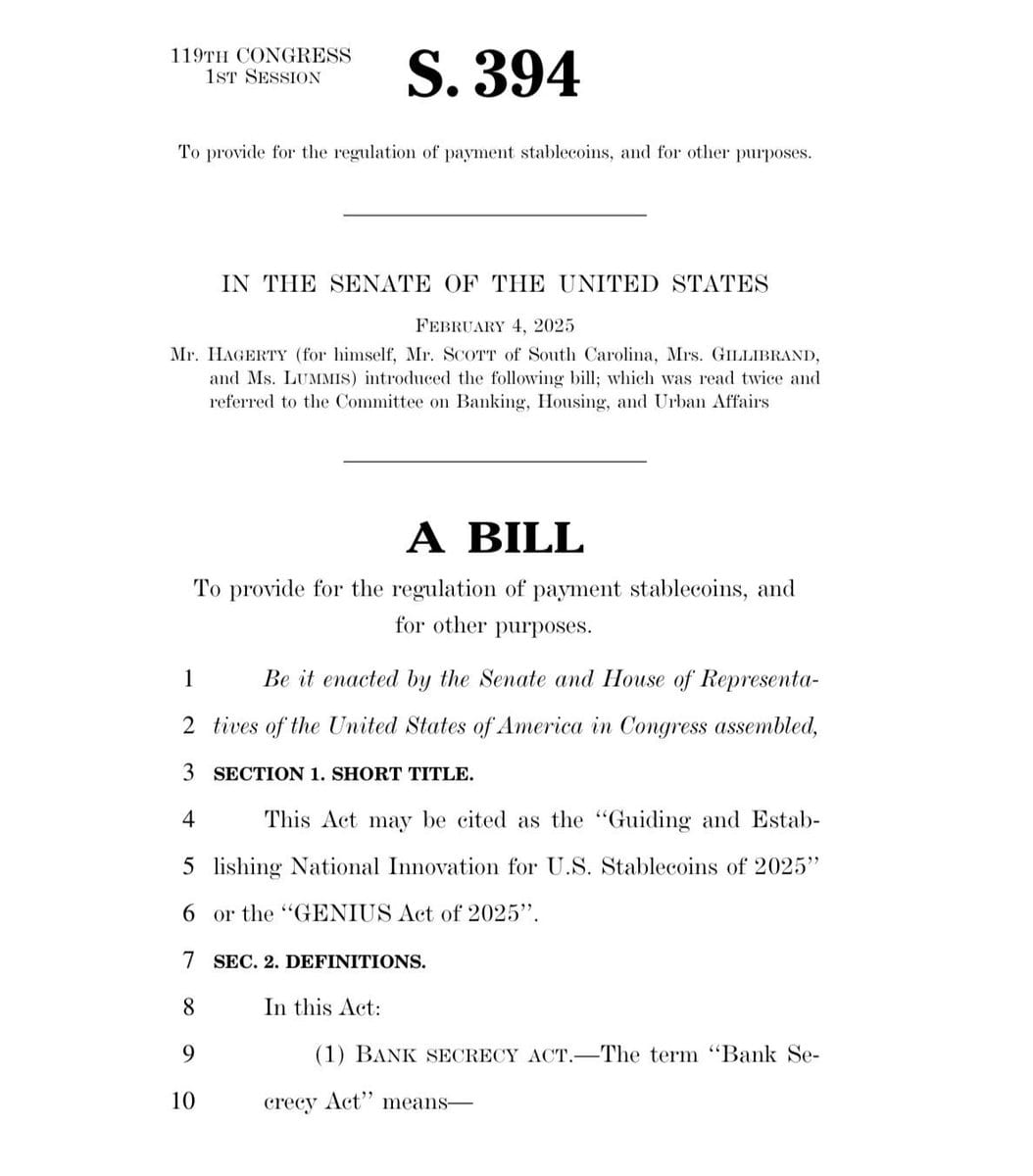
Key Takeaways:
- Bipartisan leaders have agreed to expedite a vote on the Stablecoin Trust and Transparency Act (STTA) within days.
- The STTA would mandate full dollar‑equivalent reserves, Treasury registration, and independent audits for stablecoin issuers.
- While major players back the proposal as a path to mainstream adoption, smaller issuers warn of higher barriers and consolidation.
- The U.S. stablecoin market now exceeds $230 billion in circulation, with over $40 billion swapping hands each day.
In a surprise move, Senate Majority Leader Chuck Schumer joined forces with Senator Bill Hagerty on May 1 to shave weeks off the normal legislative timeline and bring the STTA directly to the Senate floor. With midterm elections looming, both parties see an opportunity to stake a claim on the future of digital dollars. Proponents argue that decades of “regulatory uncertainty” have left businesses and consumers in limbo. By forcing a vote now, leadership hopes to lock in guardrails before holiday spending ramps up and before Congress shifts its focus to campaign season.
Blueprint for Trust: The STTA’s Core RequirementsThe Stablecoin Trust and Transparency Act aims to transform today’s loosely‑regulated digital tokens into rigorously audited, fully‑backed instruments. Under its terms, any issuer of U.S. dollar‑pegged tokens would become a “Qualified Stablecoin Custodian” and would have to:
- Maintain 100% Reserves: All outstanding tokens must be backed by U.S. dollars or equivalent safe‑asset holdings in segregated accounts.
- Register with Treasury: Issuers submit detailed operating plans, reserve compositions and risk‑management policies.
- Undergo Annual Audits: Independent attestations verify that token supply matches the underlying asset base, with quarterly public disclosures.
These provisions aim to eliminate fractional‑reserve and algorithmic schemes that have failed in the past, assuring users that a one‑to‑one redemption is always possible—even during market stress.
Titans vs. Underdogs: Industry Lines Are DrawnLegacy issuers such as Circle (USDC) and Paxos (BUSD) have celebrated the STTA as a pathway to legitimacy and institutional uptake. They argue that clear rules will spur banks, payment networks and Fortune 500 companies to integrate stablecoins into payroll, remittances and cross‑border settlement. Major exchanges likewise see the framework as a green light to expand stablecoin‑based lending, staking and tokenized asset services.
Yet not everyone is cheering. Smaller issuers warn that the capital requirements—full reserves held in FDIC‑insured accounts or U.S. Treasuries—could price them out of the market. By effectively limiting the field to deep‑pocketed incumbents, the law risks entrenching the largest players and stifling new entrants exploring novel monetary models or niche market tokens.
Dollarized Digital Rails: Transforming PaymentsStablecoins have already begun to blur the lines between bank deposits and blockchain tokens. With an on‑chain stablecoin, funds can settle in seconds without the overhead of legacy payment networks or the risk of time‑value‑of‑money arbitrage. The STTA could turbocharge this shift:
- Cross‑Border Flows: By slashing remittance fees from 6–9% down to near‑zero on public blockchains, stablecoins promise to deliver billions of dollars in annual savings for migrant workers and their families.
- Instant Settlement for Banks: As banks integrate tokenized dollars, they can reduce overnight funding and collateral costs, improving liquidity management.
- Global Dollar Hegemony: A U.S.‑regulated digital dollar could fend off private or foreign “e‑currency” initiatives, reinforcing the greenback’s primacy in global finance.
The STTA vote is more than a legislative speed bump—it’s a bellwether for America’s role in the next generation of money. Key factors fueling urgency include:
- Consumer Protection: Unregulated stablecoin failures have wiped out retail investors and businesses during past market panics. Codifying redemption guarantees and reserve audits protects everyday users.
- Systemic Risk: As stablecoins displace commercial paper and repo in short‑term funding markets, instability could cascade through banks and shadow‑bank channels without clear guardrails.
- Global Competition: China’s digital yuan pilots and the EU’s e‑Euro project threaten to marginalize U.S. influence in setting global standards for digital cash.
With every day of delay, more transactions and services migrate onto token rails that may lack the legal clarity needed for sustainable growth.
Cold, Hard Numbers: A Quantitative Snapshot- $230 billion: Combined supply of U.S.‑pegged stablecoins in circulation.
- $149 billion / 63%: Market share of Tether (USDT).
- $61 billion / 26%: Market share of USD Coin (USDC).
- $40 billion+: Average daily transaction volume streamed through stablecoin networks.
- 6–9%: Current average cost of remittances, ripe for compression by digital rails.
As the Senate prepares its historic vote, these figures spotlight the scale of what’s at stake: a nascent infrastructure handling hundreds of billions of dollars, poised to redefine how money moves both domestically and around the world.
More News: Texas Senate Approves Bitcoin Strategic Reserve Bill
The post Senate to Fast-Track Landmark Stablecoin Reform appeared first on CryptoNinjas.
Why this matters
This blockchain story adds another data point to the current market tape and is useful when read alongside nearby source coverage.
Original source
Read on CryptoNinjasRelated market context

US Hoovers up Bitcoin While the World Runs on Its Digital Dollars: Report
Bitcoin Magazine US Hoovers up Bitcoin While the World Runs on Its Digital Dollars: Report America is accumulating bitcoin while e...
Episode Six Launches Real-Time Stablecoin Backing Checks Across 50+ Global Markets
Key Takeaways: As part of Episode Six, it has introduced Verified Backing for bank-issued stablecoins and tokenized deposits. The...

Mastercard Taps 17B Endpoints With BVNK Stablecoin Platform Across 200+ Markets
Key Takeaways: Global Money Platform For Fiat and Stablecoin Payment by Mastercard and BVNK. Mastercard Move links to 17B+ devices...

Institutions managing €800 billion ask what crypto tokens actually earn
Brendan Ma, head of investment strategy at the Arbitrum Foundation, said he met with representatives of institutions managing abou...

CONNECT recap: Liquidity is tokenization’s next challenge, everyday stablecoins
Panelists at Cointelegraph’s Singapore CONNECT event explored opportunities in tokenized markets, the future of everyday stablecoi...
XRP Whales Move 1.67 Billion Tokens to Binance as Price Slips
Large XRP holders have transferred 1.669 billion XRP to Binance over the past 30 days, pushing the exchange’s whale inflow metric...