Solstice’s Ryan Day on why sustainable DeFi yield depends on business fundamentals, not token incentives
Crypto yield has always carried a credibility problem. The same market that learned to demand proof after incentive-heavy protocols unwound still tends to compress risk into a single APY. That tension sits at the center...
Archive context
Older archive item. Useful for background and entity history, but not a fresh market-moving signal.

Crypto yield has always carried a credibility problem. The same market that learned to demand proof after incentive-heavy protocols unwound still tends to compress risk into a single APY. That tension sits at the center of Solstice’s pitch: whether stablecoin-native, delta-neutral strategies can become usable yield infrastructure without recreating the same opacity, reflexive incentives, and contagion risks that damaged DeFi in prior cycles.
Solstice, as framed in this interview, sits at the intersection of staking, stablecoins, and yield infrastructure. The project says it built its business before launching SLX, pointing to a live strategy, onchain tokenization, operating revenue, and more than $500 million in deposits as evidence that the token was introduced around an existing product rather than a future roadmap. Its model centers on access to yield sources including eUSX, which the company describes as a delta-neutral strategy earning from funding rates, basis spreads, and hedged liquidity.
That positioning matters because the next phase of DeFi is less about whether yield exists and more about where the risk sits, how it is disclosed, and who can access it. Solstice’s answers push into several of the sector’s current fault lines: token design after the collapse of emissions-led growth, the durability of institutional demand, the role of offchain execution in onchain products, and the regulatory trajectory of dollar-denominated digital assets.
The discussion also reflects a broader debate over what institutional DeFi should become. Day argues that open and permissioned access models can coexist, with the same underlying asset moving through different rails depending on the user. But that coexistence raises harder questions around liquidity at size, compliance tooling, custody, reporting, and whether crypto-native composability can mature without simply rebuilding traditional finance on faster rails.
In this CryptoSlate Q&A, Ryan Day, CMO of Solstice, discusses why TVL alone is an incomplete measure of protocol quality, how Solstice thinks about risk management in onchain finance, what institutions still ask when diligencing Solana exposure, and why credibility may depend less on narrative than on consistent, verifiable operating discipline.
Read on for the full conversation.
The post Solstice’s Ryan Day on why sustainable DeFi yield depends on business fundamentals, not token incentives appeared first on CryptoSlate.
Why this matters
Solana is showing up inside the Stablecoins theme, so this story is worth tracking for follow-through rather than treating it as a one-off headline.
Original source
Read on CryptoSlateRelated market context

$900 billion asset manager Federated Hermes taps crypto infrastructure to bring tokenized funds to brokerages
This partnership could accelerate the integration of blockchain in traditional finance, potentially reshaping investment accessibi...

Raydium launches INJ token staking on Solana platform
Raydium's INJ staking on Solana may boost Solana's ecosystem growth, potentially enhancing user engagement and liquidity dynamics....

Solana ranks as top chain for stablecoin lending yields
Solana's high stablecoin lending yields may attract more depositors, but liquidity risks and reward volatility could pose challeng...

Most tokenized stock trading on Solana, BNB Chain occurs outside US market hours
Tokenized equities have reached nearly $3.3 billion in value as investors embrace round-the-clock access beyond Wall Street hours.
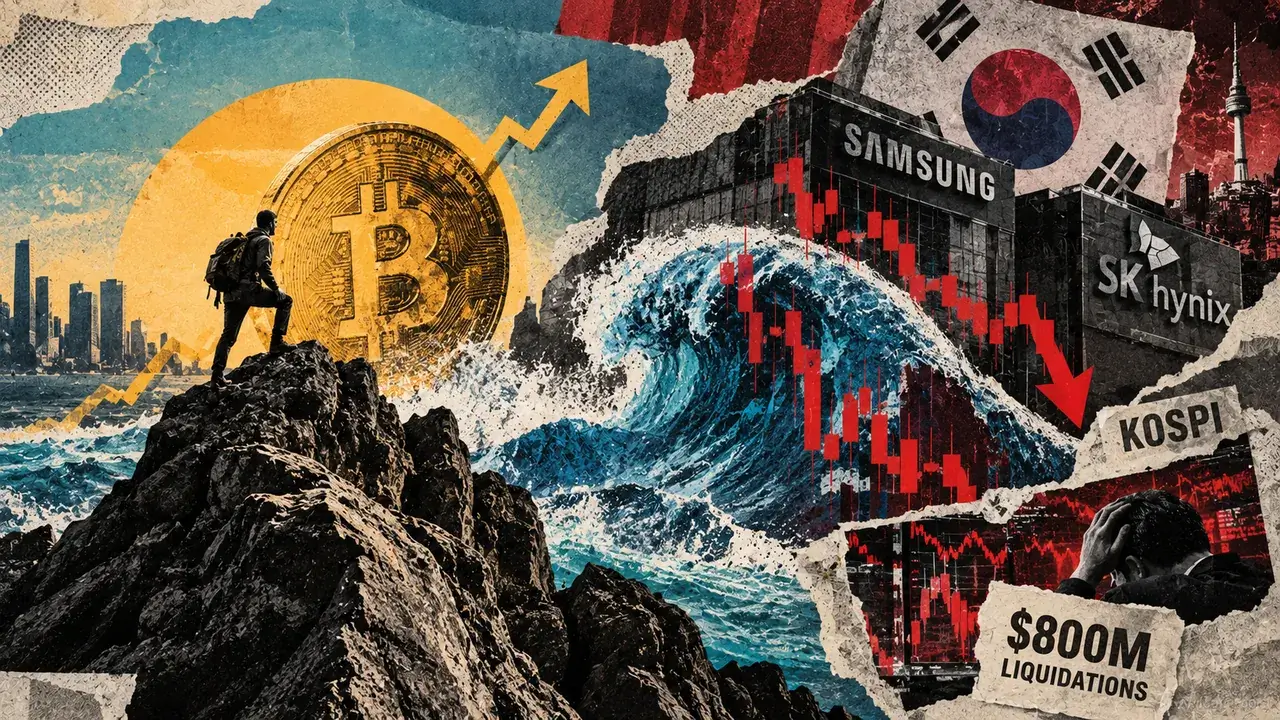
Bitcoin defies $800 million crypto wipeout as South Korea’s AI stock market crashes
Bitcoin rebounded above $83,000 on Tuesday despite a sharp Asian stock selloff, as cryptocurrency liquidations exceeded $800 milli...

Grok AI Predicts Hyperliquid to Surge 20x by 2027
Elon Musk’s Grok AI predicts that Hyperliquid (HYPE) could reach $1,500 by January 1, 2027, assuming a full-blown crypto bull mark...