U.S. Demands 12-Year Prison Term for Do Kwon After $40B Terra Crash Shook Crypto Markets
Key Takeaways: U.S. prosecutors are asking a New York judge to sentence Terraform Labs founder Do Kwon to 12 years in prison for orchestrating a multi-year crypto fraud. The collapse of TerraUSD (UST) and LUNA wiped out...
Archive context
Older archive item. Useful for background and entity history, but not a fresh market-moving signal.
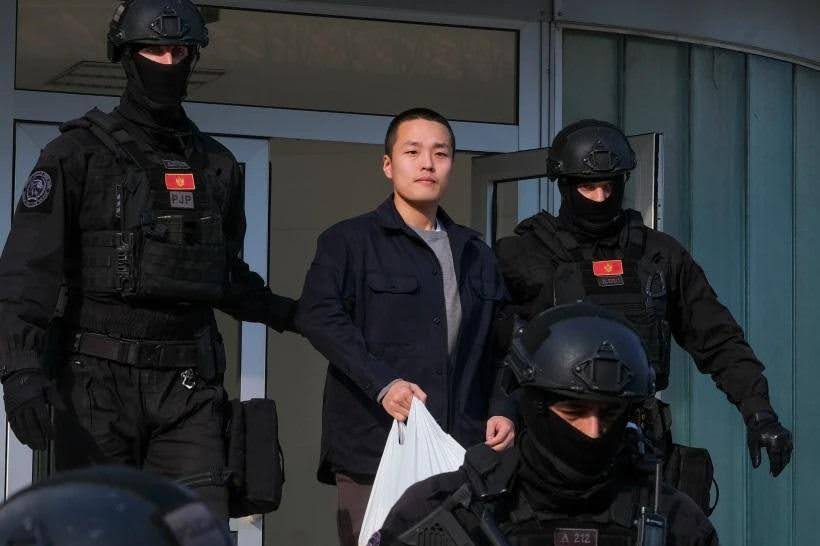
Key Takeaways:
- U.S. prosecutors are asking a New York judge to sentence Terraform Labs founder Do Kwon to 12 years in prison for orchestrating a multi-year crypto fraud.
- The collapse of TerraUSD (UST) and LUNA wiped out over $40 billion in value and helped ignite the 2022 “crypto winter.”
- Prosecutors say Kwon’s lies about decentralization, stability, and real-world adoption put him in a league beyond Sam Bankman-Fried and other major crypto fraudsters.
U.S. authorities are pushing for one of the toughest sentences yet in a crypto fraud case, arguing that Terraform Labs founder Do Kwon built his empire on calculated deception and triggered a chain reaction that rattled the entire digital asset market. His sentencing is scheduled for December 11, 2025, in Manhattan federal court.
Below is a breakdown of what prosecutors allege, why they say 12 years is justified, and what it means for crypto.
U.S. Prosecutors Call Terraform Collapse a “$40 Billion Lesson” for CryptoIn a detailed filing to Judge Paul A. Engelmayer of the Southern District of New York, U.S. prosecutors describe Do Kwon as the architect of a “deliberate fraud” that powered Terraform Labs’ rapid rise and brutal collapse.
Between 2018 and 2022, Kwon marketed Terraform’s products including the algorithmic stablecoin TerraUSD (UST) and the LUNA token, as cutting-edge, decentralized finance tools that were transparent, resilient, and governed by code and community.
According to the government, the reality was the opposite:
- Key mechanisms propping up UST’s $1 peg relied on secret trading support rather than “self-sustaining algorithms.”
- Supposedly independent entities and protocols were, in fact, controlled directly by Kwon.
- Adoption metrics and “real-world usage” figures were inflated or fabricated to lure investors and maintain hype.
At its peak in the spring of 2022, the Terraform ecosystem reached a market value of more than $50 billion. When UST depegged and the ecosystem unraveled, over $40 billion in value was wiped out, with retail and institutional investors bearing most of the losses.
Prosecutors argue these losses exceed the damage attributed to Sam Bankman-Fried’s FTX, Celsius’s Alexander Mashinsky, and OneCoin’s Karl Sebastian Greenwood combined, placing Terraform among the most devastating failures in crypto history.
Read More: Algeria Shocks Crypto World With Harsh Ban: Jail Time, Fines Up to $7,700 for Users and Miners
How Prosecutors Say the Fraud Worked A “Stablecoin” That Was Never Truly StableA central pillar of the case is how UST was marketed versus how it actually functioned.
Kwon claimed the Terra Protocol could keep UST pegged to $1 through algorithmic incentives and market dynamics, no centralized support needed. But court documents say that when UST lost its peg in May 2021, the system did not recover on its own.
Instead, Kwon allegedly struck a secret deal with a high-frequency trading firm to buy large amounts of UST and force the price back to $1. Publicly, this rebound was showcased as proof that the algorithm and design worked as promised. Privately, it was a bailout that investors never knew about.
Prosecutors say this undisclosed intervention was not a minor detail: it went to the core risk of the product. Buyers were led to believe they were relying on a robust, autonomous mechanism when, in reality, the peg depended on hidden market support.
Read More: US Charges Crypto Boss with Laundering $530M for Sanctioned Russian Banks – 22 Criminal Counts
Misleading Governance, Fake Decentralization, and Inflated AdoptionAuthorities also argue that Kwon repeatedly misrepresented how “decentralized” and “independent” Terraform’s ecosystem really was.
Luna Foundation Guard: Not So IndependentIn early 2022, Kwon launched the Luna Foundation Guard (LFG), a reserve fund that was supposed to defend UST’s peg using billions of dollars’ worth of assets, including Bitcoin. The public communications were made to focus on the fact that LFG was regulated by an autonomous governing body made of industrial experts but such is not the case, according to prosecutors:
- Kwon effectively controlled both Terraform and LFG.
- He bypassed or overrode the supposed governance structure to make key financial decisions.
- Hundreds of millions of dollars in LFG assets were misappropriated, rather than used solely for protecting UST as advertised.
Another aspect of the case that comes out is the way Kwon promised to deceive the investors regarding Terra-based applications:
- Mirror Protocol: It is advertised as a decentralized exchange of trading synthetic assets that are mirrors of the U.S. stocks. According to prosecutors, Terraform utilized trading bots to control prices in the dark and exaggerated user statistics, making it seem that they were being adopted organically.
The post U.S. Demands 12-Year Prison Term for Do Kwon After $40B Terra Crash Shook Crypto Markets appeared first on CryptoNinjas.
Why this matters
This blockchain story adds another data point to the current market tape and is useful when read alongside nearby source coverage.
Original source
Read on CryptoNinjasRelated market context
Tokenized stocks account for 99.3% of $14.4 billion in onchain trading outside the US
The rise of tokenized stocks highlights growing global retail demand for 24/7 trading, potentially reshaping traditional market dy...
Binance tokenized stocks surpass $1 billion as trading volume tops $40 billion
bStocks' growth highlights the increasing appeal of tokenized assets, potentially reshaping global investment access and financial...
Ripple opens Wall Street’s door to Hyperliquid’s $59 billion trading market
Institutions trade swaps referencing more than 100 traditional financial markets around the clock, with Ripple Prime as the princi...

MEXC AI Trading Report Reveals 85% of Crypto Traders Use AI, But Most Limit Its Control Over Funds
Mutsamudu, Comoros, October 16, 2026 — MEXC, a global cryptocurrency exchange, released its AI Trading Report, based on a survey o...
Binance Claims Fastest $1 Billion Sprint in bStocks With $6 Billion in Share Conversions
Binance has reported that its bStocks product crossed $1 billion in assets faster than any competing tokenised equity offering. Un...

Binance.US seeks up to $100 million in funding at $1 billion valuation amid US expansion push
Binance.US seeks to raise up to $100M at a $1B valuation as it moves to regain US market share and expand its crypto trading servi...