U.S. OCC Verifies Banks Can Trade and Provide Crypto Custody Using Third Parties
Key Takeaways: Banks can now trade crypto for customers under the customer’s direction, according to the OCC. Outsourcing to third-party crypto service providers is permitted with proper risk management. Custody services...
Archive context
Older archive item. Useful for background and entity history, but not a fresh market-moving signal.
Key Takeaways:
- Banks can now trade crypto for customers under the customer’s direction, according to the OCC.
- Outsourcing to third-party crypto service providers is permitted with proper risk management.
- Custody services may include trade execution, tax reporting, and fiat-crypto exchange activities.
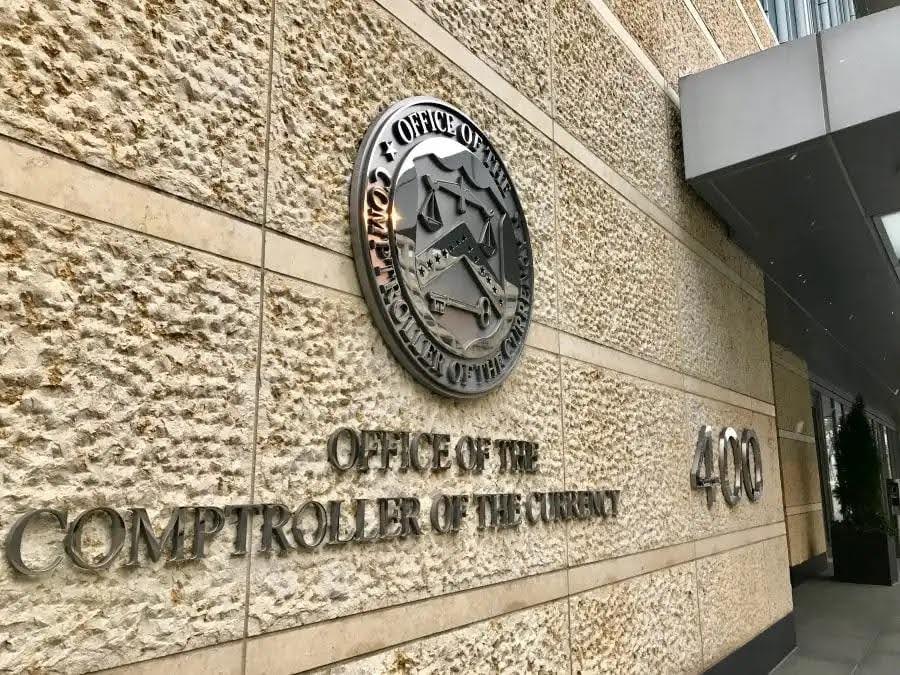
On May 7, 2025, the U.S. Office of the Comptroller of the Currency (OCC) released an official interpretive letter verifying that federal savings institutions and national banks are allowed to provide cryptocurrency custody services and execute trades for individuals. This development is a major regulatory confirmation that opens the door for banks to expand their digital asset offerings—either directly or through approved third-party suppliers.
Read More: SEC’s Crypto Custody Roundtable: Digital Asset Safekeeping Future in the Limelight
Banks Authorized to Offer Crypto Custody and Execution ServicesIn Interpretive Letter #1184, the OCC confirmed that U.S. banks under federal jurisdiction may offer crypto-related services traditionally reserved for digital asset firms. These services comprise the execution of buy and sell orders and the custody of cryptocurrencies—but only when acting on direct instructions from the consumer.
This affirmation adds on past advice, especially Interpretive Letters 1170 and 1183, which had already covered the more general extent of crypto custody. The OCC underlined that giving custody for crypto assets is only a contemporary equivalent of conventional custodial banking services.
Importantly, the letter reinforced that:
- Depending on the type of their relationship with the consumer, banks could function in either fiduciary or non-fiduciary capacity.
- Bank crypto custody is acknowledged as falling under allowable banking activities under present U.S. law.
Read More: BlackRock Engages Anchorage Digital to Enhance Crypto Custody and Tokenized Asset Infrastructure
Sub-Custodians and Third-Party Providers Are Allowed Risk Management RequiredBanks, the OCC stated, can delegate execution services and crypto custody to third-party sub-custodians. Especially for organizations without in-house cryptocurrency infrastructure, this action provides operational freedom.
However, this delegation comes with conditions. Banks are required to:
- Maintain oversight and ensure that any third-party or sub-custodian has adequate internal controls.
- Follow established third-party risk management practices, especially those designed to protect client assets.
Banks must also continue to meet existing regulatory obligations under parts 9 or 150 of Title 12 of the Code of Federal Regulations when acting in a fiduciary capacity.
Expanded Crypto-Related Services IncludedUnder the OCC’s interpretation, the list of permissible crypto services extends beyond simple asset storage. Banks are now permitted to offer:
- Trade execution services (buying/selling assets at the customer’s request)
- Fiat-to-crypto and crypto-to-fiat exchange facilitation
- Transaction settlement
- Recordkeeping, valuation, tax, and reporting services
The OCC views these services as an extension of a bank’s traditional custodial role, adapted to the evolving needs of digital finance. The decision is aligned with a broader legal perspective, supported by precedent such as M & M Leasing Corp. v. Seattle First Nat. Bank, where the court acknowledged that banking powers must adapt to technological advancements.
How the New Guidance Shapes Crypto BankingThis new guidance sends a strong signal that federal regulators are creating a clearer framework for traditional banks to safely engage in the crypto economy. It may also reduce the reliance of U.S. customers on standalone crypto platforms by integrating digital asset services into mainstream financial institutions.
From a compliance standpoint, banks must still:
- Ensure all crypto-related activities are carried out in a safe and sound manner
- Maintain strict adherence to customer agreements and applicable laws
Banks will not be allowed to freely speculate with customer-held assets. All trading and custody operations must be executed at the customer’s direction, reflecting a non-speculative, service-based model.
Outlook for the U.S. Crypto Banking LandscapeAlthough the OCC’s letter does not add new rules, it explains the current legal range for federally chartered banks to engage in the cryptocurrency industry. This action is likely to raise institutional interest in digital assets and might greatly increase rivalry between crypto-native companies and conventional banks.
With this guidance now in place, more banks are likely to:
- Integrate crypto custody services into their core offerings
- Partner with established crypto custodians and infrastructure providers
- Explore revenue opportunities through regulated digital asset services
At the same time, it underscores the need for robust risk controls and operational due diligence—especially when dealing with volatile crypto markets and outsourced service layers.
The post U.S. OCC Verifies Banks Can Trade and Provide Crypto Custody Using Third Parties appeared first on CryptoNinjas.
Why this matters
This blockchain story adds another data point to the current market tape and is useful when read alongside nearby source coverage.
Original source
Read on CryptoNinjasRelated market context

BFFS26 Denver: Joseph Kelly on Bitcoin Custody and Credit; Alan Lane on Banking Lessons
Bitcoin Magazine BFFS26 Denver: Joseph Kelly on Bitcoin Custody and Credit; Alan Lane on Banking Lessons The Bitcoin for Financial...

Fidelity Digital Assets finds Bitcoin now moving with US Treasury real rates
Bitcoin's correlation with US Treasury real rates suggests a shift in investor sentiment, potentially altering traditional portfol...

Trade futures without the wallet-hopping: Unified Wallet is now available in the EEA
TL;DR Unified Wallet is now available to EEA clients on Kraken Pro It combines your spot, margin, and futures balances into one sh...

Deutsche Bank To Debut Bitcoin Custody Within Weeks: Report
Bitcoin Magazine Deutsche Bank To Debut Bitcoin Custody Within Weeks: Report German multinational Deutsche Bank is just weeks away...

MEXC AI Trading Report Reveals 85% of Crypto Traders Use AI, But Most Limit Its Control Over Funds
Mutsamudu, Comoros, October 16, 2026 — MEXC, a global cryptocurrency exchange, released its AI Trading Report, based on a survey o...
Morgan Stanley’s Amy Oldenburg: The Digital Gold Investment Case for Bitcoin
Bitcoin Magazine Morgan Stanley’s Amy Oldenburg: The Digital Gold Investment Case for Bitcoin Bitcoin’s digital gold case is “a pr...