What is Staking? All You Need to know About Staking
What Is Cryptocurrency Staking?By definition, staking cryptocurrency is the act of using your existing crypto portfolio, by locking it up for a certain period of time, to receive rewards or interest. Staking is similar t...
Archive context
Older archive item. Useful for background and entity history, but not a fresh market-moving signal.

By definition, staking cryptocurrency is the act of using your existing crypto portfolio, by locking it up for a certain period of time, to receive rewards or interest. Staking is similar to receiving interest for having money in a regular savings account, the bank will pay you for holding your money with them. Although a bit more complicated, you are essentially being rewarded for holding a certain cryptocurrency for either a set amount of time where you will be unable to withdraw your staked crypto. However, there are some staking schemes which allow you to quickly unbind your staked crypto, but there will be some consequences. We will dive deeper into the different types of crypto staking while looking at the reasons behind staking in cryptocurrency.
Like anything in investing or cryptocurrency, there will be some element of risk versus reward. Let's take a look at why more and more crypto investors are delving into staking as an alternative to simply HODLing cryptocurrency and how the technology behind your interest-earning cryptocurrency actually works.
The Technology Behind StakingWhen you provide cryptocurrency to be staked, you are adding to a staking pool, similar to our savings accounts analogy. From there, your cryptocurrency is put to work on the blockchain, the whole reason is it is possible to make money from cryptocurrency.
Cryptocurrencies that allow staking will have a proof of stake mechanism, the mechanism which validates all transactions, making sure each transaction is completely secured and verified. This is how cryptocurrency transactions can be safe, without having a centralized body involved, such as a bank. When your staked cryptocurrency is put to work, it becomes part of the process.
Proof of stake sways away from a minor reliant method, which is extremely resource-intensive and simply relies on investors who are invested in the cryptocurrency for its validation. If you have even a minute amount of cryptocurrency being staked, you are part of the blockchain and the future.
Validators are the big players in staking, and those with more skin in the game are rewarded the most. Most individual stakers will not become validators, as it usually requires a hefty initial investment so it is advised to choose a reliable validator to stake your cryptocurrency through. Often validators are prioritized by stakers by how much of their own money they have invested, as if problems occur a slashing event could take place, something we will get back to later.
Can You Make Money from Staking?Like anything in the crypto sphere, investors are concerned about profitability. On average, crypto staking rewards vary anywhere from 5 to 20%, the higher the percentage the shorter amount of time you are likely to receive those rewards. However, over the past years, we have seen some cryptocurrencies consistently grant 10-12% returns on staked cryptocurrencies, making them on-par or above the average return rate of indexes such as the S&P 500.
Many staking opportunities are advertised as unheard of returns, like 400% APY, which should be seen as extremely unrealistic and most likely avoided.
Different Types of Crypto Staking RewardsAPR versus APYIf you decide to begin your staking journey, rewards will either be shown as an APR percentage or APY. APR is the raw interest rate over a year, or what percentage return you would expect to make, while APY takes into account the effect of compounding.
As a rule, the greater difference between APR and APY represents the amount of times the interest is compounded. For example, if a cryptocurrency is constantly compounding and reinvesting the interest back into the stake, the APY can be much higher than the APR.
It is important to note that each stake comes with its specific rules. Some cryptocurrency stakes will allow instant compounding into the same pool, but some will simply grant you the interest, which you can then take into another stake or simply withdraw.
Rewards Payout RateEach cryptocurrency stake will have a different rewards payout rate, or how frequently you receive and have access to your interest. For most investors, the higher the frequency the better as that payout can be put to work in a different stake, or traded for another cryptocurrency. Ethereum staking, for example, usually grants daily payout rewards while others may vary from a couple of days to a week.
What Are the Requirements to Stake My Crypto?For every different cryptocurrency stake, there are two main factors that you need to look out for:
There will be a minimum initial stake required for everyone's stackable cryptocurrency. The good news is, that there are many staking options that require little to no minimum requirement, such as a single CRO staked, or 0.01 ALGO.
Often, cryptocurrencies with a very small requirement will have different rules about their ‘lock up’ period, affecting how and when you can remove your liquidity from the stake.
2. Lock-Up Period
In return for high APY, you will usually be asked to confirm a lock-up period, which can alter your rewards received, the longer you lock up usually in direct proportion to the reward. Lock ups can mean a few days before being able to remove your liquidity but can vary from weeks to months or even years.
You may be asked at the start of your stake to lock up your crypto for a certain amount of time, or have no such restriction, but have to wait a period of time after you de-stake your crypto before you have access to it. Importantly, during the de-staking period, you will not receive any interest.
Can Every Cryptocurrency Be Staked?Since 2017, we have seen an increasing amount of stackable cryptocurrencies, as proof-of-stake becomes more mainstream. This does not mean that all cryptocurrencies can be staked, the opposite is true.
Is There Any Risk to Cryptocurrency Staking?As mentioned before, the bigger the cryptocurrency, the more safe stakers feel. However, there are some inherent risks of staking, which all investors should be aware of. You can find a list of all PoS coins here.
Most importantly, if you chose to stake your cryptocurrency, especially for a long period of time, you should feel bullish about the long-term potential of that coin and its ability to either hold its current value or increase in value. Although you can still earn interest on a depreciating asset, you are still losing value.
This is why many staking veterans chose to stake stablecoins to fully reap the rewards of staking from a stable asset. Options for stablecoin staking are often offered on centralized exchanges which require liquidity, whereas many coins are staked via a decentralized network, such as crypto.com’s DeFi wallet.
Slashing EventsTrue to their name, slashing events occur when a validator is punished for malicious behavior and a predefined percentage or amount of their stake is removed. Slashing events are a necessary evil to keep validators working towards the network's best interest and in a world of decentralization, a good way to anonymously punish bad behavior.
If you have cryptocurrency staked with a validator that has been slashed, some of your cryptocurrency stake will also be slashed. This makes choosing the correct validator vital to your staking success, like seeing which validator has the most skin in the game.
We will dive deeper into slashing events, why they occur and what behavior they are punishing in a more in-depth article on slashing.
Not all PoS (Proof of stake) protocols use slashing as a mechanism to punish bad behavior, but those without slashing events are often seen as more insecure.
Staking as a PhilosophyLike any investment class, there is usually a risk-averse and risk-tolerant approach. For cryptocurrency, the risk-takers like to invest in coins or tokens with huge potential gains, while risk-averse investors choose to HODL blue chip crypto, while most of us slot somewhere in the middle. Although there is no right way to invest with your own money, staking and other passive income-creating events like liquidity pools have created opportunities for investors to diversify their portfolio and not simply rely on trading as their money-making tool.
Staking has allowed large crypto investors to live a work-free life completely off their staking rewards, some extremely comfortably. For example:
If I was to stake CRO with an investment of £200,000, with rewards paid weekly, I would receive a whopping £2,000 monthly, equivalent to the average annual salary in the UK. Although £200,000 is a huge amount of money, in the world of half a million-pound jpegs, it puts into perspective how achievable it may actually be. Remember, those rewards are paid weekly and can be reinvested into anything of your choosing, or simply withdrawn into fiat. On top of this, your staked cryptocurrency may still rise in value while receiving your interest, creating an unforeseen gain.
Staking can be seen as a relatively safe option for massive gains in the crypto world. With banks offering less than a percent to store your hard-earned fiat with them, why not take your money elsewhere and start to reap the rewards, while contributing to the blockchain.
Final ThoughtsStaking may not be for everyone, as it can be viewed as boring in a space rife with speculation and crazy gains. However, if you are looking to securely and consistently build your crypto portfolio, allocating a percentage of your portfolio to strong staking protocols can help build security in a notoriously unsecure market.
This article was written by Finance Magnates Staff at www.financemagnates.com.Why this matters
This blockchain story adds another data point to the current market tape and is useful when read alongside nearby source coverage.
Original source
Read on Finance MagnatesRelated market context
Bitcoin’s newest mobile privacy feature can make your incoming money completely invisible
Silent Payments promise a reusable Bitcoin address without exposing an obvious chain of payments to that address. A sender uses th...
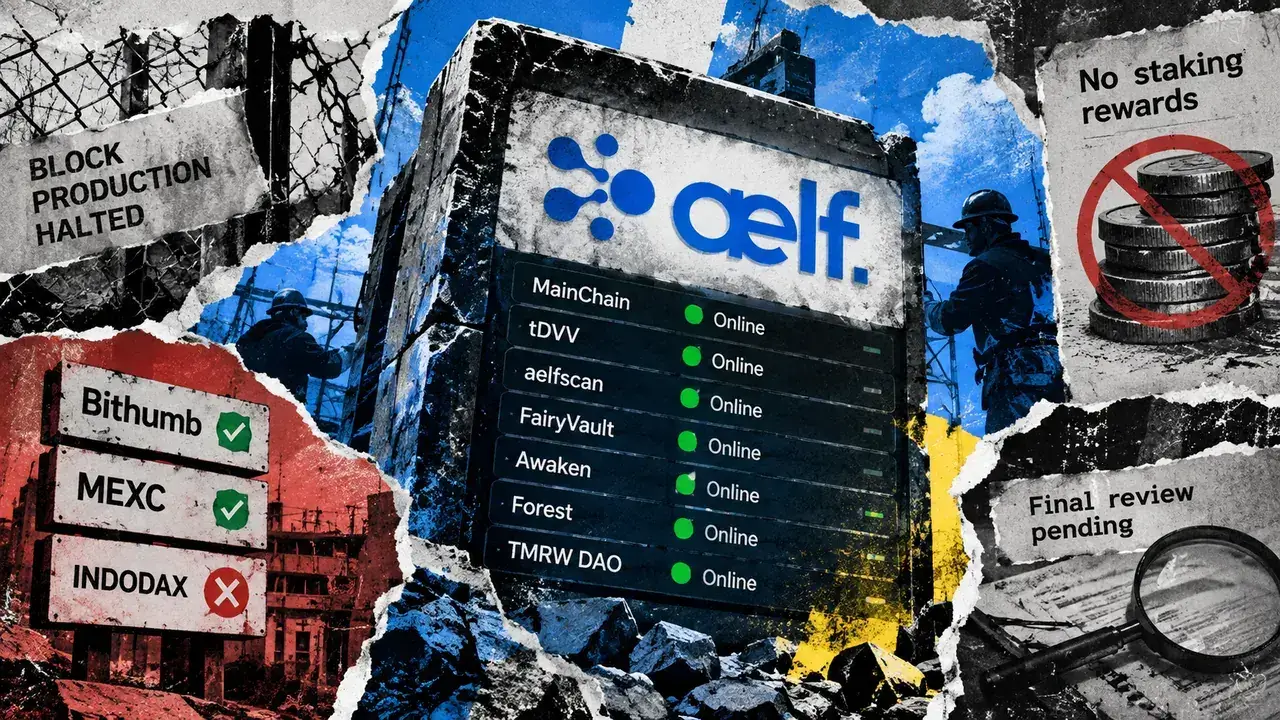
7-day blockchain outage wipes out a full week of staking rewards after emergency aelf shutdown
aelf, a blockchain network built around its AELF MainChain and tDVV dAppChain, has restored public node access and several core se...

Ethereum builders face a choice between locking up too much cash or relying on trusted brokers
In a Sept. 8-11 Lido discussion, Commit-Boost contributor Jason Vranek argued that builders funding protocol-backed payments face...

Bitcoin self-custody creates a massive cost-basis blind spot on your 2026 crypto tax forms
A Bitcoin investor can withdraw coins from an exchange, return them to the same account, and still fall outside mandatory cost-bas...
Proposed stablecoin rules might guarantee your dollar while making you wait a week to spend it
When a stablecoin holder receives spendable bank dollars before the issuer redeems the token, a buyer or conversion provider has f...

Is APEING Stage 4 the Best Crypto to Buy Now? $93K+ Raised, Find Out How to Unlock 10% Extra $APEING
Yet for anyone hunting the best crypto to buy now, there is a bigger question than which established coin can squeeze out another...