Basel Committee Finalizes Rules for Bank Exposure to Cryptocurrency Assets
The Basel Committee, the organization in charge of setting global bank standards, has finalized its new rules related to banks and cryptocurrency exposure. The document establishes two different crypto asset classes, inc...
Archive context
Older archive item. Useful for background and entity history, but not a fresh market-moving signal.
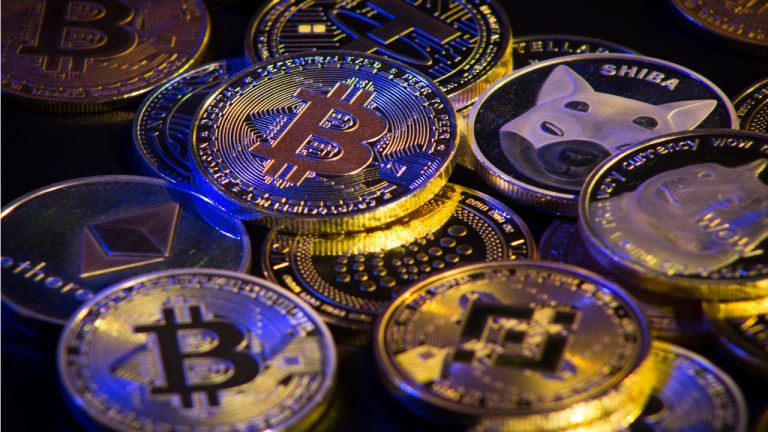
The Basel Committee, the organization in charge of setting global bank standards, has finalized its new rules related to banks and cryptocurrency exposure. The document establishes two different crypto asset classes, including tokenized real assets and stablecoins in one, and other cryptocurrencies in another, discriminating on the collateral and quantity that banks might hold for each one.
Basel Committee Defines Final Rules for Crypto ExposureAs banks have stepped into the realm of cryptocurrency services, standards organizations are now defining the ways in which traditional financial institutions will be able to hold crypto. The Basel Committee, which is the standards-setting organization for banks at a worldwide level, has finalized the rules which will define requirements for banks to be allowed to have cryptocurrency exposure, dividing the assets into two different groups.
The first group includes stablecoins and tokenized assets, while the second one includes other cryptocurrencies.
Among the new directives announced on Dec. 16 by the institution, is the establishment of the maximum amount of crypto that banks can have. This is recommended to be 1% of their Tier 1 capital, which includes the core assets of such institutions such as reserves and stocks. However, the Basel Committee sets 2% as the maximum amount of crypto that banks will be able to hold.
Stablecoins, which are part of the first group, have to comply with strict rules to be considered as such, and will not be able to be received as collateral.
Evolution of the FrameworkThis new group of rules is the result of the third consultation among members of the group, after receiving heavy criticism for some of the decisions adopted as part of the second iteration of this ruleset, that was published on June 30. For example, the most recent version of the document includes cryptocurrency asset hedging, and sets a 100% capital charge for it, while in the earlier version there was no mention of this.
About the importance of this crypto framework, Pablo Hernandez de Cos, chairman of the Basel Committee and Governor of the Bank of Spain, stated:
The Committee’s standard on cryptoassets is a further example of our commitment, willingness and ability to act in a globally coordinated way to mitigate emerging financial stability risks.
In October, the Basel Committee determined that banks around the world were exposed to $9 billion worth of cryptocurrency assets.
The cryptocurrency-related rules will begin to be applied on Jan. 1, 2025, and will be subject to more changes as the committee monitors the behavior of the crypto situation with banks.
What do you think about the new cryptocurrency ruleset issued by the Basel Committee? Tell us in the comments section below.
Why this matters
This cryptocurrency story adds another data point to the current market tape and is useful when read alongside nearby source coverage.
Original source
Read on Bitcoin NewsRelated market context
Crypto Industry Group Pushes Congress For Small-Payment Tax Relief And Clearer Rules
TL;DR: The Blockchain Association has asked congressional leaders to advance bipartisan crypto tax changes, including a de minimis...
Chainlink And LG CNS Target South Korean Banks With Digital Asset Infrastructure Deal
TL;DR: Chainlink and LG CNS are partnering on oracle and cross-chain infrastructure aimed at South Korea’s financial institutions;...

Ripple Makes a Shock SEC Move After $150M XRP Fight as OCC Unveils GENIUS Act Rules
In an October 20 comment letter, Ripple supported the proposed framework while requesting changes to how federal securities law tr...
Bank of Korea Wants Stablecoins Written Into Forex Law as Crypto Bill and Tax Fight Come to a Head
Bitcoin Magazine Bank of Korea Wants Stablecoins Written Into Forex Law as Crypto Bill and Tax Fight Come to a Head The Bank of Ko...
Blockchain Association Urges Congress to Pass Crypto Tax Rules, Lays Out 10 Principles
The Blockchain Association asked congressional leaders on Thursday to pass bipartisan digital asset tax legislation, setting out 1...
Chainlink Expands LG Tech Arm Tie-Up Into Formal Partnership on Korean Stablecoins
Chainlink and LG CNS, the technology arm of South Korea’s LG Group, announced a strategic partnership on Oct. 22, widening a relat...