Brazil’s $318B Crypto Boom: How Stablecoins Quietly Forged Latin America’s #1 Market
Brazil has emerged as Latin America’s undisputed crypto leader, fueled by a combination of financial pragmatism, regulatory clarity, and the rapid rise of stablecoins as practical financial tools.A report from Chainalysi...
Archive context
Older archive item. Useful for background and entity history, but not a fresh market-moving signal.
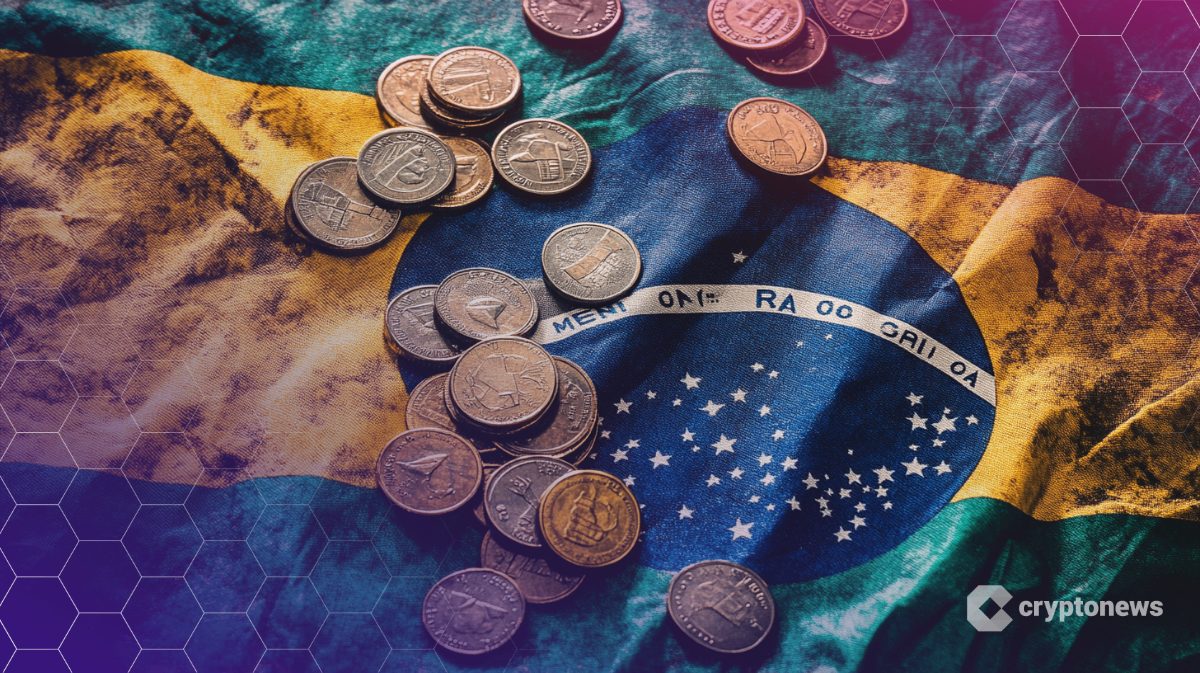
Brazil has emerged as Latin America’s undisputed crypto leader, fueled by a combination of financial pragmatism, regulatory clarity, and the rapid rise of stablecoins as practical financial tools.
A report from Chainalysis shows that between July 2024 and June 2025, Brazilian users received an estimated $318.8 billion in digital assets, nearly one-third of all crypto transactions across Latin America.
Across the region, cumulative crypto transaction volume reached nearly $1.5 trillion during the same period, with monthly trading activity climbing from $20.8 billion in mid-2022 to a record $87.7 billion in December 2024.
Brazil Captures One-Third of LATAM’s $1.5T Crypto Market — Stablecoins Lead the ChargeBrazil’s dominance lies in its embrace of stablecoins. Officials estimate that over 90% of the country’s crypto transaction volume involves stablecoins such as USDT and USDC, used for remittances, merchant payments, payroll, and cross-border settlements.
Source: ChainalysisIn a nation long accustomed to inflation and currency volatility, stablecoins have become a financial lifeline, offering stability and liquidity that the real often lacks.
Notably, institutional transactions have more than doubled year-on-year, according to Chainalysis, while retail activity remains strong. Major financial institutions, including Itaú Unibanco, Mercado Pago, and Nubank, now integrate crypto into their platforms, bridging the gap between traditional finance and digital assets.
@Nubank, the biggest digital bank in Latin America, to integrate stablecoins into its ecosystem, starting with credit card transactions.#Nubank #Stablecoinhttps://t.co/VUr4feetL9
— Cryptonews.com (@cryptonews) September 19, 2025Local exchanges like Mercado Bitcoin, Foxbit, and BitPreço have also strengthened Brazil’s position by providing secure, regulated access to crypto markets while aligning with domestic banking infrastructure.
Brazil’s $318.8 billion in crypto activity dwarfs the rest of Latin America. Argentina followed with $93.9 billion amid soaring inflation, while Mexico ($71.2 billion), Venezuela ($44.6 billion), and Colombia ($44.2 billion) rounded out the top five.
Smaller but fast-growing markets like Peru ($28 billion) and Chile ($23.8 billion) are increasingly driven by remittance flows and DeFi experimentation.
Despite its leading Bitcoin-legal-tender status, El Salvador contributed a modest $3.5 billion in activity, showing that bold policy moves don’t always translate to market adoption.
El Salvador buys 21 Bitcoin to celebrate its fourth anniversary of the Bitcoin Law, reaching a total of 6,313.18 BTC, valued at $701 million.#ElSalvador #BitcoinOffice #BitcoinTreasuryhttps://t.co/578e4ujv1r
— Cryptonews.com (@cryptonews) September 8, 2025Across Latin America, 64% of crypto activity takes place on centralized exchanges (CEXs), a higher ratio than in North America or Europe. This preference reflects regional realities, where CEXs offer straightforward access to crypto, fiat conversion, and cross-border remittances.
Platforms like Bitso (Mexico and Colombia) and Ripio (Argentina) have localized their services to integrate with national payment systems, reinforcing user trust and accessibility.
Brazil Tightens Crypto Oversight as BCB Eyes Forex Rules and $19B Bitcoin ReserveBrazil’s regulatory momentum in the crypto sector is accelerating as authorities move to refine both virtual asset and forex oversight. The Virtual Assets Law (BVAL) of 2022–2023 remains the foundation of Brazil’s crypto regulation, assigning supervision to the Banco Central do Brasil (BCB) and embedding AML/KYC compliance standards that balance innovation with consumer protection.
Following the BVAL, the government launched further regulatory consultations—Nos. 109, 110, and 111/2024—to address emerging areas such as DeFi protocols, custodians, and stablecoin issuers.
These new guidelines, expected by late 2025, are intended to provide clarity and strengthen Brazil’s position as a leader in digital finance.
Brazil examines $19 billion Bitcoin Strategic Reserve proposal in first legislative hearing. #Bitcoin #Brazil #BTChttps://t.co/uWZliUNpQH
— Cryptonews.com (@cryptonews) August 21, 2025At the same time, Brazil is advancing a bold proposal to create a $19 billion Bitcoin strategic reserve, known as RESBit, under Bill 4501/24. Debated during an August 20 hearing before the Chamber of Deputies’ Economic Development Commission, the plan would integrate Bitcoin into Brazil’s treasury management strategy.
If approved, the country would join others such as El Salvador, the United States, China, and the European Union in formally incorporating digital assets into national economic frameworks.
Parallel to these developments, the BCB is moving to expand its regulatory reach into the foreign exchange (Forex) sector, a move that could indirectly affect crypto exchanges. According to a report, the central bank released a public consultation paper proposing tighter supervision over electronic Forex (eFX) platforms.
While the proposals make no explicit mention of crypto exchanges, their scope would likely impact platforms that facilitate international transfers or crypto-to-fiat conversions involving currencies other than the Brazilian real.
The post Brazil’s $318B Crypto Boom: How Stablecoins Quietly Forged Latin America’s #1 Market appeared first on Cryptonews.
Why this matters
This cryptocurrency story adds another data point to the current market tape and is useful when read alongside nearby source coverage.
Original source
Read on CryptonewsRelated market context

BlackRock’s digital assets chief to speak at Bitcoin Treasuries Conference in New York City
BlackRock's involvement signals growing institutional interest in Bitcoin, potentially influencing corporate strategies and market...

Grayscale launches model portfolios to simplify digital asset investing for financial advisors
Grayscale's model portfolios could drive increased crypto adoption among financial advisors, reshaping digital asset distribution...
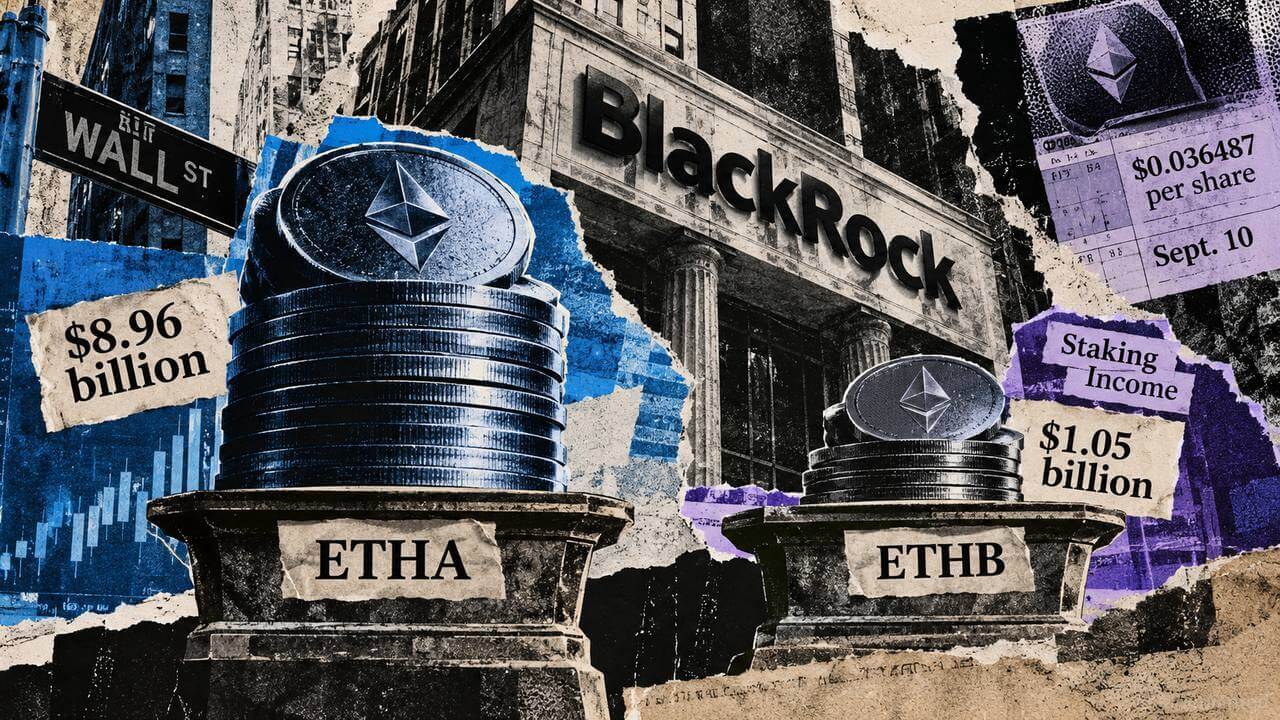
BlackRock’s staking Ethereum ETF pays yield but investors still prefer its $9 billion ETHA fund
Staking was supposed to strengthen Ethereum exchange-traded funds (ETFs), but BlackRock’s early results show investors still favor...
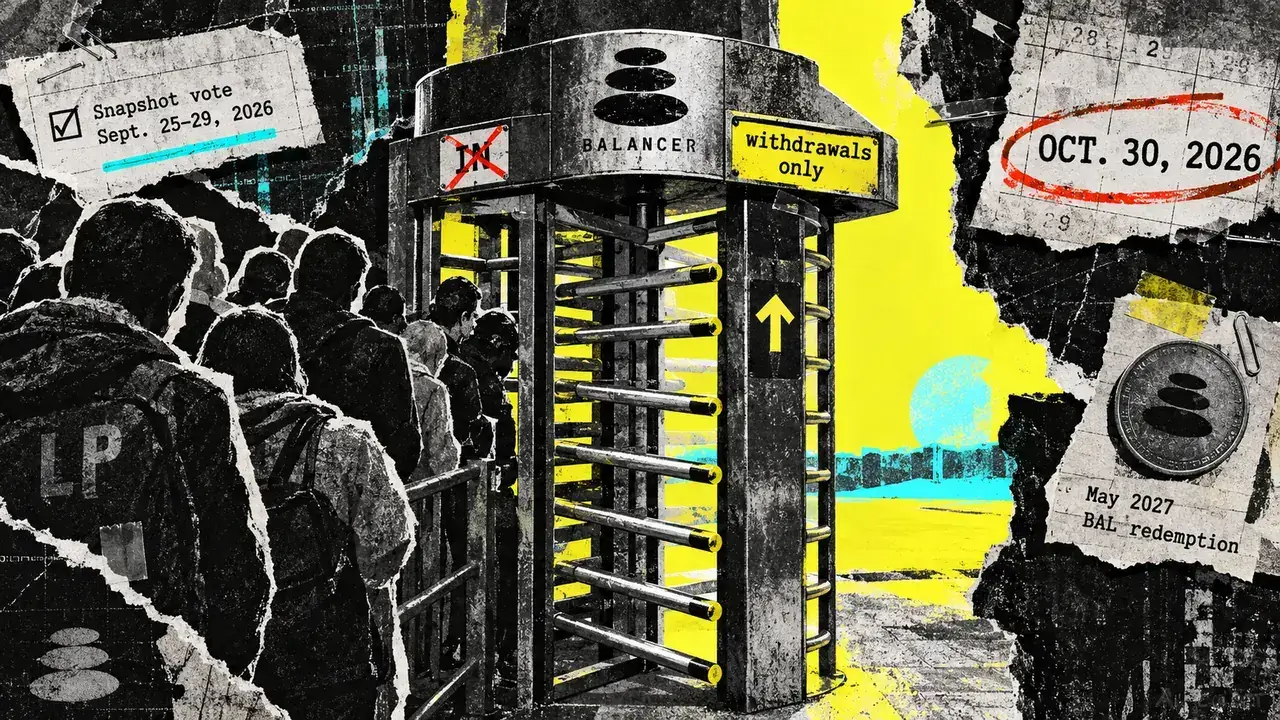
A DeFi giant that once held $3 billion is now proposing to wind itself down
DeFi platform Balancer is proposing an orderly shutdown after a cost-cutting overhaul failed to revive revenue following last year...

MEXC’s September 2026 Proof of Reserves Reaffirms Full Backing of User Assets, BTC Reserve Ratio Increases to 297%
Mutsamudu, Comoros, September 15, 2026 – MEXC, a pioneer in 0-fee digital asset trading, has released its September 2026 Proof of...
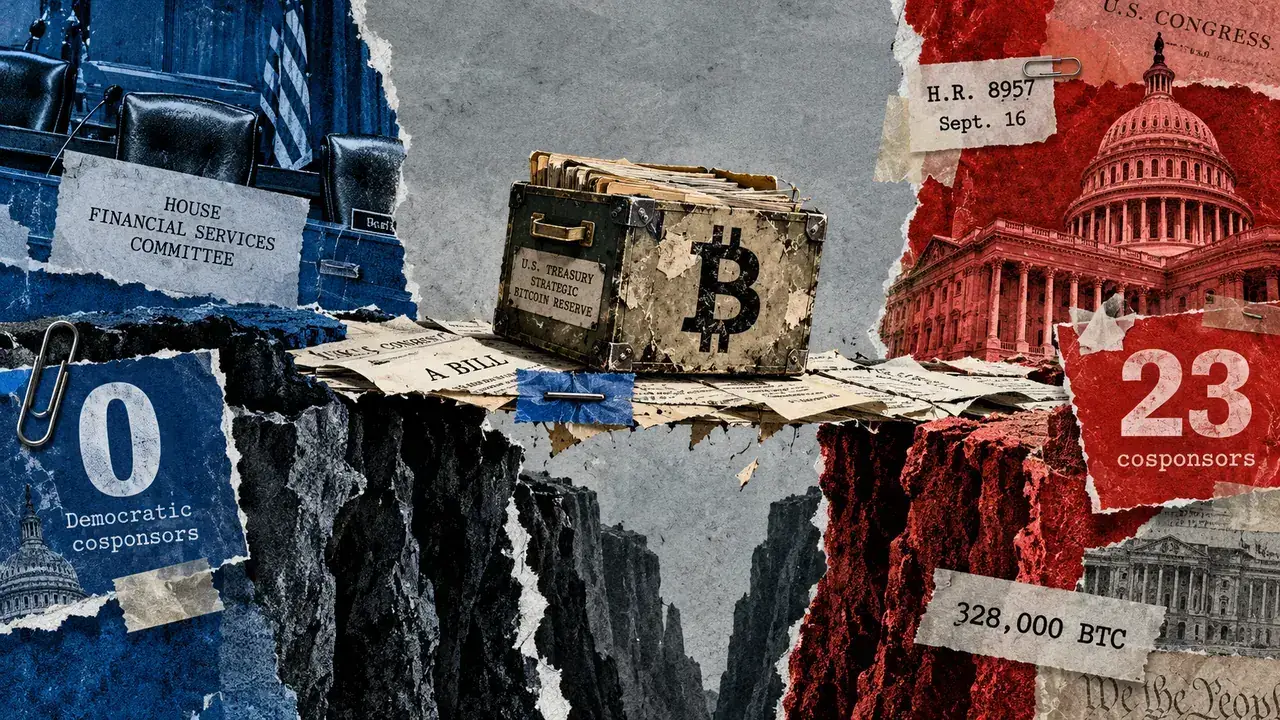
The US Bitcoin reserve faces a crucial bipartisan test Wednesday
The American Reserve Modernization Act (ARMA) would put the federal government's Bitcoin reserve into law for the first time. But...