Circle Explores Reversible Stablecoin Transactions to Curb Fraud, Align with TradFi
Circle, the issuer behind $74 billion worth of USDC stablecoins, is exploring the possibility of enabling reversible transactions, a significant shift that aims to bring blockchain payments in line with traditional finan...
Archive context
Older archive item. Useful for background and entity history, but not a fresh market-moving signal.

Circle, the issuer behind $74 billion worth of USDC stablecoins, is exploring the possibility of enabling reversible transactions, a significant shift that aims to bring blockchain payments in line with traditional finance standards.
Key Takeaways:
- Circle is considering reversible USDC transactions to address fraud and align more closely with traditional finance.
- Its new blockchain, Arc, targets institutional use but faces criticism for being overly centralized.
- As stablecoins gain political support, Circle is repositioning USDC for broader adoption and regulatory acceptance.
Speaking to the Financial Times, Circle President Heath Tarbert said the company is weighing how to add refund capabilities to USDC payments in cases of fraud or disputes, without compromising the finality of settlement that blockchain systems are built on.
“There’s an inherent tension between being able to transfer something immediately, but having it be irrevocable,” Tarbert noted.
Circle Rethinks Strategy as It Targets Institutional Stablecoin AdoptionThe comments reflect a broader rethink within Circle as it courts financial institutions and prepares for wider stablecoin adoption in the mainstream.
The company recently began testing Arc, a new blockchain designed for institutional use, where banks, asset managers, and corporates could settle transactions such as FX payments using stablecoins.
However, Arc has drawn criticism for being too centralized, potentially clashing with the founding ethos of decentralization.
While Circle said Arc will not support direct transaction reversals, it could introduce a “counter-payment” layer, similar to how credit card refunds work.
The design would let parties agree to reverse a transaction off-chain in a compliant, transparent process, potentially making blockchain-based payments more acceptable to large institutions wary of irreversible errors or scams.
Community Insight: Stablecoin Valuations Under Spotlight
Tether eyes a raise at a $500B valuation, while Circle trades at just ~$30B.
Is Circle underestimated — or is Tether rewriting stablecoin dominance? How would stablecoin issuers' revenue survive after rate-cut?
High… pic.twitter.com/VRpdDYh754
The push for reversible payments also reflects Circle’s effort to close the gap between crypto and traditional financial systems, even as some in the industry see the move as a betrayal of blockchain’s core principles.
A venture capitalist called the concept “offensive,” questioning whether such a system still qualifies as blockchain at all.
Meanwhile, stablecoins are gaining traction in Washington. A landmark federal bill regulating the sector passed in July, and the Trump administration has voiced strong support, viewing stablecoins as a tool to extend the reach of the US dollar in global markets.
Tarbert echoed that vision but dismissed fears that stablecoins would pull deposits away from banks, suggesting the money may instead come from other assets or new capital inflows.
Goldman Sachs projects a $77 billion expansion of USDC by 2027, and Circle is adjusting its products accordingly.
Trump-Backed GENIUS Act Boosts US Push for Dollar-Pegged StablecoinsThe recent passage of the GENIUS Act, signed by President Trump, aims to cement the dollar’s dominance by backing dollar-pegged stablecoins in global markets.
The Treasury Department expects the stablecoin market to exceed $2 trillion by 2028, a projection that places greater emphasis on liquidity, interoperability, and regulatory alignment across the ecosystem. Tether’s latest move underscores a pragmatic shift toward that future.
As reported, Ripple CEO Brad Garlinghouse has said the stablecoin sector is poised for explosive growth, projecting the market could balloon from its current $250 billion capitalization to as much as $2 trillion in the near future.
“Many people think it will reach $1 to $2 trillion in a handful of years,” Garlinghouse said, adding that Ripple is positioned to benefit from that trajectory.
Meanwhile, Western Union is positioning itself for a new phase of digital transformation, signaling strong interest in using stablecoins to modernize its global remittance operations.
The post Circle Explores Reversible Stablecoin Transactions to Curb Fraud, Align with TradFi appeared first on Cryptonews.
Why this matters
This cryptocurrency story adds another data point to the current market tape and is useful when read alongside nearby source coverage.
Original source
Read on CryptonewsRelated market context

Ripple and Circle backs OKX as it targets the next wave of stablecoin users
OKX brought Circle, Ripple and Standard Chartered’s venture arm onto its cap table as the crypto exchange broadens its push into s...

Crypto card payments hit a record $12.5 billion as Jupiter Spend chases stablecoin shoppers
The surge in crypto card payments highlights stablecoins' growing role in mainstream finance, potentially reshaping consumer spend...

Circle’s new USDC ambassador? DJ Khaled
Circle, the issuer of $74 billion stablecoin USDC, has shared a promotional photo of music producer DJ Khaled sporting the new USD...

Circle, Ripple and Hedge Fund QRT Back Crypto Exchange OKX at $25 Billion Valuation
Stablecoin issuer Circle, Ripple, Standard Chartered’s investment arm SC Ventures and London-based hedge fund Qube Research & Tech...

Changer+ Launches Stablecoin-First Self-Custodial Wallet to Make Stablecoins Easier to Use
Singapore, Singapore, October 6th, 2026, Chainwire Multi-chain stablecoin wallet combines simpler transfers, flexible gas-fee opti...
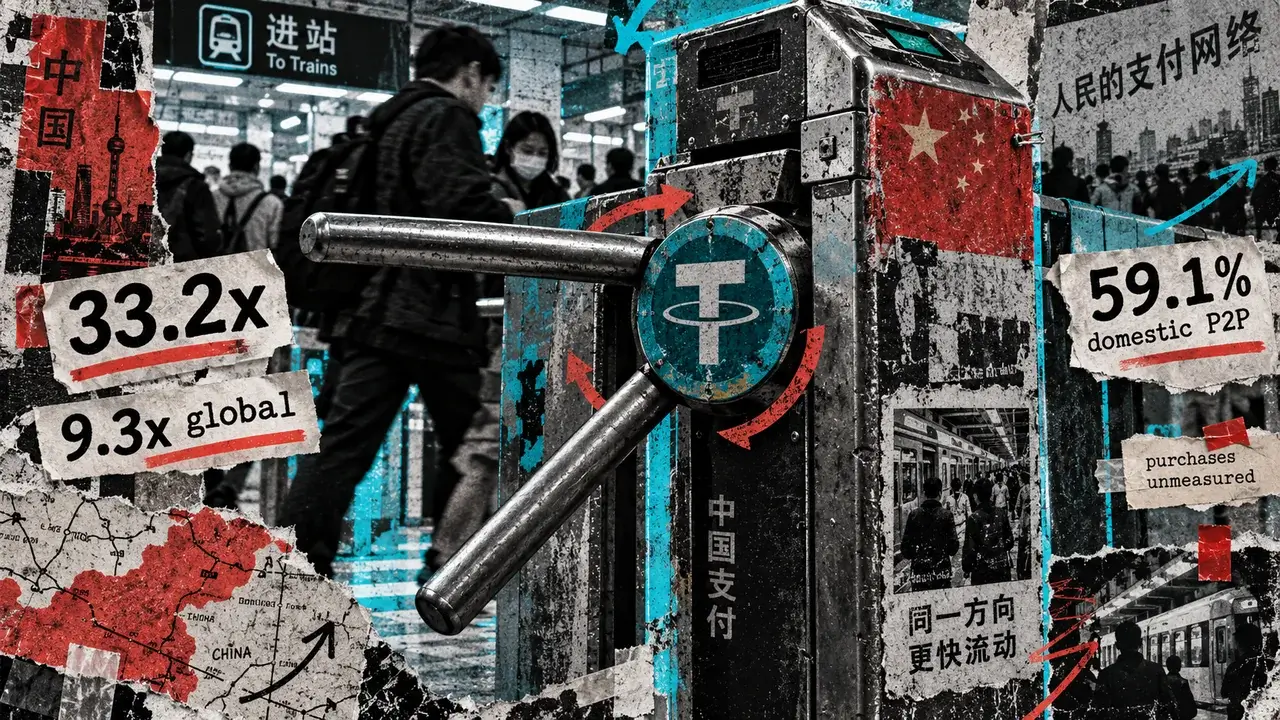
China’s crypto ban Is failing to stop a $176 billion P2P economy
China’s underground crypto economy is increasingly shifting toward peer-to-peer stablecoin payments despite Beijing’s longstanding...