Coinbase Users in 4 States Won’t Be Able to Stake Additional Assets
Coinbase announced that retail clients in four states will no longer be able to add new assets to its staking product due to ongoing legal proceedings. SEC files lawsuit against the firm Ten states, which include Alabama...
Archive context
Older archive item. Useful for background and entity history, but not a fresh market-moving signal.

Coinbase announced that retail clients in four states will no longer be able to add new assets to its staking product due to ongoing legal proceedings.
SEC files lawsuit against the firmTen states, which include Alabama, California, and New Jersey, have filed actions against the exchange to stop its staking program within their jurisdictions. This comes after the Securities and Exchange Commission filed a lawsuit against the firm in June.
The SEC and several states argue that the product constitutes an unregistered security offering.
Coinbase claims staking is not a security, maintaining that it is a “core part of ensuring the cryptoeconomy functions for hundreds of millions of users around the globe.”
The company has been communicating with policymakers in multiple states to ensure that its staking program remains available to all users.
However, in California, New Jersey, South Carolina, and Wisconsin, the company will no longer be able to accept additional staking assets from customers.
“Customers’ crypto that was staked before these orders were issued remains unaffected,” the company said in the Friday blog post. “Impacted customers have received an email with more information specific to their state, and all customers can visit our Help Center to learn more about these actions and the changes we will be implementing in the coming weeks in these four states.”
Coinbase staking services will operate normally in other states
Coinbase’s staking services will operate normally in the other states in which there are ongoing proceedings.
“Staking is not some exotic or complex financial product,” the company said.
“In fact, it is not a financial product at all,” it continued.
The notes went on and stated the following:
“Whether a user stakes on their own or through a service like ours, they remain the owner of their crypto at all times. Unlike lending, for example, there is no risk that a borrower will fail to repay, because the underlying crypto remains in custody from start to finish.”
Why this matters
This cryptocurrency story adds another data point to the current market tape and is useful when read alongside nearby source coverage.
Original source
Read on CryptoGazetteRelated market context

Coinbase Faces Hack Cover-Up Allegations as Customers Claim Huge Losses
A public dispute over how Coinbase handles customers who say they lost funds on the exchange has grown over the past week on X, dr...

Open USD Stablecoin Goes Live as Stripe, Visa and Mastercard Open It to Businesses
Open USD (OUSD), the dollar stablecoin backed by Coinbase, Mastercard, Shopify, Stripe and Visa, went live on Wednesday, its opera...
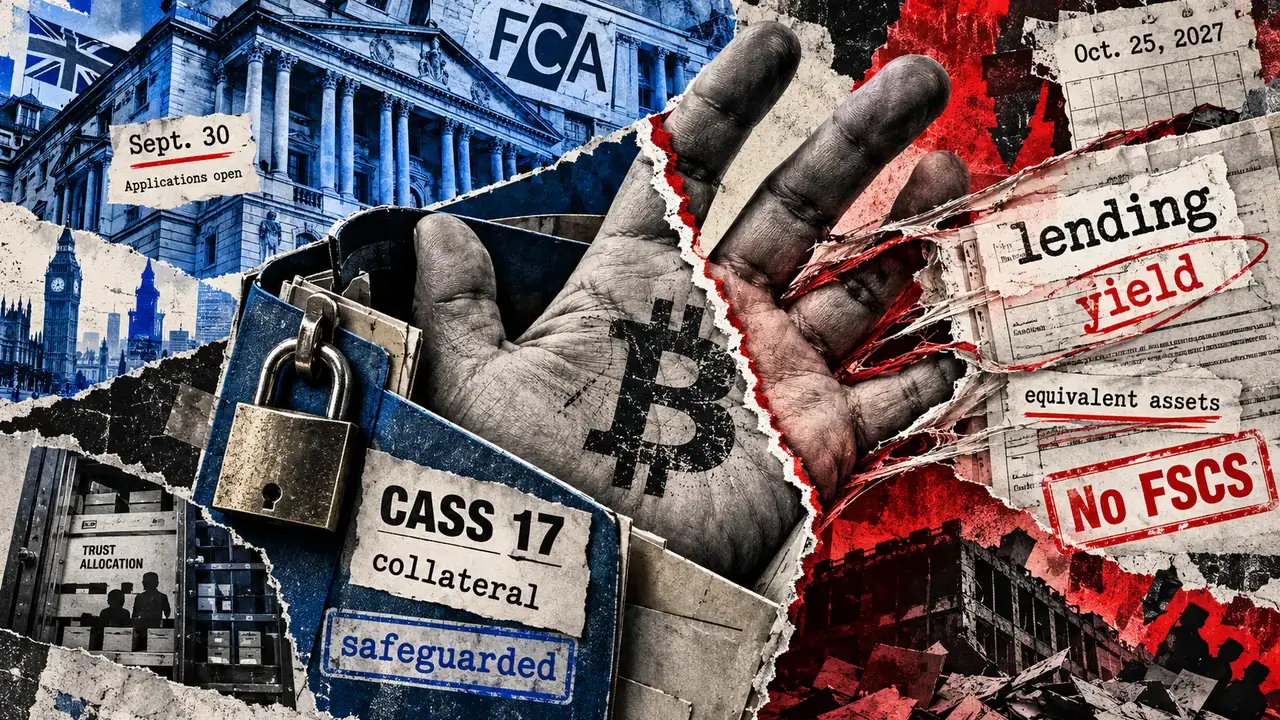
UK’s 2027 crypto rules let firms remove trust protection from Bitcoin lent for yield
UK crypto firms can now apply for authorization as of Sept. 30, bringing Bitcoin holders closer to a rulebook that will treat coin...

Coinbase just completed its US derivatives stack but its biggest bet still sits outside it
Coinbase, the largest US-based crypto exchange, has secured Commodity Futures Trading Commission (CFTC) approval for its own deriv...

Brazilian Depository With $4.2 Trillion in Assets Taps XRP Ledger to Mirror Fund Shares
CSD BR, a Brazilian central securities depository with more than 22 trillion reais (about $4.2 trillion) in registered assets, wil...

Lighter Crypto LIT Drops Violently on Robinhood Plan
Lighter crypto is trading at $3.86, down 13% over 24 hours and 26% over seven days. The selloff followed Robinhood’s decision to r...