Compliance and Protecting Personal Information
tl;dr How we protect personal information while complying with existing laws and regulations.By Melissa Strait, Chief Compliance OfficerRecently, we’ve received questions about why we occasionally review specific account...
Archive context
Older archive item. Useful for background and entity history, but not a fresh market-moving signal.
tl;dr How we protect personal information while complying with existing laws and regulations.
By Melissa Strait, Chief Compliance Officer
Recently, we’ve received questions about why we occasionally review specific accounts and ask for more detailed personal information about the owners of those accounts. In short, we do this to meet our regulatory obligations. Here’s a more detailed explanation:
At Coinbase, we strive to be the most trusted platform for buying, selling, and exchanging digital assets. Trust is the best way to help more people participate in the cryptoeconomy and reach our goal of increasing economic freedom around the world.
Earning and maintaining trust requires us to ensure the integrity of all transactions supported by our platform. And an important part of doing that is abiding by relevant laws and regulations. We’ve always believed that for crypto to gain the legitimacy needed for mainstream adoption, compliance can’t be an afterthought — it is core to the way we operate.
In practice, this means following laws and regulations in different jurisdictions, some of which are more stringent than others.
Crypto is a highly regulated market, with various parts of it overseen by many different federal regulatory agencies, individual states and others — and that’s just in the U.S. If we want to offer Coinbase services in other countries, we also have to comply with local regulations. In some cases, this includes the Travel Rule, which requires companies like Coinbase to exchange information about the participants in crypto transactions under certain circumstances.
Over time, the advantages of web3 may allow people to create and own decentralized identities, sharing much less information with third parties and keeping that information more secure. We’re also excited about advances in digital identity which may move us away from reliance on traditional forms of identification, like driver’s licenses and other paper documents. But for now, companies like Coinbase are required to follow existing regulations, some of which have been on the books since before the Internet even existed.
This means we have to ask our customers for basic information about themselves and their businesses. Sometimes, and for a very small percentage of our customer base, we need much more detailed information. This helps us to comply with “Know Your Customer” regulations and keep Coinbase and the cryptoeconomy safe. No matter what, we are committed to protecting our customers’ privacy and providing a smooth and intuitive customer experience.
As part of our ongoing efforts to keep our customers safe, we’ve also organized a coalition to help other companies comply with global regulations, following industry leading safeguards to protect customers’ privacy and security. To join this coalition, and receive Travel Rule information, all participants must meet anti-money laundering, security, and privacy requirements.
We’ve also developed proprietary blockchain analytics capabilities to help secure the crypto economy from bad actors. And we have ongoing dialogues with policymakers globally where we advocate for consistent and reasonable requirements that protect our customers’ privacy.
While some within the digital currency industry have questioned the application of more traditional Know Your Customer (“KYC”) requirements in this novel space, widespread adoption of crypto will depend on building and maintaining the trust and integrity of the ecosystem. For crypto to succeed, people need to be able to buy digital currency with common payment methods, and feel safe doing so. The only way that can happen is if companies like Coinbase follow local laws and regulations, while partnering with policymakers to guide the next generation of rulemaking in this space. Put simply, if we want crypto to be widely accepted, compliance can’t be optional.
That’s why we’ll keep working to be an industry leader in compliance — protecting our customers, preserving trust, and building the cryptoeconomy.
Compliance and Protecting Personal Information was originally published in The Coinbase Blog on Medium, where people are continuing the conversation by highlighting and responding to this story.
Why this matters
This cryptocurrency story adds another data point to the current market tape and is useful when read alongside nearby source coverage.
Original source
Read on CoinbaseRelated market context

Coinbase Ireland Hit With €3.25M Fine Over Fund Safeguarding and Oversight Failures
Key Takeaways: Irish central bank fines Coinbase Ireland $1.19m for customer fund safeguarding and outsourcing failures. The compa...
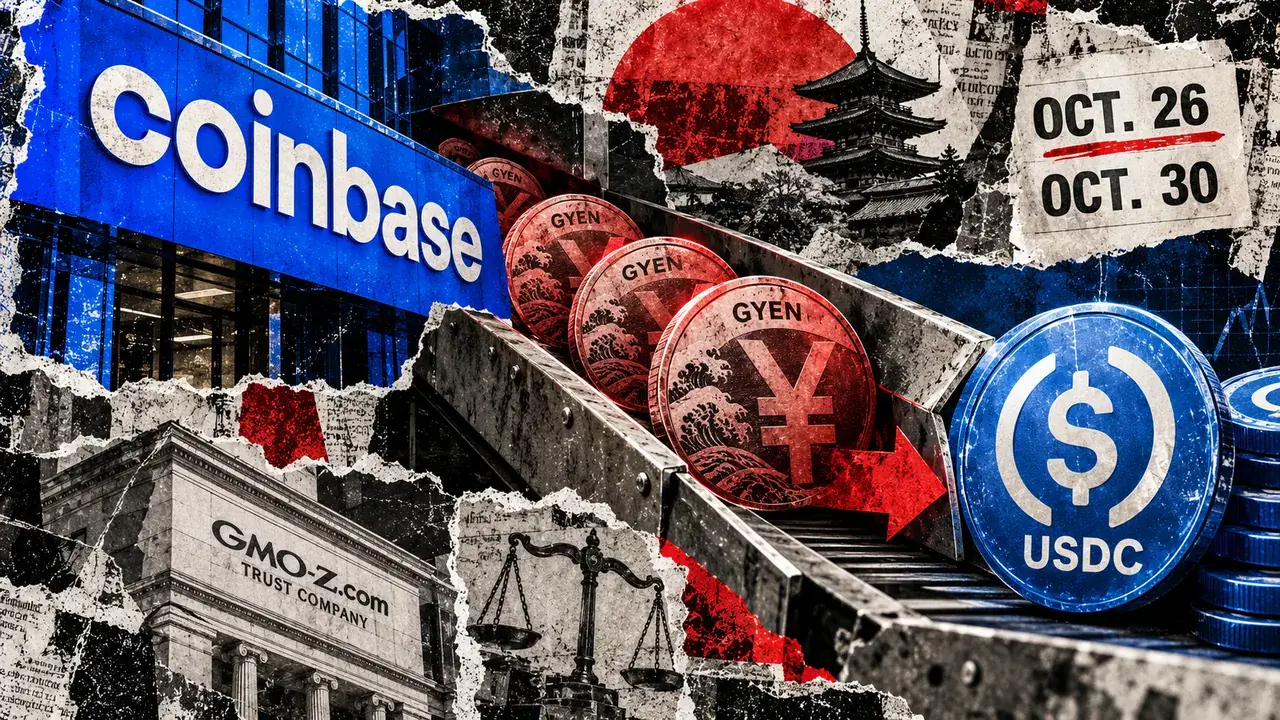
Coinbase to drop this Japanese yen stablecoin years after its price crash sparked investor lawsuits
Holders who want to avoid market-rate conversion must withdraw before Monday, ahead of GMO Trust’s Nov. 11 initial direct-redempti...
Irish Central Bank Fines Coinbase Unit €3.25 Million Over Customer Fund Safeguards
TL;DR: Ireland’s central bank imposed a €3.25 million penalty on Coinbase Ireland over electronic-money safeguarding and outsourci...
Chainlink And LG CNS Target South Korean Banks With Digital Asset Infrastructure Deal
TL;DR: Chainlink and LG CNS are partnering on oracle and cross-chain infrastructure aimed at South Korea’s financial institutions;...
HSBC Launches RedCoin Stablecoin and Plans to Let Customers Buy Tokenized Funds With It
HSBC put its first stablecoin, a Hong Kong dollar token called HSBC RedCoin (ticker RCHKD), on its PayMe payments app on Oct. 23,...
FCA Proposes Crypto Crime Guidance On Wallet Checks And Blockchain Analytics
TL;DR: The FCA is consulting on updated financial crime guidance for crypto businesses, including customer checks, blockchain anal...