Deceiving Bank Customers: Lending Giant Fined $15,000,000 for Withdrawing Funds From Bank Accounts Without Consent
It has been just revealed the fact that a lending giant has been fined for deceiving its customers. Check out the latest reports about the matter below. Bank fined for deceiving customers Enova, one of the biggest licens...
Archive context
Older archive item. Useful for background and entity history, but not a fresh market-moving signal.

It has been just revealed the fact that a lending giant has been fined for deceiving its customers. Check out the latest reports about the matter below.
Bank fined for deceiving customersEnova, one of the biggest licensed lenders in the US, has been penalized $15 million by the Consumer Financial Protection Bureau (CFPB) for engaging in “widespread illegal conduct”.
The lender from Chicago has been accused of withdrawing funds from customers’ bank accounts without their consent, which is a violation of the CFPB’s orders.
In addition, Enova failed to change its deceptive practices despite being instructed to do so. As a result, the CFPB has banned Enova from offering certain types of consumer loans.
It is also worth noting the fact that Enova also canceled loan extensions that it had initially offered to consumers, misrepresented due dates for loan payments, and tried to withdraw funds from consumers’ bank accounts without obtaining their express informed consent.
This is not the first time Enova has been penalized for such issues.
The company was fined $3.2 million for similar violations in 2019. CFPB director Rohit Chopra has stated that Enova had violated the agency’s orders to change its ways.
“Enova decided to keep flouting the law after it was caught taking advantage of its customers, and violated a law enforcement order.
Today’s action imposes a $15 million penalty, bans the company from certain lines of business, and reforms executive compensation.”
Enova says the majority of the items in question were self-reported by Enova to the CFPB, and the lender says it has already provided “appropriate redress” to customers who were affected.
“While the errors identified in this settlement are similar to those addressed in the 2019 order, they do not arise from deliberate attempts to avoid law, but instead resulted from unintended computer and system errors.
However, with any complex system or process, it is impossible to eliminate all errors. Since there is no established regulatory standard for satisfactory performance, any subsequent errors, no matter how infrequent or insubstantial, constitute an offense.”
Why this matters
This cryptocurrency story adds another data point to the current market tape and is useful when read alongside nearby source coverage.
Original source
Read on CryptoGazetteRelated market context

Coinbase Faces Hack Cover-Up Allegations as Customers Claim Huge Losses
A public dispute over how Coinbase handles customers who say they lost funds on the exchange has grown over the past week on X, dr...

Citi And Coinbase Bring Stablecoin Payments Into Corporate Banking
TL;DR Citi and Coinbase have expanded their partnership with new stablecoin and fiat payment infrastructure for businesses. Citi c...
Banker Turned on Clients, Routing $932K to Coinbase for $1K+
A former Georgia banker faces federal charges after allegedly helping steal about $931,500 from customers and route the funds to C...

Aave’s $50 million lending plan could lose money without a single default
Aave’s proposed institutional lending business would put crypto collateral on both sides of the financing chain. Institutions woul...
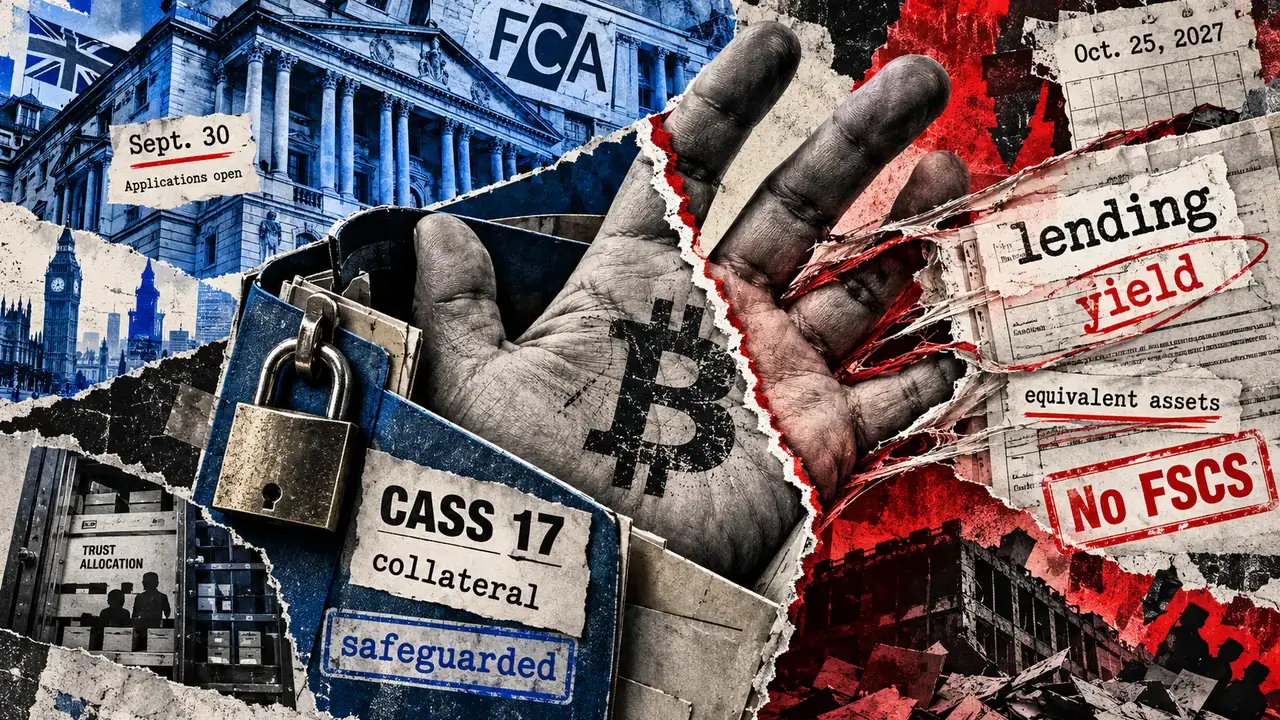
UK’s 2027 crypto rules let firms remove trust protection from Bitcoin lent for yield
UK crypto firms can now apply for authorization as of Sept. 30, bringing Bitcoin holders closer to a rulebook that will treat coin...

Circle Brings USDC Workflows Into Banking Platform Used By Major Institutions
TL;DR Volante Technologies and Circle have announced a collaboration around stablecoin payment and settlement infrastructure. Vola...