European Commission Launches Crypto Rules Review As Euro Stablecoin Project Gains Support
As market dynamics evolve and pressure builds to strengthen Europe’s position in the global crypto economy, the European Commission (EC) has launched a review of its landmark crypto framework to keep pace with the evolvi...
Archive context
Older archive item. Useful for background and entity history, but not a fresh market-moving signal.

As market dynamics evolve and pressure builds to strengthen Europe’s position in the global crypto economy, the European Commission (EC) has launched a review of its landmark crypto framework to keep pace with the evolving digital asset landscape.
EC Opens Review Of EU Crypto RulesOn Wednesday, the European Commission launched a consultation on the functioning of the European Union’s (EU) regulatory framework on crypto assets, the Markets in Crypto‑Assets Regulation (MiCA).
The regulator is seeking feedback from stakeholders and the public on whether the current framework remains fit for purpose, noting that the crypto markets and broader policy landscape have evolved since it took effect in 2024.
According to the announcement, the Commission is evaluating whether updates to the framework are needed to reflect the developing landscape. Specifically, the consultation seeks input on MiCA’s core components, with a public consultation for individuals and a targeted consultation addressing more technical and legal issues.
The targeted consultation is aimed at stakeholders, including crypto issuers and service providers, financial institutions, technology firms, academia, think tanks, industry associations, consumer groups, and EU public authorities.
The consultation will remain open until August 31, with feedback informing the Commission’s future policy work on digital assets. This move comes as European industry groups push for MiCA reforms to boost the competitiveness of Euro-denominated stablecoins.
Last month, Blockchain for Europe, an organization that represents international Blockchain industry players in the European Union (EU), argued that the MiCA framework made euro-pegged stablecoins safe, but less competitive than their US-denominated counterparts.
As a result, the group proposed various reforms to the EU’s crypto legislation to improve the regulated stablecoin market and maximize its positive impact on the European digital assets industry.
European Banks Back Euro Stablecoin PushWhile crypto executives and lawmakers express concerns about the dollar’s dominance in the crypto market, nearly 40 European banks have rallied behind Qivalis, a key project to boost euro-pegged stablecoins.
The Qivalis consortium was launched in Amsterdam in 2025, seeking to launch a euro-pegged stablecoin with a critical mass of lenders to make transactions more efficient, boost adoption, and increase the competitiveness of Europe’s digital assets market.
As reported by the Financial Times (FT), the Qivalis consortium, which launched in Amsterdam in 2025, has secured the support of another 25 lenders, increasing the total number of banks behind the project to 37.
European bankers have become increasingly concerned about dollar dominance in the crypto market, the report noted, with many exploring stablecoins for faster, cheaper settlements, collateral management, and payments. Therefore, some of Europe’s biggest banks are backing the project, including BNP Paribas, ING, and UniCredit.
Jan-Oliver Sell, chief executive of Qivalis, told the FT that “the European sovereignty angle” was critical in the current geopolitical climate, which makes it “attractive for people to think about an alternative to the US dollar”.
Sell also revealed that he was in discussions with several non-European banks operating in countries that receive significant remittances from Europe about joining the consortium, adding that euro-pegged stablecoins would be used for activities such as cross-border payments and immediate settlement.
Why this matters
This maps to the Stablecoins hub, so it can help confirm whether that theme is gaining breadth across the crypto news cycle.
Original source
Read on NewsBTCRelated market context

TOKEN2049 Takeaways: Stablecoins, Asset Tokenization, and AI Payments
Every crypto conference brings a wave of new partnerships, products, and concepts. After scrolling through the latest updates, you...
Kraken Parent Company Payward to Buy Saldo Bank in European Banking Push
Bitcoin Magazine Kraken Parent Company Payward to Buy Saldo Bank in European Banking Push Payward, the parent company of crypto ex...
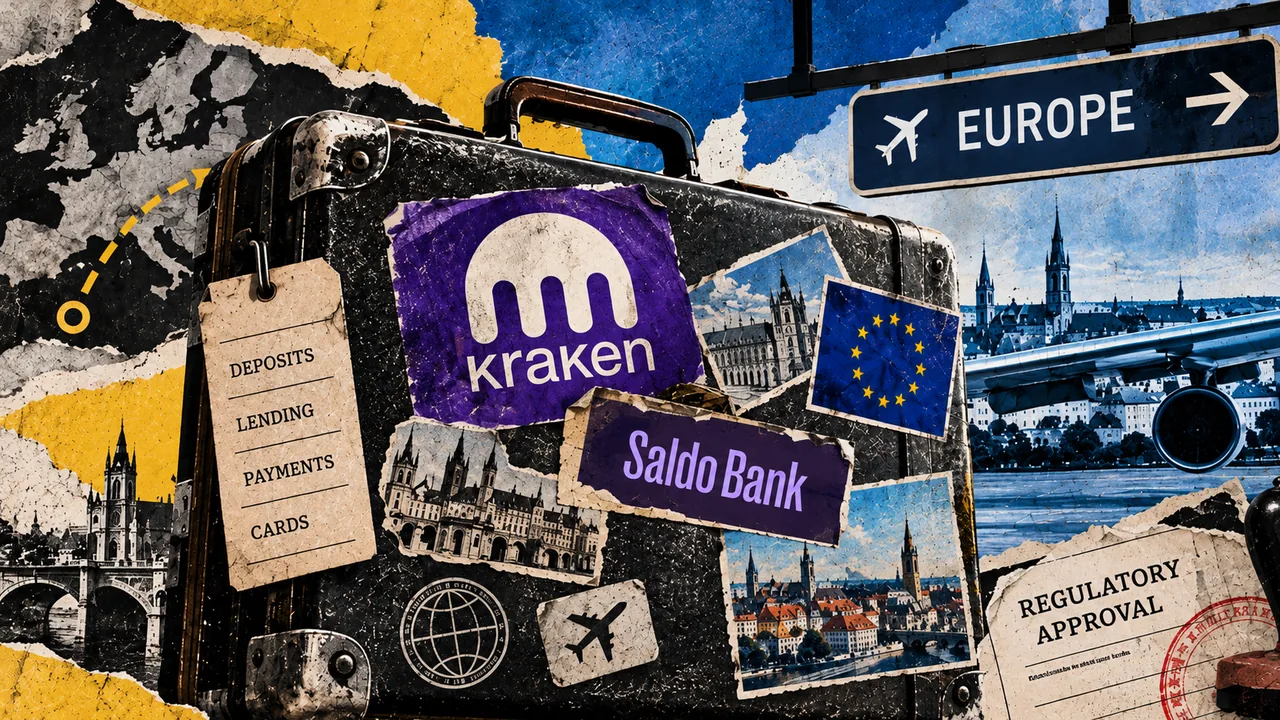
Kraken moves to acquire $181 million European bank in major push beyond crypto trading
Kraken's parent company, Payward, has agreed to acquire a European bank as it expands beyond cryptocurrency trading into tradition...
EU Banking Regulator Takes Over Key Oversight of Circle’s USDC Stablecoin
The European Banking Authority (EBA) classified Circle's USDC as a significant e-money token under the Markets in Crypto-Assets Re...

Kraken owner Payward plans to acquire a European bank
Payward's acquisition of a European bank could enhance its financial platform, but regulatory hurdles and integration challenges l...
TRON settles $2.2 trillion in stablecoins in Q3 as onchain payments grow
TRON settled $2.2126 trillion in stablecoins in Q3 2026, with supply hitting $93.88 billion and a 23.2% share of stablecoin card s...