Exclusive: Scammers Impersonate Binance, but the Exchange Says There’s Nothing It Can Do
Binance customers may have received an SMS last week encouraging them to participate in a new lottery to win up to 100 EUR in cryptocurrencies. Although these texts appeared in threads with official announcements from th...
Archive context
Older archive item. Useful for background and entity history, but not a fresh market-moving signal.

Binance customers may have received an SMS last week encouraging them to participate in a new lottery to win up to 100 EUR in cryptocurrencies.
Although these texts appeared in threads with official announcements from the exchange, they turned out to be scams. The platform is aware of such phishing attempts but admits it is powerless to stop them.
Binance Claims Eliminating Fake SMS Is "Unrealistic"
At the end of last week, Binance customers received SMS messages about winning in the "Binance Mystery Box." The texts informed that up to €100 in tokens were available for claiming and that the offer was expiring on the same day.
There is confirmed evidence that Binance's clients located in Poland received fraudulent SMS messages attempting to steal their account information. Multiple Polish Binance users, in discussions with Finance Magnates, validated that they had personally received these phishing texts.
The screenshot below shows a suspicious SMS that appeared in the same thread as other messages delivered by Binance regarding login codes or account verification processes.
The article continues under the screenshot:
Furthermore, posts on social media document the receipt of fraudulent offers. Some comments even suggested there might have been a potential data leak concerning phone numbers, although the exchange claims no such infringement occurred.
Hello there, thank you for bringing this to our attention.Kindly disregard this message, it's not from Binance and do NOT click on the link in the message as it may confirm trojan/virus to your device/account. What you received is called SMS Spoofing Attacks.The attacker…
— Binance Customer Support (@BinanceHelpDesk) January 11, 2024Finance Magnates asked the Polish branch of Binance to comment on this matter. The company said that to eliminate SMS security loopholes, modifying the entire GSM technology system would be necessary, which "seems unrealistic” to the company.
When we asked a local cryptocurrency expert about encountering such scams in Poland, he mentioned that he had never experienced these fraudulent SMS messages locally. However, he noted that this scam is frequently seen in other countries.
The Origin of the Fake SMS Scam
In response to Finance Magnates, Binance explained that the GSM system, which SMS messages operate on, allows the sender to fill in the "sender name" field arbitrarily. Standard SMS applications and tools typically insert the sender's phone number in this field. However, entities like companies often replace the phone number with a textual name, such as "Binance."
"The problem is that operators do not verify whether the sender sending the SMS is legally authorized to use such a name, allowing fraudsters to use the same name. As a result, a scam SMS has the same 'sender name' as legitimate SMS messages from Binance, leading the recipient's phone to attach this SMS to the message history from Binance," Binance Poland commented in Polish, auto-translated to English.
Binance added that Poland recently introduced regulations to reduce the prevalence of this exploit, at least to some extent. This is enabled by registering sender names and assigning them to specific entities by telecommunications operators.
“To eliminate this security loophole in SMS, the entire world would have to modify this technology, which seems unrealistic,” Binance Poland concluded in the statement in Polish, auto-translated to English.
Phishing and Pig Butchering
This strategy is a typical phishing attempt aimed at extracting data from customers of popular cryptocurrency exchanges. Several months ago, Binance users from Hong Kong fell victim to this, losing nearly $500,000. In that case, the scam was even more sophisticated. Individuals posing as representatives of Binance contacted users, calling to perform a supposed account verification.
Binance, along with other exchanges, has recently been alerting about the growing popularity of an investment scam called "pig butchering," which may be indirectly linked to phishing. The name refers to the practice of fattening a pig before slaughter. Victims are gradually lured into contributing more money into fraudulent crypto investments before ultimately being defrauded.
This article was written by Damian Chmiel at www.financemagnates.com.Why this matters
This cryptocurrency story adds another data point to the current market tape and is useful when read alongside nearby source coverage.
Original source
Read on Finance MagnatesRelated market context
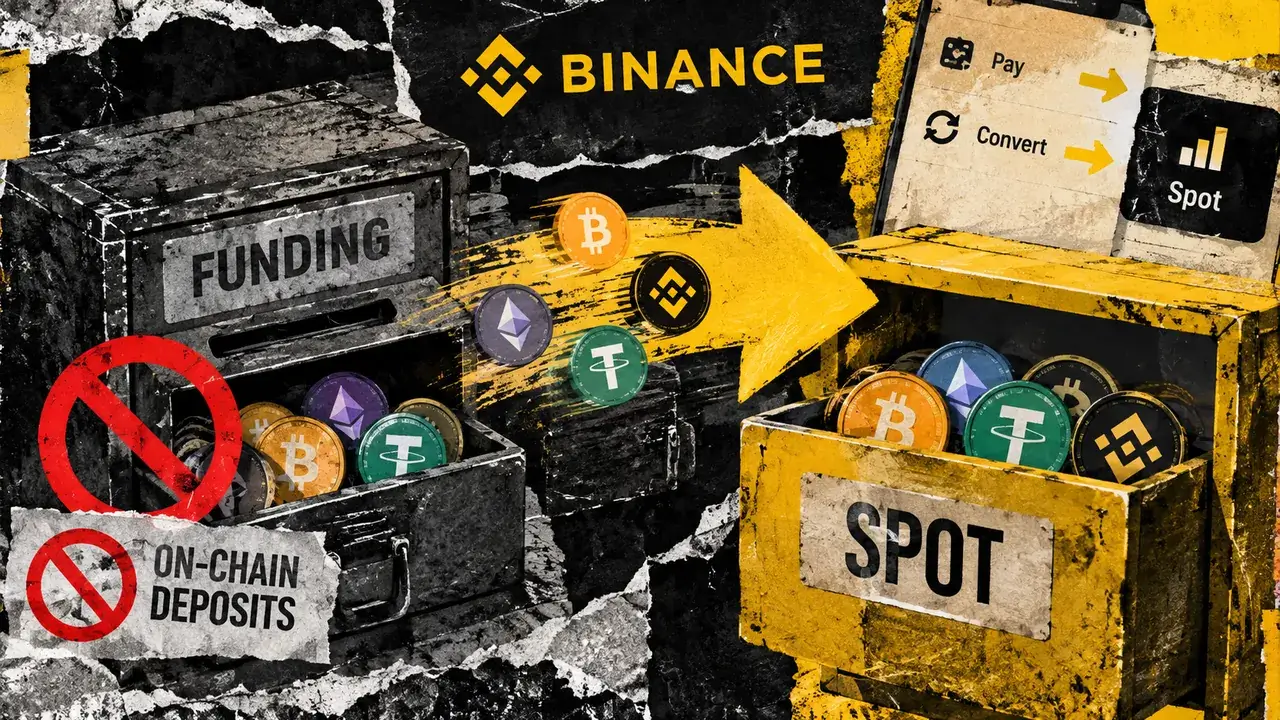
Binance ends Funding Account crypto deposits as Pay and Convert move to Spot
From Sept. 29, Binance says Funding Accounts no longer accept direct on-chain crypto deposits. Users depositing crypto must use Sp...

Binance appears to move value transfers to Solana from Tron and Ethereum
Binance's shift to Solana for value transfers could signal a broader trend towards faster, cost-effective blockchain solutions, im...

Abracadabra blames hacks for shutdown amid ‘looting’ claims
Embattled DeFi project Abracadabra has proposed “an orderly wind down,” blaming a string of security incidents which leave its sta...
Perplexity AI Predicts Insane $40 Price Target for XRP: How Did It Get There?
Perplexity AI predicts something that few analysts or other AI models do. It has produced an insanely wild bullish prediction for...

Standard Chartered says Ethena’s ENA could crush Bitcoin and Ethereum returns by 2028
Standard Chartered expects Ethena’s ENA token to rise about sevenfold by 2028, provided the protocol can rebuild its shrinking syn...
XRP Price Prediction: Binance XRP Scarcity Index Hits 20-Month Low
XRP is trading at $1.50, down more than 1% over 24 hours, as Binance’s scarcity index signals a sharp reversal in exchange supply...