FDIC moves to eradicate ‘reputational risk’ category from bank exams
The US Federal Deposit Insurance Corporation, an independent agency of the federal government, is reportedly moving to stop using the “reputational risk” category as a way to supervise banks. According to a March 24 lett...
Archive context
Older archive item. Useful for background and entity history, but not a fresh market-moving signal.
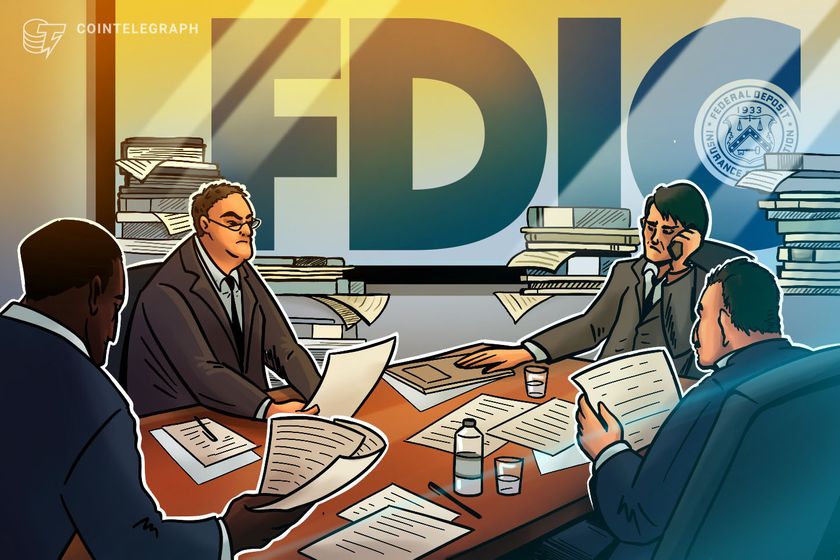
The US Federal Deposit Insurance Corporation, an independent agency of the federal government, is reportedly moving to stop using the “reputational risk” category as a way to supervise banks.
According to a March 24 letter sent by the agency’s acting chairman, Travis Hill, to Rep. Dan Meuser, banking regulators should not use “reputational risk” to scrutinize firms.
“While a bank’s reputation is critically important, most activities that could threaten a bank’s reputation do so through traditional risk channels (e.g., credit risk, market risk, etc.) that supervisors already focus on,” notes the letter, first reported by Politico.
According to the document, the FDIC has completed a “review of all mentions of reputational risk” in its regulations and policy documents and has “plans to eradicate this concept from our regulatory approach.”
Reputational risk and debankingThe Federal Reserve defines reputational risk as “the potential that negative publicity regarding an institution’s business practices, whether true or not, will cause a decline in the customer base, costly litigation, or revenue reductions.”
The FIDC letter specifically mentioned digital assets, with Hill noting that the agency has generally been “closed for business” for institutions interested in blockchain or distributed ledger technology. Now, as per the document, the FDIC is working on a new direction for digital asset policy aiming at providing banks a way to engage with digital assets.
The letter was sent in response to a February communication from Meuser and other lawmakers with recommendations for digital asset rules and ways to prevent debanking.
Industries deemed as “risky” to banks often face significant challenges in establishing or maintaining banking relationships. The crypto industry faced such challenges during what became known as Operation Chokepoint 2.0.
The unofficial operation led to more than 30 technology and cryptocurrency companies being denied banking services in the US after the collapse of crypto-friendly banks earlier in 2023.
Related: FDIC resists transparency on Operation Chokepoint 2.0 — Coinbase CLO
Why this matters
This cryptocurrency story adds another data point to the current market tape and is useful when read alongside nearby source coverage.
Original source
Read on CointelegraphRelated market context

ShredPay Joins Jack Henry Network To Bring Stablecoin Infrastructure To Banks
TL;DR ShredPay has joined the Jack Henry Fintech Integration Network. The integration can connect ShredPay’s stablecoin and digita...

Circle heads to Sibos 2026 in Miami to pitch stablecoin infrastructure to global banking leaders
Circle's engagement at Sibos 2026 could accelerate stablecoin adoption, reshaping global banking with enhanced digital finance sol...

ECB Launches Pontes to Move €1.6B Tokenized Market Into Central Bank Money
Key Takeaways: The European Central Bank has launched Pontes, a tool that will allow wholesale transactions of tokens to be settle...

European central banks seek to expand stablecoin yield ban to crypto lending, staking
The expanded ban could stifle innovation in the crypto sector, affecting market dynamics and investor confidence across the EU. Th...

United Nations highlights Bitcoin’s promise at digital cooperation event
The UN's focus on Bitcoin as digital infrastructure could empower developing nations, fostering economic independence and sustaina...
ECB, EU cenbanks seek changes in MiCA’s minimum bank deposit for stablecoins
The ECB and EU central banks want to replace MiCA’s stablecoin bank-deposit requirements with liquidity thresholds, warning that s...