Fed Cracks Down: U.S. Banks Can No Longer Block Crypto Over “Reputational Risk”—Now What?
The United States Federal Reserve has removed “reputational risk” from its supervisory framework for banks, a decision that could reshape how financial institutions engage with the crypto sector. In a policy update relea...
Archive context
Older archive item. Useful for background and entity history, but not a fresh market-moving signal.

The United States Federal Reserve has removed “reputational risk” from its supervisory framework for banks, a decision that could reshape how financial institutions engage with the crypto sector.
In a policy update released Monday, the Fed said it will now focus on more specific financial risk discussions instead of the vague and often criticized reputational risk metric.
For years, crypto firms have argued that reputational risk has been used as a vague and unfair justification to block or sever banking relationships with crypto firms, contributing to what many referred to as “debanking.”
@federalreserve announces that reputational risk will no longer be a component of examination programs in its supervision of banks: https://t.co/7Gwn1UuyNx
— Federal Reserve (@federalreserve) June 23, 2025With the change, banks may now find it easier to do business with digital asset companies without fear of supervisory pushback.
Fed Clarifies Banks Risk Ratings, Dropping Barrier Long Blamed for Crypto ExclusionThe policy shift may ease access to financial services for companies operating in the digital asset space, many of which have faced challenges in maintaining banking ties over the past several years.
“This is a win, but there is still more work to be done,” said U.S. Senator Cynthia Lummis in response to the announcement.
Lummis, a pro-crypto lawmaker from Wyoming, has been vocal about the need for regulatory clarity in the crypto space and has criticized what she called the “assassination” of digital asset businesses in the U.S. through aggressive regulatory practices.
In February, I exposed the Fed’s aggressive reputation risk policies that assassinated American bitcoin & digital asset businesses.
Today, the Fed announced it will scrap reputation risk as a factor in its bank supervision. This is a win, but there is still more work to be done. https://t.co/AOZSr0IFcp pic.twitter.com/1FtsIcNJsI
According to the Federal Reserve, the removal of reputational risk is meant to clarify how examiners evaluate a bank’s risk management practices.
The updated guidance emphasizes that the formal rating will now reflect both quantitative and qualitative elements tied directly to financial performance and safety.
“This change does not alter the Board’s expectation that banks maintain strong risk management,” the Fed said, adding that the adjustment is not meant to prevent banks from using the concept of reputational risk in their own internal assessments.
Historically, reputational risk was defined by the Fed as the possibility that negative publicity, true or not, could lead to customer losses, litigation, or a drop in revenue.
Critics in the crypto industry have long argued that the term was too broad and too subjective, allowing regulators to apply inconsistent standards, especially when it came to digital assets.
Fed Ends ‘Operation Chokepoint 2.0’ Tactics with Reputational Risk ReformThe decision comes after years of what some have described as “Operation Chokepoint 2.0,” a period during which more than 30 crypto and fintech firms reported being cut off from banking services.
Rob Nichols, president of the American Bankers Association, welcomed the change. “The supervisory process will now be more transparent and consistent,” he said.
“We have long believed banks should be able to make business decisions based on prudent risk management and the free market, not the individual perspectives of regulators,” he added.
The Fed has already begun reviewing and removing references to reputational risk from its guidance materials. It is also planning to train examiners on the new framework and coordinate with other federal banking regulators to ensure consistent application.
The removal of reputational risk references will be done gradually as existing guidance is updated.
Although banks are still required to manage risks in line with existing regulations, the shift could provide relief for crypto firms seeking stable banking relationships in the U.S.
It also follows a broader trend of regulatory recalibration, as several federal agencies appear to be easing crypto-related restrictions introduced in previous years.
The crypto industry scored several wins in recent months as federal regulators eased long-standing banking barriers.
The FDIC removed “reputational risk” from its bank oversight criteria, following the Senate Banking Committee’s approval of the FIRM Act. In May, the OCC confirmed banks can handle crypto trading and delegate services.
The FDIC also greenlit crypto activities without prior approval. On June 17, the Senate passed the GENIUS Act, focused on stablecoin regulation, with strong bipartisan support.
The bill now heads to the House, potentially cementing the first comprehensive US crypto framework.
Still, some observers warn the change could reduce oversight and open the door to riskier bank behavior if not properly monitored. But for the digital asset industry, the removal of reputational risk marks a moment of progress after years of regulatory uncertainty.
The post Fed Cracks Down: U.S. Banks Can No Longer Block Crypto Over “Reputational Risk”—Now What? appeared first on Cryptonews.
Why this matters
This cryptocurrency story adds another data point to the current market tape and is useful when read alongside nearby source coverage.
Original source
Read on CryptonewsRelated market context

Standard Chartered brings Ripple’s RLUSD into banking custody after $765 million quarterly surge
Standard Chartered has launched custody for Ripple's RLUSD stablecoin as it prepares to expand its use as collateral for instituti...

Financial Stability Board warns of untested stablecoin risks in crises
The FSB's warning highlights the urgent need for robust global regulatory frameworks to manage stablecoin risks and ensure financi...

Willem Middelkoop: Bitcoin is the Fastest Horse – Why the Debasement Trade Takes it to $1M
Bitcoin Magazine Willem Middelkoop: Bitcoin is the Fastest Horse – Why the Debasement Trade Takes it to $1M Central banks are buyi...

South Korean Lender Jeonbuk Bank to Offer Bitcoin-Backed Loans
Bitcoin Magazine South Korean Lender Jeonbuk Bank to Offer Bitcoin-Backed Loans Jeonbuk Bank has become the first bank in South Ko...

The $5,000,000 USDG Kraken Futures Challenge: one leaderboard, three multipliers
TL;DR Enroll in the $5,000,000 USDG Kraken Futures Challenge. It runs from October 12 to December 10, 2026 on Kraken Futures. Trad...
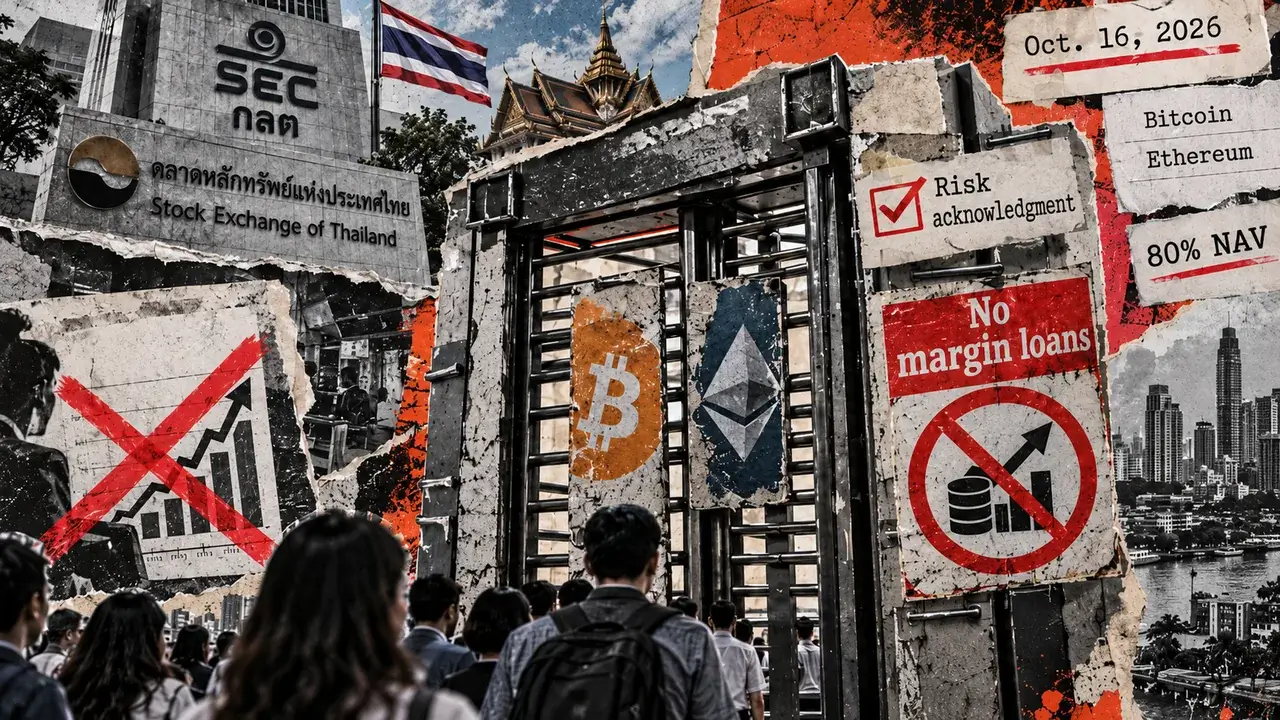
Thailand wants a piece of the $120 billion Bitcoin and Ethereum ETF market, but on its own terms
Thailand has finalized rules allowing domestic Bitcoin and Ethereum ETFs while restricting retail access to competing overseas inv...