Google U-Turn on Plan to Remove Non-Custodial Crypto Wallets from Play Store Following Backlash
Google has officially reversed its controversial plan to remove non-custodial crypto wallets from the Play Store following intense criticism from the cryptocurrency community on Wednesday.On August 13, Google Play unveil...
Archive context
Older archive item. Useful for background and entity history, but not a fresh market-moving signal.

Google has officially reversed its controversial plan to remove non-custodial crypto wallets from the Play Store following intense criticism from the cryptocurrency community on Wednesday.
On August 13, Google Play unveiled new licensing requirements mandating that custodial crypto wallet providers secure jurisdiction-specific licenses across more than 15 countries.
After regulation by prosecution, here comes regulation by monopoly.
Google Play Store is banning all non-custodial wallets whose developers do not have a FinCEN registration, state banking license, or MiCA license.
This means that in the US, *all* non-custodial wallets on the… https://t.co/NU3gLzEi5R pic.twitter.com/iOrXcj5NEN
Under these regulations, US app developers must operate under federal or state banking charters or register with FinCEN as money services businesses while obtaining state money transmitter licenses.
Crypto Twitter Explodes On Google’s Threat to Non-Custodial WalletsWithin the European Union, developers are required to register as crypto-asset service providers under the Markets in Crypto-Assets (MiCA) regulation.
Meanwhile, the UK mandates Financial Conduct Authority registration for compliance purposes.
These requirements would have forced non-custodial wallets such as MetaMask, Phantom, and Ledger to meet stringent compliance standards, including implementing comprehensive Anti-Money Laundering (AML) programs and potentially extensive Know Your Customer (KYC) procedures.
Such measures fundamentally contradict the core principles these wallets represent and the broader DeFi ecosystem’s values.
The initial announcement triggered widespread concern throughout the crypto community on social media platforms.
Many users expressed alarm that these rules would encompass non-custodial or self-custodial wallets on Android devices.
Crypto attorney Jacob Wittman commented that “the Google Play wallet ‘ban’ is a giant nothing-burger in many ways, but it does show that tech giants control distribution and we are still at their whim.”
Former Twitter CEO Jack Dorsey and Chairman of Block, Inc., characterized the proposed developer guidelines as “terrible.”
Google swiftly addressed these concerns through its Help Center documentation, clarifying that “non-custodial wallets are out of scope of the Cryptocurrency Exchanges and Software Wallets policy.”
Thanks for flagging this. Non-custodial wallets are not in scope of Google Play’s Cryptocurrency Exchanges and Software Wallets Policy. We are updating the Help Center to make this clear.
— News from Google (@NewsFromGoogle) August 13, 2025Richard Widmann, Global Head of Strategy for Web3 at Google Cloud, also intervened to reassure the crypto industry that the policy was never intended to cover non-custodial wallets.
He explained that the imprecise use of the term “software wallets” without proper distinction had created confusion.
“It is not 2015 anymore – we are working alongside dozens of crypto development shops and protocols to enable this ecosystem,” Widmann stated.
Google’s clarification confirms that self-custody applications remain exempt, while the Play Store will continue to regulate custodial apps and exchanges in the US, EU, UK, and other specified markets.
The practical outcome shifts the compliance burden entirely onto entities that custody user funds, rather than the open-source code that empowers users to maintain self-custody.
Non-Custodial Wallet Developer Loses Google 5-Star Reviews in Silent PurgeHowever, despite Google’s clarification, edge cases persist.
Adam Simecka, Founder of Bitcoin non-custodial wallet MannaBitcoin, revealed that Google delisted the wallet without warning, notice, or recourse. He further disclosed that Google removed the app from search results and eliminated five-star reviews.
It is still downloadable from the link on our website and the Apple App Store. They just removed us from search results and removed our wonderful 5-star reviews.
— Adam Simecka (@AdamSimecka) August 13, 2025These incidents highlight Google’s historically complex relationship with cryptocurrency applications.
The platform banned crypto mining apps in 2019 and removed crypto news applications, including those from Cointelegraph and CoinDesk, without explanation.
In the last week, the MetaMask Android client was suspended by the Google Play App Store @googleplaydev. They cited their policy that bans mining on mobile, which we don't. Appeal rejected. #ProtectWeb3.https://t.co/rfP4EbOAqv!?zippy_activeEl=cryptocurrencies%23cryptocurrencies
— MetaMask.eth (@MetaMask) December 26, 2019Google later reinstated these apps and relaxed its crypto media and advertising restrictions, permitting certified advertisers to promote approved products under strict guidelines.
Despite these restrictions, Google has also fostered positive collaborations within the Web3 space.
In July, Google Cloud partnered with ZK-powered identity protocol Self to accelerate adoption of its Web3 infrastructure and AI tooling among verified human users.
In January 2024, Google announced a partnership with Coinbase, enabling select customers to pay for Cloud services using cryptocurrencies such as Bitcoin (BTC), with plans to expand cryptocurrency payment options to additional customers over time.
Several months later, blockchain-based Web3 game development platform Sequence collaborated with Google Cloud to deliver Web3 technology and simplicity to gaming by offering its comprehensive gaming solution to Google Cloud customers.
The post Google U-Turn on Plan to Remove Non-Custodial Crypto Wallets from Play Store Following Backlash appeared first on Cryptonews.
Why this matters
This cryptocurrency story adds another data point to the current market tape and is useful when read alongside nearby source coverage.
Original source
Read on CryptonewsRelated market context

Stripe lets US businesses send stablecoin payouts to crypto wallets in 160-plus markets
Stripe's stablecoin payout feature could accelerate global business transactions, enhancing financial inclusivity and reducing rel...
XRP wallets holding 1 million tokens climb to 2,147, highest of 2026
Increased accumulation by large XRP holders suggests potential long-term confidence, despite current price stagnation and market v...
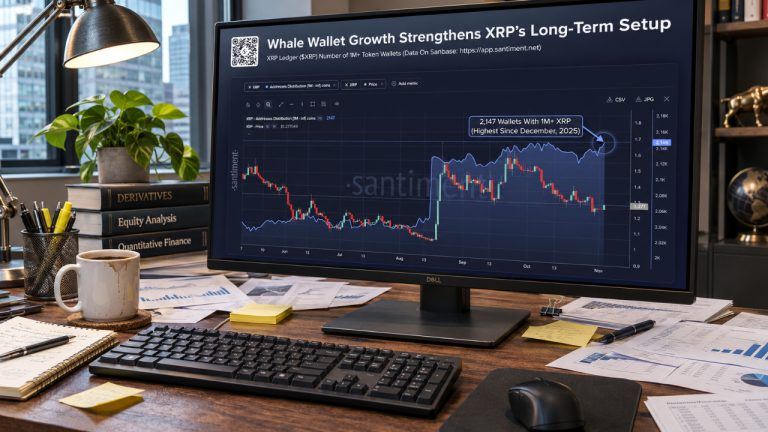
XRP Millionaire Wallets Hit 2026 High Despite Price Weakness
XRP wallets holding at least 1 million tokens reached their highest count of 2026, according to Santiment. The analytics firm inte...
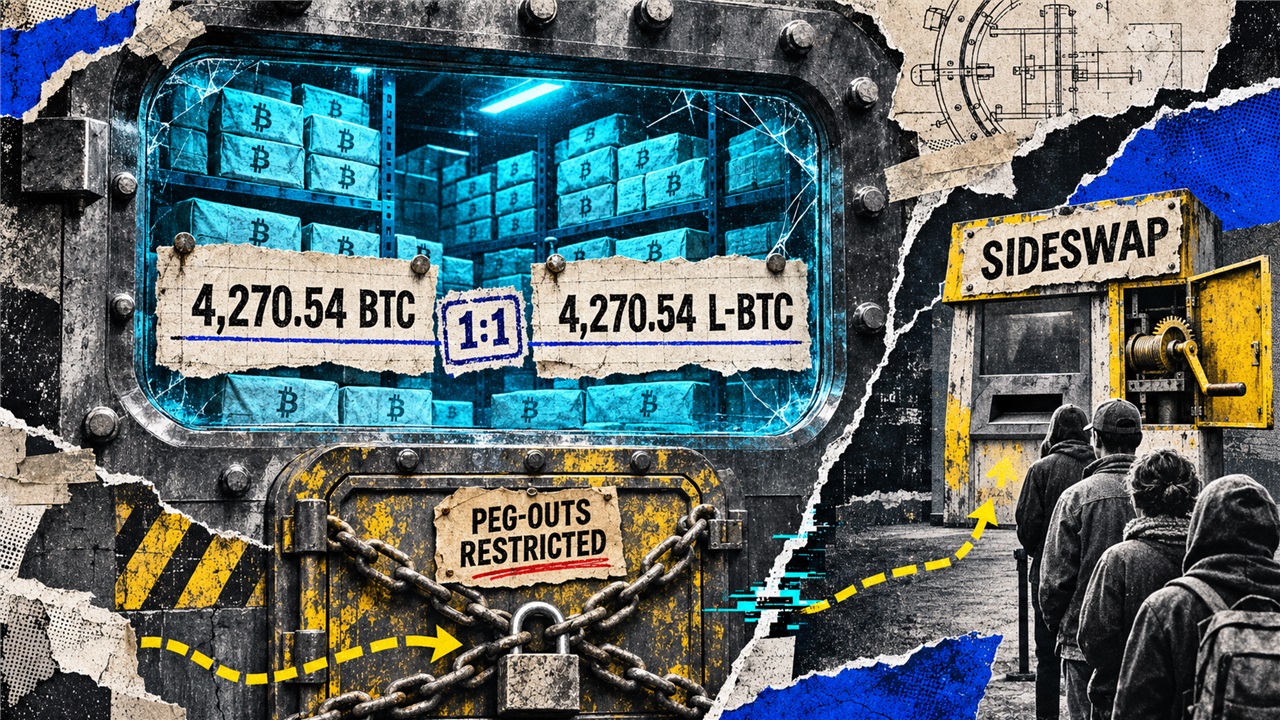
Liquid restores 1:1 Bitcoin backing, but wallet refills remain manual
SideSwap reports full L-BTC backing, while customer payouts still depend on its own Bitcoin wallet and manual refills. Read the fu...

Binance Hacker Sends $798K in SOL to Privacy Cash, Laundering Spreads Across 11 Chains
Key Takeaways: The Binance hacker wallet deposited 8,567 SOL, or approximately $798,000, to Privacy Cash. Elliptic mapped the laun...
After Binance’s $6.3 Billion Hack, Austin Campbell Calls for a 24-Hour Clock on Billion-Dollar Crypto Moves
Crypto hacks reach into the billions partly because the industry designed its systems around technology risk and never adopted the...