Grayscale and Uniswap Rulings Spill Messages For US lawmakers
It has been just reported the fact that there are some pretty strong messages coming to the US lawmakers, and these are targeted by Uniswap and Grayscale. Check out the latest reports about this below. Messages reach US...
Archive context
Older archive item. Useful for background and entity history, but not a fresh market-moving signal.

It has been just reported the fact that there are some pretty strong messages coming to the US lawmakers, and these are targeted by Uniswap and Grayscale. Check out the latest reports about this below.
Messages reach US lawmakersIt appears that federal courts are sending a clear message to lawmakers in Washington that it’s time to take action on updating cryptocurrency regulation.
In the past week, courts have criticized the Securities and Exchange Commission’s reasoning in cases involving Uniswap and Grayscale, with one judge suggesting that Congress should take charge.
These influential rulings have come at a time when lawmakers, led mostly by Republicans, have been working to draft comprehensive regulations for the industry.
However, SEC Chair Gary Gensler has argued that new legislation is unnecessary, as securities law has already been tried and tested. Some experts believe that the recent court rulings, particularly those from Democratic-appointed judges, hold significant weight.
Grayscale sees massive winOn Tuesday morning, three judges in the U.S. Court of Appeals for the D.C. Circuit ruled that the SEC must review Grayscale’s application for a bitcoin ETF spot again.
The asset management firm sued the agency last year after its plan to convert the flagship GBTC fund was rejected.
Judge Neomi Rao wrote the opinion, with judges Sri Srinivasan and Harry Edwards making the ruling.
Edwards is known for his progressive stance, while Rao was appointed by former President Donald Trump, making her a conservative.
Srinivasan, on the other hand, was appointed by President Barack Obama and is deemed a moderate Democrat by Justin Slaughter, a policy director at Paradigm.
With both Srinivasan and Edwards siding with Grayscale, that could send a signal that the SEC could “lose to a lot of Democratic judges,” Slaughter said.
The D.C. Circuit Court is recognized as the second most significant court in the United States since it handles cases regarding rulemakings.
It’s also considered the SEC’s home court due to its Democratic majority, according to an expert named John Aughenbaugh, who is an associate professor at Virginia Commonwealth University.
Aughenbaugh noted that it’s widely assumed that federal judges appointed by Democrats are more likely to rule in favor of a Democratic administration, and vice versa for a Republican administration.
However, he also emphasized that this assumption doesn’t always hold true. In some areas of law, such as the regulation of cryptocurrency, an “odd alliance” can be formed among federal judges, according to Aughenbaugh.
Why this matters
This cryptocurrency story adds another data point to the current market tape and is useful when read alongside nearby source coverage.
Original source
Read on CryptoGazetteRelated market context

CFTC secures $31M court order against digital asset fraud scheme that duped 14,000 investors
The case underscores the critical need for regulatory vigilance and investor due diligence in preventing and mitigating digital as...

Grayscale reports Zcash market cap rises to 1.5% of Bitcoin’s in one year
Zcash's market cap growth highlights increasing demand for privacy in crypto, but regulatory risks and volatility remain significa...

Federal Reserve’s Waller embraces AI, stablecoins, and tokenization as future of payments
Waller's embrace of AI and stablecoins signals a shift towards modernizing payment systems, potentially reshaping regulatory and f...
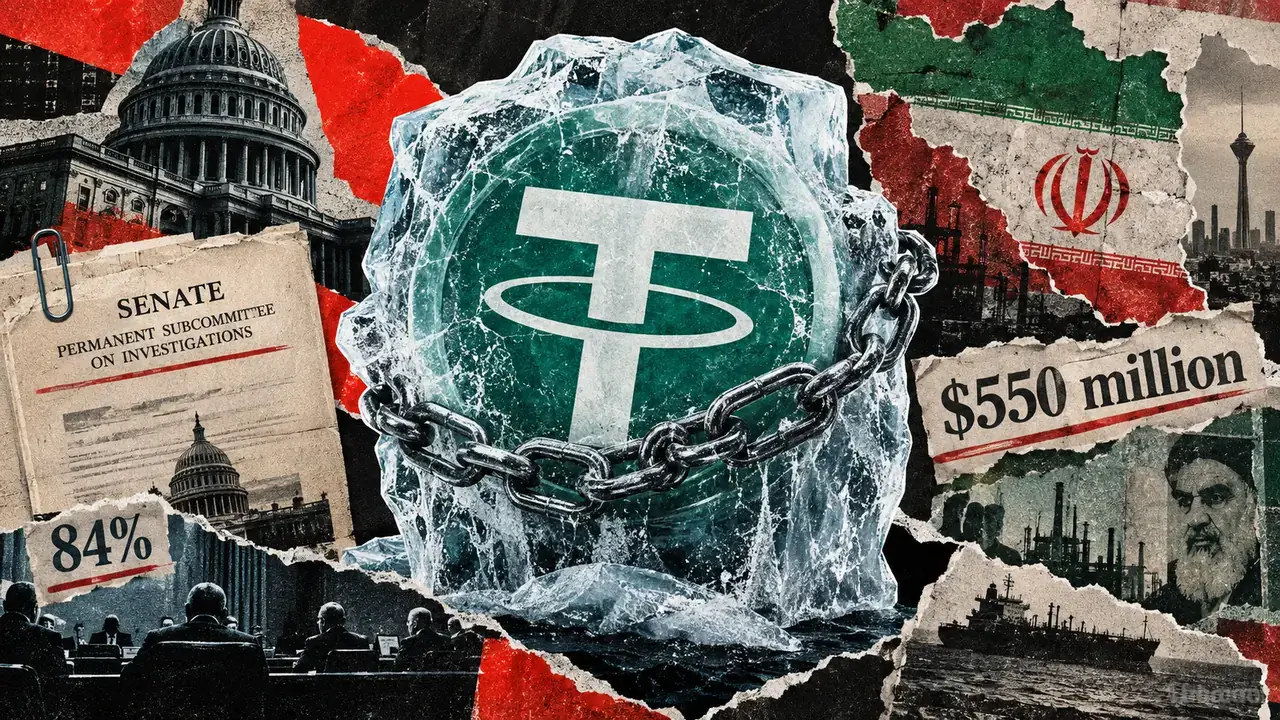
Tether claims $550 million in Iran freezes, but $35 million slipped past Senate
Tether says it helped freeze nearly $550 million in Iran-linked USDT during 2026, while Democratic investigators on a Senate subco...
Bitcoin Surges 40% in Its Best Quarter Since Late 2024
Bitcoin Magazine Bitcoin Surges 40% in Its Best Quarter Since Late 2024 Bitcoin is having one of its best quarters ever — another...
Bitcoin’s Price Jumps Above $85,000 on Lighter-Than-Expected Inflation Data
Bitcoin Magazine Bitcoin’s Price Jumps Above $85,000 on Lighter-Than-Expected Inflation Data Bitcoin’s price rose — albeit slightl...