In Its De Facto War on Crypto, Regulatory Rulemaking Isn't the SEC's Priority
Gary Gensler once described the Securities and Exchange Commission’s (SEC) role in policing the “Wild West” crypto industry as a “cop on the beat”. Although anecdotal, what has since followed is a series of high-profile...
Archive context
Older archive item. Useful for background and entity history, but not a fresh market-moving signal.

Gary Gensler once described the Securities and Exchange Commission’s (SEC) role in policing the “Wild West” crypto industry as a “cop on the beat”.
Although anecdotal, what has since followed is a series of high-profile civil lawsuits against some of the sector’s largest players. Yet, a statement like this would only ring true if the SEC actually adhered to its very own rule-driven standard.
SEC's Priorities in Crypto Regulation
It’s no secret that the SEC, which aims to bring crypto under tighter government scrutiny as its primary overseer, is continuing to drag its feet by refusing to tailor rules to clarify oversight of the multi-trillion dollar crypto sector. But it isn’t just that the SEC has declined to write new regulations on how digital assets should be treated, the agency has instead placed its focus, solely and lamentably, on enforcement actions that have turned courts into “execution chambers” as academic J.W. Verret has remarked.
Gensler, who operates as chairman of the SEC, has previously claimed that most digital assets are “crypto asset securities” despite there being no crypto-specific regulations in place that stipulate this. All the while, the SEC demands that crypto companies comply with still-evolving securities-law requirements.
SEC Faces Scrutiny Amid Crypto Regulation SetbacksSEC under scrutiny for crypto regulation after losses against Ripple and Grayscale, raising questions about its independence and political influence.#Blockchain #CryptoNewshttps://t.co/bGqihWD4Nc
— Global Crypto News (@GlobalCNNews) June 4, 2024Challenges Faced by Crypto Companies
In fact, the SEC has never issued a single regulatory guideline pertaining to the registration of digital assets. In the barren land of crypto regulatory ambiguity, crypto companies like BlockFi get sued for failing to register despite not knowing how to “come into compliance” in the first instance.
Notably, Gensler has publicly stated that Bitcoin (BTC) is not a security, but he has hinted that Ethereum (ETH) might be a security and has repeatedly argued that hundreds of smaller tokens should fall under the SEC’s jurisdiction, which would mean that the companies who issue such cryptocurrencies would need to register with U.S governmental authorities.
Defining Crypto as Securities
In addition to refusing to conduct the rulemaking needed to set stable crypto regulatory standards, the SEC is unwilling to formally define what makes a crypto a security outside of the explanations the agency provides in its enforcement actions.
Granted, the SEC has stated that it is in the process of forming cogent crypto policies, evidentin proposals such as those which seek to overhaul the definition of exchanges in order to require that investment advisors use qualified custodians to park their customers’ crypto. However, if the SEC spent as much time clarifying crypto-specific rules (as many in the industry have urged it to do so) as it does suing crypto companies in court, we might have more answers.
Coinbase Accuses SEC of Stifling Crypto Industry with Regulation-by-Enforcement Strategy https://t.co/gD5WUjnyJt
— Liisa Crypto (@LiisaCrypto) June 3, 2024But crypto regulatory rulemaking isn’t the SEC’s priority, nor is providing the clear answers that would ease the legal quagmire that many crypto companies remain in.
Balancing Enforcement and Guidance
Gensler’s view is that existing securities laws are sufficiently clear because SEC measures already apply to crypto — a convenient but misguided argument that negates the necessity of new rules. What’s more, Gensler (who even once taught an MIT blockchain lecture course and has historically flip-flopped on his views) has said that while misconduct is rampant in the crypto sector, crypto only accounts for a small portion of the U.S capital markets.
If indeed crypto is too small of an industry to exist on the SEC’s direct radar, why has this ostensibly inconsequential sector garnered so much of the agency’s attention, leading to controversial billion-dollar penalties for crypto companies like Ripple? How does pursuing a punitive campaign against crypto assist in the issuing of clear guidance on core issues that impact the industry?
Global Trends in Crypto Regulation
Hundreds of millions of people worldwide use crypto for various purposes and believe in its potential. The SEC’s inability to see how crypto is inevitably a part of our future means that on a federal regulatory level, the US could lag behind the rest of the world. The EU, UK, United Arab Emirates, Japan, Singapore and even China have introduced or are in the process of introducing permanent regulatory frameworks for crypto — take note SEC. U.S policymakers should consider running a sandbox too, just like the UK has done.
BREAKING: 🇺🇸 President Biden vetoes bill that allows highly regulated financial firms to hold #Bitcoin and crypto. pic.twitter.com/qRWC2myigR
— Watcher.Guru (@WatcherGuru) May 31, 2024I often find myself thinking of the age-old dating question: “Where do we go from here?”. No, but really. How can the crypto industry continue to move forward without a clear regulatory path ahead? The stakes are too high, especially as crypto has become increasingly woven into the global financial system. “Investor protection and enhancing public trust in our markets requires that we work with a sense of urgency”, SEC enforcement division director Gurbir Grewal once remarked. I just wish that sense of urgency would be applied to the formation of much-needed crypto regulatory guidelines.
This article was written by Mohadesa Najumi at www.financemagnates.com.Why this matters
This cryptocurrency story adds another data point to the current market tape and is useful when read alongside nearby source coverage.
Original source
Read on Finance MagnatesRelated market context

UK Brings Crypto Under Full FCA Oversight for the First Time
Bitcoin Magazine UK Brings Crypto Under Full FCA Oversight for the First Time The UK’s Financial Conduct Authority has opened appl...

The SEC’s Buyback Guidance Is Narrower Than It Looks. Does Yours Pass the Test?
Crypto projects that buy back their own tokens have operated under a dour legal cloud within the US for nearly a decade. A buyback...
SEC Sues Four Firms Over Alleged $15 Million Crypto Scams Run Through WhatsApp Chats
The Securities and Exchange Commission charged four entities on Tuesday over two alleged schemes that used WhatsApp group chats an...
SEC changes token buyback guidance as spending hits $638M
The US Securities and Exchange Commission tightened its guidance for crypto token buybacks just three days after publishing it. On...

Brazilian Depository With $4.2 Trillion in Assets Taps XRP Ledger to Mirror Fund Shares
CSD BR, a Brazilian central securities depository with more than 22 trillion reais (about $4.2 trillion) in registered assets, wil...
Bitcoin Price Holds $83K as Bitfinex Says Leverage Has Cleared
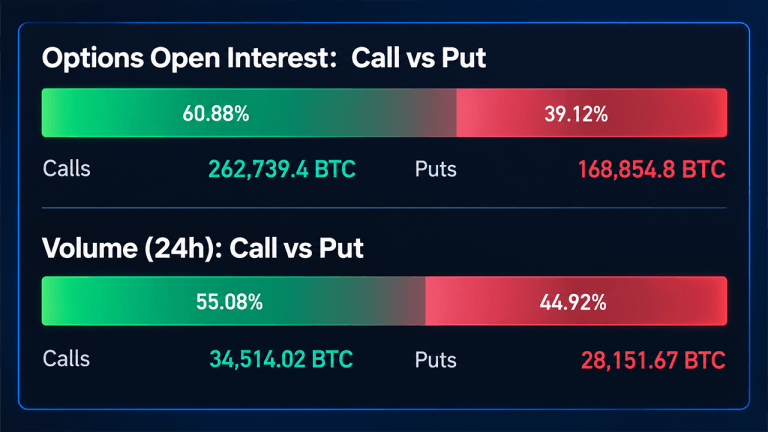
Bitcoin calls represent 60.88% of options open interest, while Deribit’s October max-pain level sits near $76,000, below bitcoin’s...