Russian Bankers Suggest Criminalizing Crypto Storage in Non-Custodial Wallets
Keeping cryptocurrencies in non-custodial wallets may be criminalized in Russia, if authorities accept a proposal from the trade association representing Russian banks. While financial regulators think the idea deserves...
Archive context
Older archive item. Useful for background and entity history, but not a fresh market-moving signal.
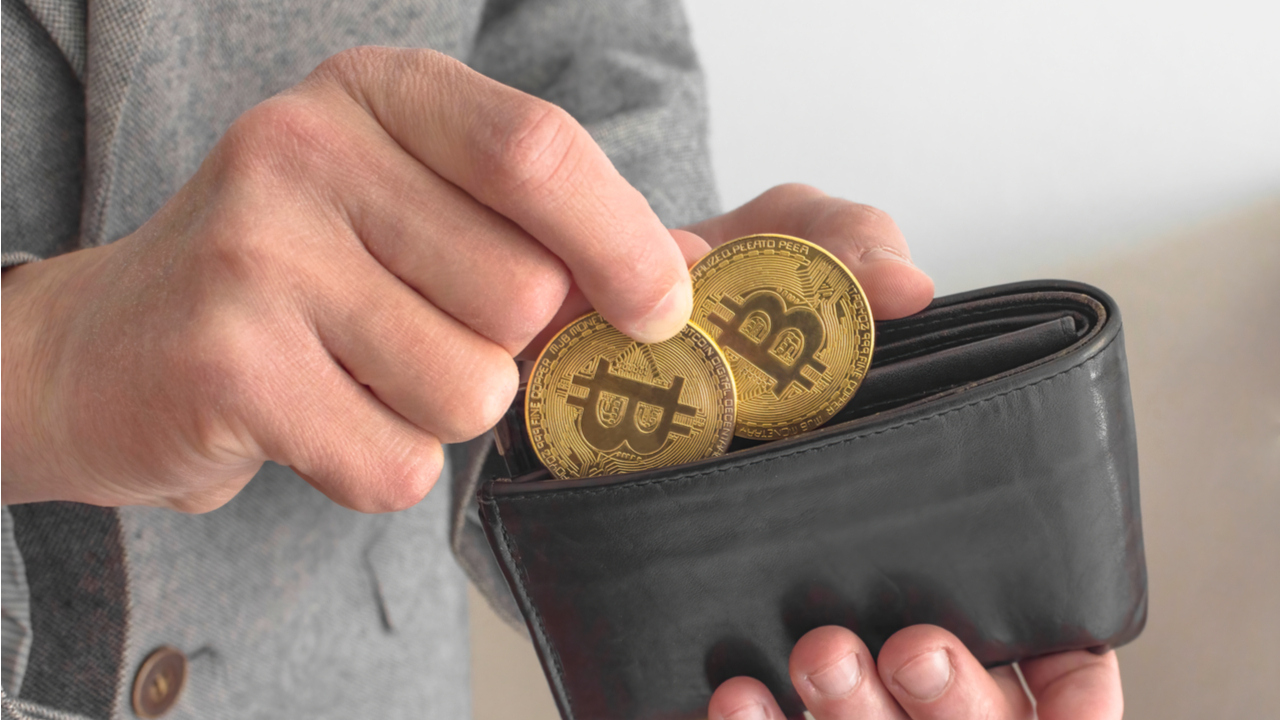
Keeping cryptocurrencies in non-custodial wallets may be criminalized in Russia, if authorities accept a proposal from the trade association representing Russian banks. While financial regulators think the idea deserves attention, lawmakers and experts doubt it’s possible to implement such a measure.
Russian Banks Move to Curb Use of Private Cryptocurrency WalletsChallenges with foreclosure and seizure of crypto assets held by debtors and criminals have motivated the Association of Banks of Russia (ABR) to suggest introducing criminal liability for storing coins in non-custodial wallets, the organization’s Vice President Anatoly Kozlachkov told Izvestia this week.
ABR’s initial proposal, made with the advisory assistance of the Russian Ministry of Internal Affairs, was to criminalize the undeclared storing of cryptocurrency in such wallets. The association is now leaning towards targeting refusals to provide the wallet keys when requested by authorized bodies, Kozlachkov said.
The ABR remarks that it is not referring to digital assets in wallets provided by crypto exchanges, which are de facto controlled by these platforms similar to bank deposits, but wallets controlled directly by the users.
When the relevant authorities establish a connection between a debtor and a cryptocurrency wallet, for example, the person may be given a choice — to either share their keys or risk penalties for hiding property in the form of digital assets.
Besides preventing capital outflow through crypto, the bankers say their approach would help to create “a closed circuit for the circulation of cryptocurrencies” in Russia. According to the ABR, this would be impossible without an effective foreclosure mechanism for non-custodial cryptocurrencies.
In mid-April, the ABR sent its regulatory concept to the Central Bank of Russia, the Ministry of Finance, and Rosfinmonitoring, Russia’s financial watchdog. Rosfinmonitoring told Izvestia that it deserves attention and the finance ministry was ready to consider it. Bank of Russia declined to comment.
Meanwhile, the idea has been met with criticism from lawmakers and representatives of the crypto industry in the expert council at the parliamentary working group tasked to develop comprehensive crypto regulations. Andrey Lugovoy, the group’s deputy chairman, said he understood ABR’s concerns but warned the move would hinder the legalization of the crypto market.
Experts interviewed by Izvestia were also skeptical. According to Roman Yankovsky, deputy dean of the Faculty of Law at the Higher School of Economics, a leading Russian university, it’s unrealistic to identify the non-custodial wallets of ordinary citizens and seizing them would be difficult, if not impossible.
Andrey Gusev, managing partner of the Nordic Star law firm, considers the introduction of criminal liability for owning such wallets unnecessary and says that tax incentives and administrative fines should be enough to dissuade Russian crypto holders from using or hiding them.
Criminalizing non-custodial wallets is “fundamentally wrong,” thinks Maxim Bashkatov, head of the Legal Development Department of the Center for Strategic Research. He points out that right now it’s unsafe for Russians to store cryptocurrency on exchanges because of the risk of asset freezes as a result of western sanctions imposed over the war in Ukraine.
Do you think Russia will criminalize holding crypto assets in non-custodial wallets? Share your expectations in the comments section below.
Why this matters
This cryptocurrency story adds another data point to the current market tape and is useful when read alongside nearby source coverage.
Original source
Read on Bitcoin NewsRelated market context

Bank of England Opens Tokenized Collateral Door With 2027 Deadline for UK Clearing
Key Takeaways: The Bank of England is seeking input on tokenized collateral for central clearing. All tokenizable assets must be e...

Binance Confirms $6.3B Security Breach, Freezes $3B in Assets and Pledges Full Compensation
The exchange says blockchain partners have frozen approximately $3 billion in affected assets. Binance has also pledged to cover a...

Anthropic’s Claude AI Predicts a Seismic BNB Move Post-Binance Hack
Something potentially transformative could be on the horizon for BNB by January 1, 2027. Anthropic’s Claude AI predicts that even...

Binance updates Proof of Reserves addresses, will route all withdrawals through new wallets
Binance's wallet update aims to restore trust post-breach, but full recovery hinges on successful withdrawals and cryptographic ve...

Chainlink Unveils 24/7 Pricing for Tokenized Assets as Aave Adopts Feeds
TL;DR: The service extends a prior 24/5 equity-data product into weekends and holidays. An oracle feed is not a guarantee of a red...

Bitcoin Whitepaper Turns 18: How Satoshi’s 9-Page Vision Reshaped Global Finance
Key Takeaways: On October 31, 2008, the Bitcoin whitepaper was published by Satoshi Nakamoto, which outlines a peer-to-peer electr...