South Korea FIU Blocks 14 Unregistered Crypto Apps on Apple Store
South Korea’s Financial Intelligence Unit (FIU) announced on Monday that it had blocked domestic access to 14 unregistered foreign crypto apps on the Apple App Store as part of a new regulatory measure.The blocked platfo...
Archive context
Older archive item. Useful for background and entity history, but not a fresh market-moving signal.

South Korea’s Financial Intelligence Unit (FIU) announced on Monday that it had blocked domestic access to 14 unregistered foreign crypto apps on the Apple App Store as part of a new regulatory measure.
The blocked platforms included major names like KuCoin and MEXC, sending a clear signal to overseas exchanges lacking local approval.
Since March 25, at the request of the South Korean government, Google has implemented domestic access restrictions on 17 exchanges that are not registered in South Korea. Users cannot install new related applications or update them, including: KuCoin, MEXC, Phemex, XT, Biture,… pic.twitter.com/lEesTeYxSf
— Wu Blockchain (@WuBlockchain) March 26, 2025The move followed a similar action on March 25, when the FIU asked Google Play to restrict access to 17 unregistered crypto platforms.
South Korea Crypto Companies Must Operate LegallyUnder the Act on Reporting and Using Specified Financial Transaction Information (commonly referred to as the Special Financial Transaction Information Act), any virtual asset service provider (VASP) conducting business that targets users in South Korea must register with the FIU.
The requirements for registration include providing services in Korean, supporting Korean won-denominated transactions, or engaging in marketing campaigns aimed at South Korean residents.
Noncompliant platforms face penalties, including fines of up to 50 million won and prison terms of up to five years.
The 14 apps recently removed from Apple’s platform—KuCoin, MEXC, Phemex, Bitrue, CoinW, CoinEX, ZoomEX, Poloniex, BTCC, Blofin, CoinCatch, DOEX, WEEX, and BitMart—were found to be offering services to South Korean users without securing the required FIU registration.
According to the Financial Services Commission, Apple Korea took action on the FIU’s request starting April 11, cutting off access to new users in South Korea and blocking updates for existing ones.
The FIU has indicated that it will continue working with internet service providers, mobile platforms, and regulatory partners to prevent access to unregistered crypto apps and websites.
From Google to Apple and BeyondOn March 25, Google blocked 17 unregistered VASP apps at the FIU’s request, including several platforms now also restricted on Apple’s App Store.
@GooglePlay blocks 17 unregistered crypto apps in South Korea, targeting foreign exchanges like KuCoin and MEXC, as the FIU enforces strict compliance with local regulations.#CryptoRegulation #SouthKoreahttps://t.co/M9UoZ8w1dV
— Cryptonews.com (@cryptonews) March 26, 2025This dual-platform crackdown aims to close any remaining loopholes that allow overseas operators to sidestep South Korea’s strict crypto licensing regime.
This dual-platform strategy is part of an escalating campaign to close gaps that allow unregistered exchanges to reach South Korean users.
As of March 2025, multiple investigations have been launched into foreign exchanges suspected of operating illegally within the country.
KuCoin, CoinW, Bitunix, BitMEX, and KCEX remain under investigation for continuing to serve South Korean users without proper registration.
To aid public awareness, the FIU has published an official list of registered VASPs on its website.
South Korean users are advised to verify platform registration status and withdraw any funds from unregistered platforms to reduce risk.
Japan Mirrors South Korea’s Crypto Enforcement StrategySouth Korea’s regulatory push is not unfolding in isolation. Japan has been taking similar steps to curb unlicensed crypto activity within its borders.
In February 2025, Apple reportedly removed access to apps for exchanges including Bybit, Bitget, KuCoin, MEXC, and Bitcastle for users in Japan.
新たな情報入りました。
Bybitは日本政府からの規制とみて間違いなさそうです。
そして今後、日本のApp Storeからインストール・更新は出来ない模様。 pic.twitter.com/F3VCTElX6U
This followed a November 2024 warning from Japan’s Financial Services Agency (FSA), which accused several platforms of offering Japanese-language services and support without local authorization.
By early February, Japanese users were no longer able to download the apps from the App Store, often encountering messages such as “Cannot connect to the iTunes Store.”
To operate in these regulated markets, exchanges must seek licenses, improve compliance, and work more closely with regulators. Until then, the crackdown continues.
The post South Korea FIU Blocks 14 Unregistered Crypto Apps on Apple Store appeared first on Cryptonews.
Why this matters
This cryptocurrency story adds another data point to the current market tape and is useful when read alongside nearby source coverage.
Original source
Read on CryptonewsRelated market context

South Korea Blocks 27 Crypto Exchange Websites, Including KuCoin, BitMart
South Korea’s Financial Intelligence Unit has ordered access restrictions on 27 websites operated by unregistered overseas cryptoc...
Ripple targets trillion-dollar securities markets with new US brokerage and South Korean deals
Ripple calls Meritz its fourth Korean institutional partner this year, with custody and tokenization cooperation to widen as regul...
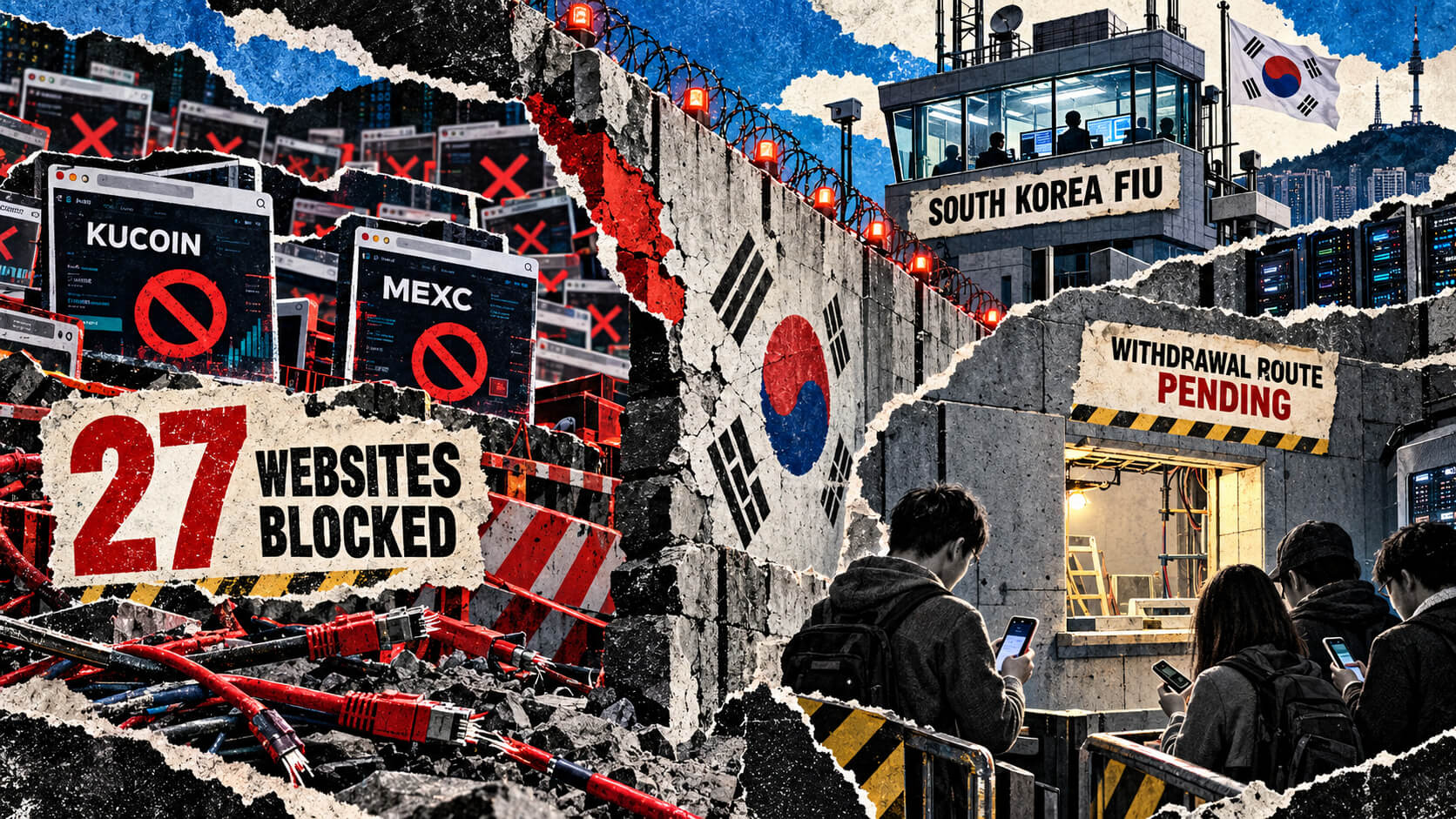
South Korea locks out crypto users as 27 exchange sites go dark
FIU plans withdrawal guidance through DAXA with operators’ cooperation as website restrictions raise access concerns for existing...

Crypto Regulation: UK Lands £3.8Bn Bitcoin Seizure as Korea Blocks KuCoin and MEXC
In recent crypto regulation news, The High Court in London has strengthened the UK authorities’ position in a dispute over roughly...

South Korea clears way for courts to seize and sell Bitcoin for unpaid debts under new November rules
South Korea has established procedures for courts to seize and sell debtors' cryptocurrency to satisfy civil claims. On Oct. 12, t...

Bitcoin defies $800 million crypto wipeout as South Korea’s AI stock market crashes
Bitcoin rebounded above $83,000 on Tuesday despite a sharp Asian stock selloff, as cryptocurrency liquidations exceeded $800 milli...