South Korean Candidate Vows ‘Trump-Style’ Crypto Deregulation—Will 15M Users Put Him in Office?
Key Takeaways: South Korean presidential candidate Hong Joon-pyo promises to cut strict crypto rules. Friendly crypto regulations in the U.S. have propelled bank charter applications and job creation, which Hong hopes to...
Archive context
Older archive item. Useful for background and entity history, but not a fresh market-moving signal.

Key Takeaways:
- South Korean presidential candidate Hong Joon-pyo promises to cut strict crypto rules.
- Friendly crypto regulations in the U.S. have propelled bank charter applications and job creation, which Hong hopes to replicate.
- Hong’s crypto regulation plans and ongoing AML policy-foreign investors discussions could spark growth for digital assets.
South Korean presidential candidate Hong Joon-pyo recently promised to ease crypto regulations, following the example set by Trump in the U.S.
SOUTH KOREAN CANDIDATE HONG JOON-PYO PLEDGES TRUMP-STYLE CRYPTO DEREGULATION
Hong Joon-pyo, a presidential candidate from South Korea’s ruling People Power Party, has vowed to dismantle crypto regulations “to the extent seen under the Trump administration.”
He aims to promote… pic.twitter.com/c9Idpla8dc
He believes cutting red tape will unlock the potential of blockchain technology and support the nation’s economic growth and recovery.
Is Trump’s Crypto Regulations Becoming an Electoral Strategy in Asia?Hong Joon-pyo, a leading candidate in the People Power Party’s presidential primary, unveiled his policy blueprint on April 16 at the Daeha Building in Yeouido, according to a local news report.
The candidate stated that, like the Trump administration in the U.S., he would follow a similar regulatory rollback to create a supportive environment for digital assets and blockchain development.
Hong Joon-pyo is betting that the same formula could work in South Korea and also capture the enthusiasm of pro-crypto voters ahead of the Presidential election to be held on June 3, 2025.
South Korea is a global crypto hotspot. With over 15 million crypto users — many of them young and politically engaged — crypto policies are bound to be a key issue heading to the polls.
Last year, during the parliamentary elections, both parties courted these young voters — many of whom are in their 20s and 30s — by making a series of promises, including tax delays.
Just like in the U.S., where crypto PACs spent over $100 million to support candidates, South Korean voters are bound to shape policy debates and decide who wins power in Seoul.
Hong’s attempt to mirror President Trump’s crypto strategy follows a wave of international developments that put pro-crypto policies in the spotlight.
Trump’s administration replaced key regulators with more crypto-friendly figures. Mark T. Uyeda succeeded former SEC Chair Gary Gensler, and a new CFTC chair was appointed to reshape the crypto policy.
In March, POTUS signed an executive order to create a Strategic Bitcoin Reserve and a Digital Asset Stockpile that included Ethereum, Ripple, Solana, and Cardano.
50 Trillion Pledge: Hong’s Vision Extends to AI and Quantum TechBeyond crypto, Hong outlined five key economic strategies.
These included plans for a public-private economic revival, super-gap technology-led growth, fairer distribution based on productivity, people-centered job creation and welfare, and responsible national debt management tied to economic growth.
He pledged an investment of at least 50 trillion won over the next five years to back these goals. This funding would target the artificial intelligence and quantum technology sectors.
Hong’s plans show the nation’s growing interest in blockchain and digital assets.
Last August, the National Pension Service (NPS), one of the largest public pension funds in the world, acquired 245,000 shares in Strategy (formerly MicroStrategy), valued at $33.75 million.
The fund had earlier also bought over 280,000 shares in Coinbase. These moves suggest that crypto is no longer fringe in South Korea. It’s becoming a central pillar of investment, strategy, and perhaps election politics.
Could Banking Alliances Spur Crypto Growth?South Korea’s banks are also pushing for practical changes in how crypto services are delivered.
Major financial institutions have asked lawmakers to relax current rules restricting crypto exchanges to exclusive partnerships with just one bank because of the belief that this stifles competition.
Banks argue that exclusivity has skewed the benefits, and a potential change would better serve institutional clients and offer regular users more options.
Meanwhile, South Korea’s financial regulator is showing a willingness to revisit another key issue: foreign investor access to the domestic crypto market. Right now, non-residents are blocked due to strict know-your-customer (KYC) rules.
One major roadblock is the requirement for users to link exchange accounts to locally registered bank accounts.
However, Kim Sung-jin, who heads the virtual asset division at the Financial Services Commission (FSC), has recently voiced support for easing these restrictions.
The post South Korean Candidate Vows ‘Trump-Style’ Crypto Deregulation—Will 15M Users Put Him in Office? appeared first on Cryptonews.
Why this matters
This cryptocurrency story adds another data point to the current market tape and is useful when read alongside nearby source coverage.
Original source
Read on CryptonewsRelated market context
Binance weighs adding Hong Kong, Korean, Taiwanese and Brazilian stocks, says co-CEO Teng
Binance's potential expansion into diverse stock markets could enhance its resilience and diversify its revenue streams, reducing...
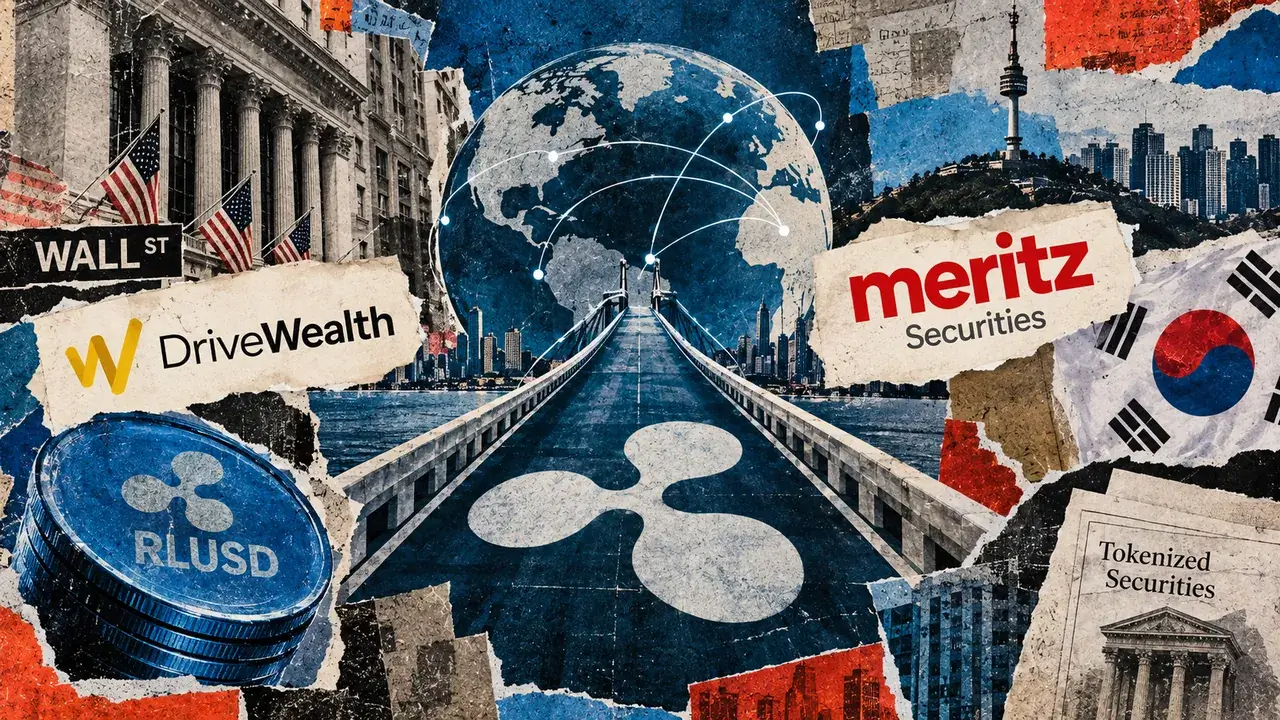
Ripple targets trillion-dollar securities markets with new US brokerage and South Korean deals
Ripple calls Meritz its fourth Korean institutional partner this year, with custody and tokenization cooperation to widen as regul...
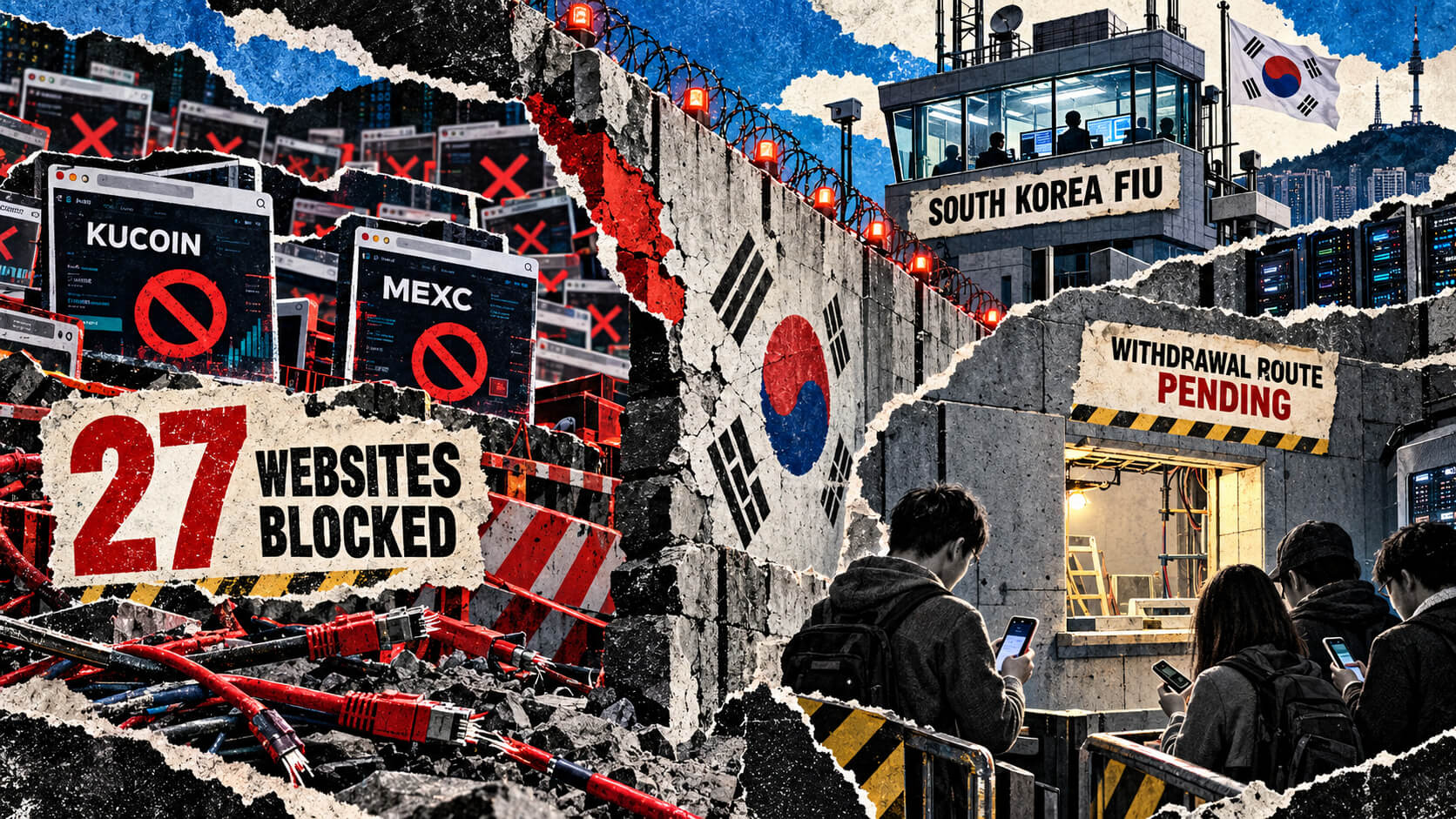
South Korea locks out crypto users as 27 exchange sites go dark
FIU plans withdrawal guidance through DAXA with operators’ cooperation as website restrictions raise access concerns for existing...
South Korea Blocks 27 Crypto Exchange Websites, Including KuCoin, BitMart
South Korea’s Financial Intelligence Unit has ordered access restrictions on 27 websites operated by unregistered overseas cryptoc...
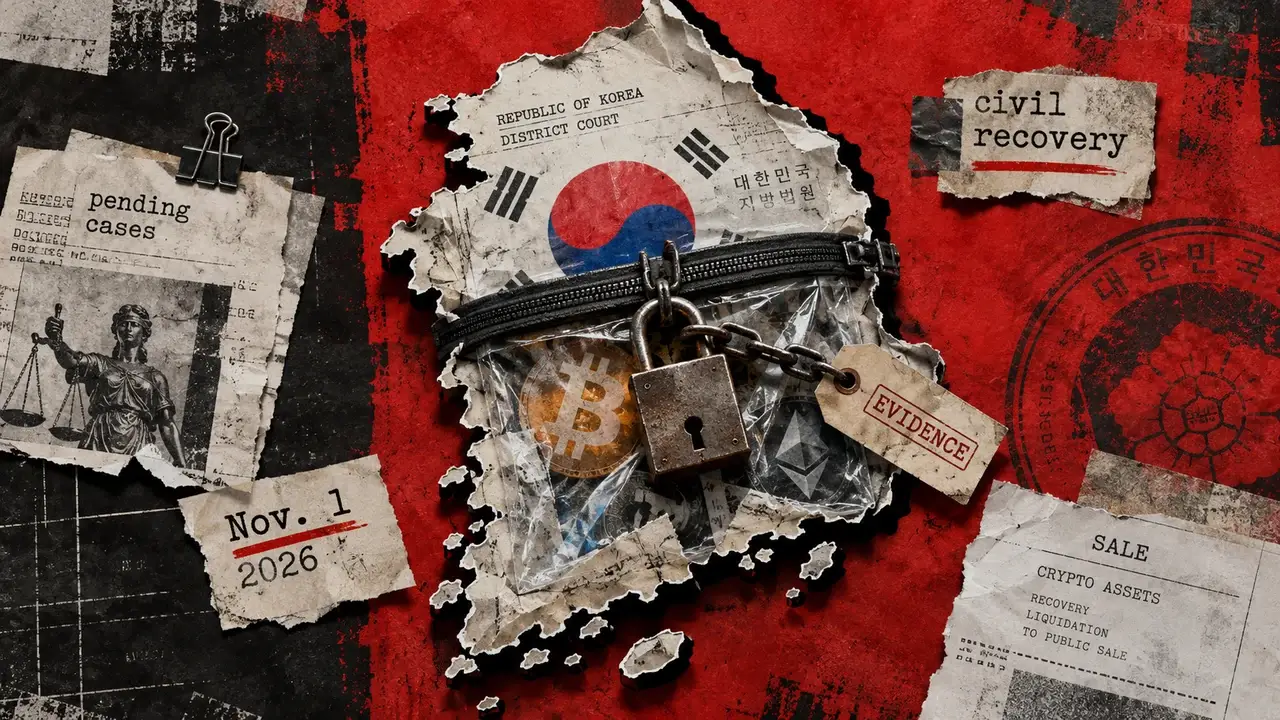
South Korea clears way for courts to seize and sell Bitcoin for unpaid debts under new November rules
South Korea has established procedures for courts to seize and sell debtors' cryptocurrency to satisfy civil claims. On Oct. 12, t...

South Korea Exchange Ban Hits KuCoin, MEXC and 25 Other Platforms
South Korea Financial Intelligence Unit (FIU) disclosed that authorities had ordered a domestic access ban on 27 websites operated...