The Central Bank of Uruguay Requested Binance to Stop Marketing Its Savings Products
Binance, among the largest crypto exchanges in 2022 was issued a summons by the Central Bank of Uruguay. The summons was issued as the central bank sees crypto savings products that are issued by Binance can only be issu...
Archive context
Older archive item. Useful for background and entity history, but not a fresh market-moving signal.

Binance, among the largest crypto exchanges in 2022 was issued a summons by the Central Bank of Uruguay. The summons was issued as the central bank sees crypto savings products that are issued by Binance can only be issued by banks or companies that are listed in Uruguay's stock market.
source: Binance
Binance is not authorized by the regulator to issue crypto savings products. The central bank requested Binance to stop marketing investment products as savings products and stated the following:
"The call to the general public for the application of their savings can only be done through financial intermediation institutions authorized to collect deposits in the market or as an issuer registered in the stock market registry."
Binance issued a swift reply to the central bank, and it has begun discussing the matter with the regulator according to recent reports:
"Binance reinforces that it is leading the way globally in the development of the crypto and blockchain ecosystem, working collaboratively with regulators, legislators, governments and law enforcement authorities to ensure the most secure environment."
At the time of writing, there are no cryptocurrency regulations in Uruguay.
High Interest in Crypto Savings
When Bitcoin was trading at around $2,000 several years ago, investors purchased the cryptocurrency as a long-term investment. The elderly bought Bitcoin as an inheritance for their children and grandchildren.
The majority of investors that entered the crypto markets following the BTC rally explored different methods for long-term investments. According to recent studies, Africa has the largest cryptocurrency market.
In South Africa, crypto is viewed as an alternative investment. In Nigeria, however, cryptocurrencies are used for savings. Due to NGN weakness against the US Dollar (currently trading around 415 NGN for 1 USD), Nigerians find stablecoins and cryptocurrencies, such as Bitcoin and Ethereum more attractive.
Fidelity was the first to introduce 401(k) retirement plans in Bitcoin (expected to begin this fall). MicroStrategy was the first company to apply for the 401(k) crypto plans. Approximately 23,000 companies are using Fidelity's retirement plans, the company has more than $10 trillion in assets under administration (AUA).
Any participants in the crypto retriment plan will only be allowed to use 20% of the funds for cryptocurrencies. At the time of writing, only Bitcoin will be offered in the 401(k) plans.
Other companies, such as Swan Bitcoin and Bitcoin IRA, are introducing crypto retirement plans due to the high-interest Fidelity has received for its Bitcoin plans.
Lending Cryptocurrencies Returns
Lending cryptocurrencies is another method used for long-term investments. Celsius was a top centralized crypto lending company before its collapse.
In crypto lending, investors deposit their cryptocurrencies on a lending platform in exchange for interest. Borrowers will often require lenders to deposit in order to obtain a loan (collaterlized) although some platforms offer uncollateralized loans (KYC is required).
The interest lenders' earnings vary from platform to platform. Rather than choosing a centralized platform, decentralized lending protocols such as Aave are favoured by investors that do not wish to hold their cryptocurrencies in a centralized environment.
source: aave
For NFT holders, there are platforms that allow NFTs to be used as collateral for a loan such as NFTfi. On its official Twitter account, NFTfi says it surpassed 15,000 loans that were made on the platform. Individuals can be lenders as well, the platform is not solely for borrowers.
source: nftfi
Like any investment, lending cryptocurrencies or NFTs have great risks. Security breaches have taken place in the past due to bugs in the smart contract's code despite security audits.
The loan-to-value (LTV) ratio must be sufficient and in an event of a sudden price drop, the protocol may struggle to sell the borrower's collateral at a fast pace, which will result in a loss for both lenders and borrowers.
Staking Cryptocurrencies
Staking cryptocurrencies is another yield-bearing method for investors. Staking is joining the validating process of transactions on a blockchain that uses PoS. Rather than mining, the staked (locked) cryptocurrencies are used to maintain the mainnet in exchange for staking rewards.
For Ethereum 2.0, 32 ETH are required to validate the network. Investors that do not have 32 ETH can join a pool for less and enjoy staking rewards. Centralized exchanges, such as Binance and Kraken, offer ETH pools. Additionally, eToro is offering staking in Ethereum 2.0.
Lido is among the most popular staking platforms. According to Genesis, the number of staked ETH on Lido has been rising.
source: genisis
Lido is currently offering 3.9% APR on staked ETH. A higher APR is offered for Kusama (20%) and Polkadot (16.5%). Polygon investors may earn 8.7% APR by staking their cryptocurrencies on Lido.
However, it is worth noting that ethereum 2.0 staked on Lido (stETH) cannot be exchanged back to ETH until the merge takes place. The incident where stETH de-pegged from ETH (the ratio is 1:1 but extreme conditions took place in June) has triggered a chain reaction that led to the collapse of Celsius (Celsius used stETH on aave for collateral and to borrow Ethereum).
Staking is not limited to Ethereum or the top mainnets. The majority of companies offer staking options for their tokens' holders. Stablecoins may also be staked for rewards.
As soon as there is a global consensus on crypto regulations, traditional institutions may consider offering crypto plans. The UK is among the countries that are making an effort towards regulating cryptocurrencies at a faster pace.
The progress is held back until a new Prime Minister is chosen at the beginning of September 2022. Plans may be composed of different sectors within the blockchain such as health, gaming, defi, tourism, green energy, security and metaverse.
The reason why the focus is primarily on Bitcoin is due to its liquidity, popularity, and the fact it is decentralized (as opposed to Ethereum).
This article was written by Matti Williamson at www.financemagnates.com.Why this matters
This cryptocurrency story adds another data point to the current market tape and is useful when read alongside nearby source coverage.
Original source
Read on Finance MagnatesRelated market context

Standard Chartered says Ethena’s ENA could crush Bitcoin and Ethereum returns by 2028
Standard Chartered expects Ethena’s ENA token to rise about sevenfold by 2028, provided the protocol can rebuild its shrinking syn...
ESMA Proposes MiCA Rules for DeFi Gateways, Staking and Lending
The European Securities and Markets Authority has proposed a new regulated category for crypto firms that connect clients to DeFi,...

EigenLayer Unveils Dual-Staking Extension For Bitcoin Asset Security
In a major development confirmed on SEPTEMBER 30, 2026, Confirmed announcement/filing for EigenLayer Unveils Dual-Staking Extensio...
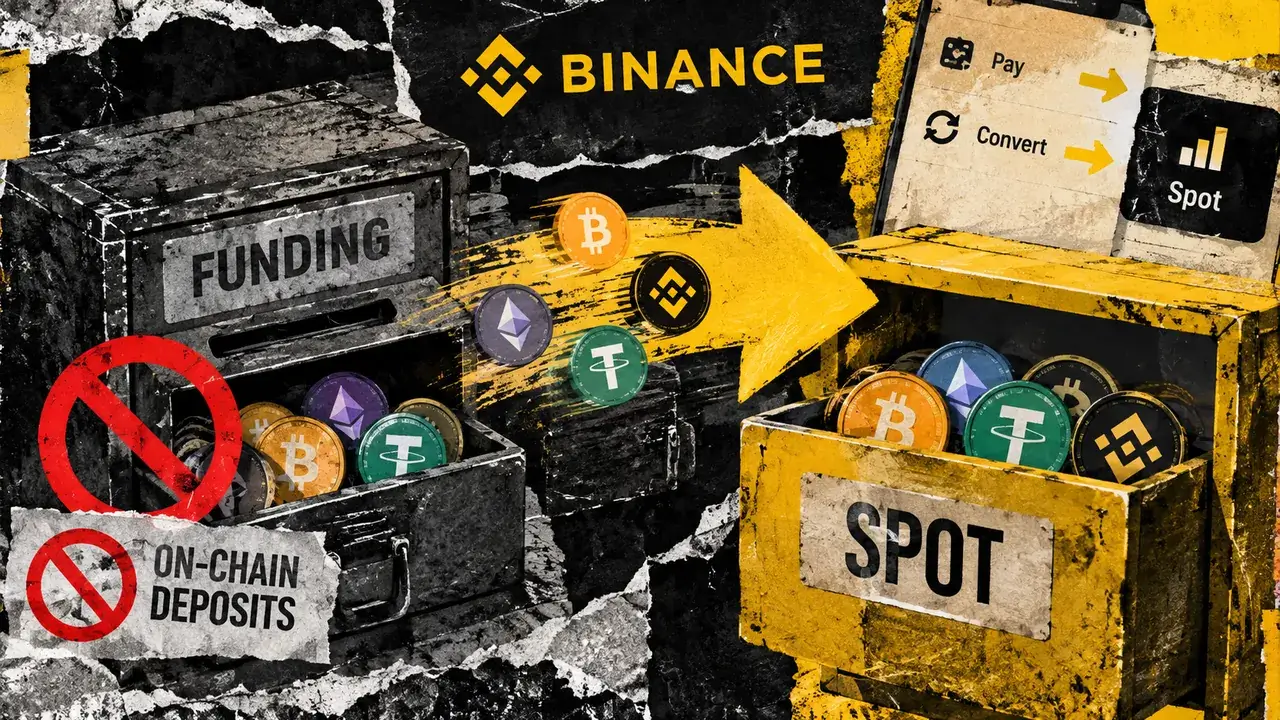
Binance ends Funding Account crypto deposits as Pay and Convert move to Spot
From Sept. 29, Binance says Funding Accounts no longer accept direct on-chain crypto deposits. Users depositing crypto must use Sp...

XRP Price Prediction: Binance XRP Scarcity Index Hits 20-Month Low
XRP is trading at $1.50, down more than 1% over 24 hours, as Binance’s scarcity index signals a sharp reversal in exchange supply...

MetaMask Staking exits its Lido validators following a security incident
MetaMask's exit from Lido validators highlights the critical need for robust security measures in decentralized finance to prevent...