US Senator Cruz Introduces Bill to Prevent Federal Reserve From Using Digital Currency as Surveillance Tool
U.S. Senator Ted Cruz has introduced legislation to prohibit the Federal Reserve from issuing a central bank digital currency (CBDC) directly to individuals and competing with the private sector. The senator from Texas w...
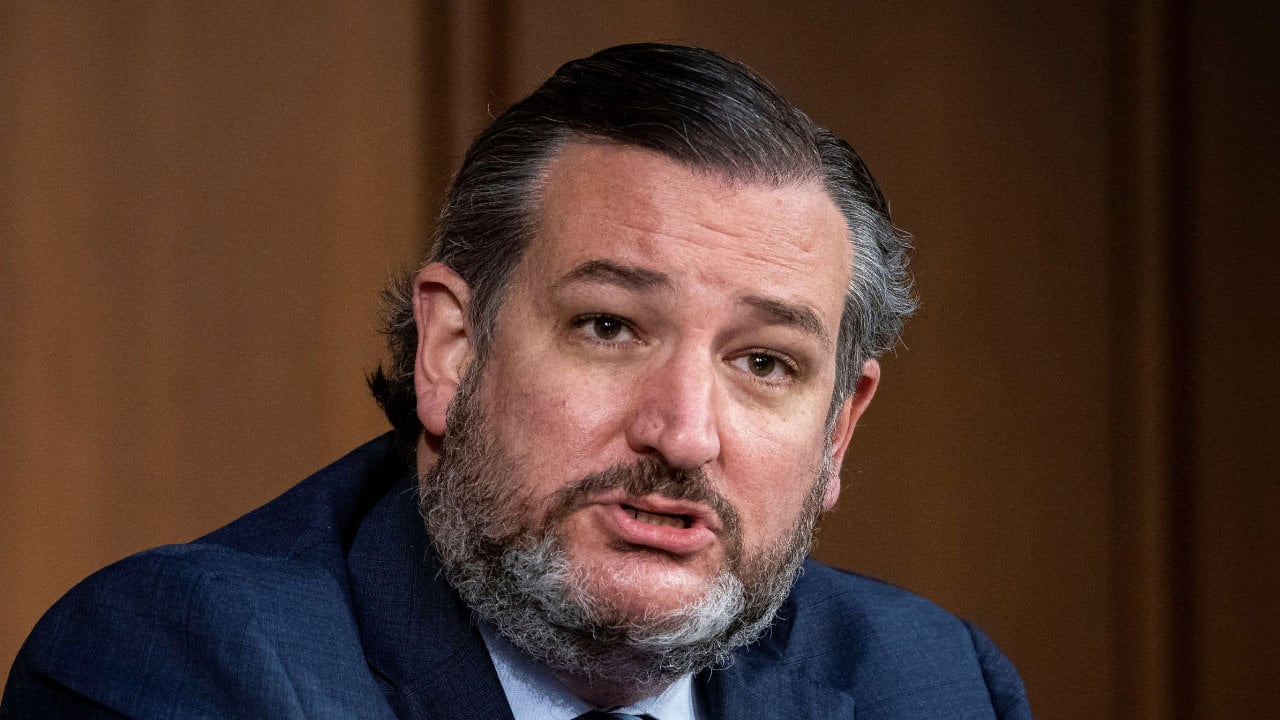
U.S. Senator Ted Cruz has introduced legislation to prohibit the Federal Reserve from issuing a central bank digital currency (CBDC) directly to individuals and competing with the private sector. The senator from Texas warned that not only would this CBDC model centralize financial information, leaving it vulnerable to attack, but it could also be used “as a direct surveillance tool into the private transactions of Americans.”
U.S. Senator Ted Cruz (R-TX) introduced legislation Wednesday “to prohibit the Federal Reserve from issuing a central bank digital currency (CBDC) directly to individuals,” an announcement posted on his official website describes. The bill was co-sponsored by Senators Mike Braun (R-IN) and Chuck Grassley (R-IA).
‘‘No Federal Reserve bank may offer products or services directly to an individual, maintain an account on behalf of an individual, or issue a central bank digital currency directly to an individual,” the text of the bill reads.
Stating that “The bill aims to maintain the dollar’s dominance without competing with the private sector” and “It is important to note that the Fed does not, and should not, have the authority to offer retail bank accounts,” the announcement details:
The legislation prohibits the Federal Reserve from developing a direct-to-consumer CBDC which could be used as a financial surveillance tool by the federal government, similar to what is currently happening in China.
The senator believes that central bank digital currencies (CBDCs) must adhere to three basic principles: protect financial privacy, maintain the dollar’s dominance, and cultivate innovation. CBDCs that fail to do so “could enable an entity like the Federal Reserve to mobilize itself into a retail bank, collect personally identifiable information on users, and track their transactions indefinitely.”
Noting that “Unlike decentralized digital currencies like bitcoin, CBDCs are issued and backed by a government entity and transact on a centralized, permissioned blockchain,” the senator warned:
Not only would this CBDC model centralize Americans’ financial information, leaving it vulnerable to attack, it could also be used as a direct surveillance tool into the private transactions of Americans.
Upon introducing the legislation, Senator Cruz commented, “The federal government has the ability to encourage and nurture innovation in the cryptocurrency space, or to completely devastate it.” He stressed:
This bill goes a long way in making sure big government doesn’t attempt to centralize and control cryptocurrency so that it can continue to thrive and prosper in the United States.
Cruz concluded: “We should be empowering entrepreneurs, enabling innovation, and increasing individual freedom — not stifling it.”
Following Senator Cruz’s introduction of the bill, U.S. Representative Tom Emmer (R-MN) issued an announcement stating that Cruz’s bill is a companion to his own bill, which is also aimed at “prohibiting the Federal Reserve from issuing a central bank digital currency (CBDC) directly to individuals.” Emmer introduced his bill on Jan. 18.
The congressman said, “I’m glad Senator Cruz has agreed to offer a Senate companion to my legislation limiting the Fed’s authorities,” emphasizing:
The Fed must only craft a CBDC framework that is open, permissionless and private – meaning any digital dollar must be accessible to all, transact on a blockchain that is transparent to all, and maintain the privacy elements of cash.
“Anything less puts Americans on the road to CCP-style financial authoritarianism,” the congressman stressed.
The Federal Reserve has not decided whether to issue a CBDC. In January, the Fed published a report exploring various aspects of a digital dollar.
Some lawmakers and Federal Reserve governors are still undecided whether the U.S. should issue a central bank digital currency. Federal Reserve Governor Michelle Bowman similarly said in November, “I’m not really sure that I understand or see the business case for creating it.”
Do you think the Fed should be able to issue a central bank digital currency directly to individuals? Let us know in the comments section below.
Original source
Read on Bitcoin NewsRelated market context

The future of vaults: neobanks and invisible DeFi
The following is a guest post and opinion from Vincent Maliepaard, VP of Marketing at Sentora. On January 26, 2026, Kraken launche...

Here's what SpaceX's IPO means for its $1.3 billion bitcoin reserve
The largest company on public markets now holds bitcoin as a treasury reserve, not as a business model. Its first earnings cycles...

VanEck Bets BNB’s Real-World Usage Can Help Its ETF Stand Out
TL;DR VanEck is positioning its VBNB spot BNB ETF around BNB Chain usage and revenue metrics. The ETF reportedly has around $2 mil...

Ripple CEO Accused Jamie Dimon of Lying About CLARITY Act And Called Out $20Bn Reason Why
Ripple CEO Brad Garlinghouse went directly at JPMorgan chief Jamie Dimon on Fox Business Wednesday, accusing him of ‘intentional m...

CFTC sues New Mexico over federal jurisdiction infringement
The CFTC's legal actions could centralize prediction market regulation, impacting state autonomy and setting a precedent for feder...

SpaceX’s $75 Billion IPO at $135 Sparks Fresh Crypto Bets
Key Takeaways: SpaceX’s IPO was priced at $135 a share to raise a record $75 billion. Offering will value the company at about $1....