Will 2023 Be a Year of Crypto Calm?
As we approach the end of 2022, it’s safe to say that anyone who has been involved in crypto lately will not miss the departing year, but may be quietly optimistic that 2023 can, at least, not recreate the catastrophes o...
Archive context
Older archive item. Useful for background and entity history, but not a fresh market-moving signal.

As we approach the end of 2022, it’s safe to say that anyone who has been involved in crypto lately will not miss the departing year, but may be quietly optimistic that 2023 can, at least, not recreate the catastrophes of the twelve months just gone.
We can expect, perhaps, a bump in positive thinking as the new year rolls around, and predict that there are several developments and trends likely to emerge or continue throughout 2023.
Token-Gated Verticals
The rise of token-gated communities within new verticals should continue. The web has always been a hub in which niche communities evolve, and with the influence of crypto, richer more visibly demarcated ecosystems and communities can develop.
This is already happening around NFT communities, in which holding an asset is requisite to membership, and pseudo-staking mechanisms encourage loyalty. (True crypto staking is core to the functioning of proof-of-stake blockchains, while NFT staking is usually just a mechanism of locking in your NFT, and your membership of the community, in exchange for rewards).
Token-gated ecosystems can create their own currencies, deliver airdrops, arrange real-life meet-ups, events and creative collaborations, and, on the whole, build out their own unique online networks.
Add in virtual playgrounds and dedicated marketplaces, such as the Otherside metaverse being constructed by Yuga Labs, or Nike’s .Swoosh web3 platform, and the possibilities become more substantial.
One caveat here is that establishing walled gardens may appear contrary to the idea of accessibility for everyone (which crypto was supposed to facilitate), but the reality is that this kind of application is viable.
The Rebranding Continues
Over the past couple of years, we have already seen a rise in references to the concept of web3, which usefully cuts out explicit mention of crypto or altcoins, and this shift in terminology appears likely to continue.
Where, up until recently, we have talked about NFTs, newcomers to the space, particularly big-name traditional brands and migrants from web2, may start to refer instead to digital collectibles or something similar. The most conspicuous recent example of this is Reddit, whose NFTs are called Collectible Avatars.
Over time, we may simply be left talking about Bitcoin (which will continue to stand distinct as the primary and most credible new form of money), web3 (which equates to other, smart-contract oriented, consumer uses of fungible crypto) and digital collectibles (which refers to non-fungible crypto assets), while the term crypto itself, lacking specificity, is used less and less.
This may especially be the case as newer crypto participants seek to establish a cordon sanitaire between themselves and the now-disgraced FTX, along with other 2022-era crypto collapses, and the general perception that crypto is hazardous, and simple changes in terminology can help to achieve this.
Politics Enters the Chat
Those involved in crypto can tend, on the whole (and to generalize), not to be fond of politics. There are times when crypto discussion comes across as an idealistic escape from the endless political back-and-forth that takes place online, and it stands out because it’s generally rare when influencers and prominent voices take explicitly party-centered positions.
However, post-FTX (meaning when the crypto space has effectively overcome the worst of the fallout, although a full legal disentangling will take a longer time), regulation, which is tied up with politics, will become a bigger issue than ever before.
As such, divides will open up between politicians who take a broadly pro or anti position on crypto (which will equate to being hands-off or heavy-handed), and it’s likely that some crypto advocates and developers may then assume a more active role interacting with political bodies and individuals.
Due to the overall apolitical nature of Bitcoin and other cryptocurrencies, it’s plausible that party baggage needn’t pollute these debates too much. Crypto advocates can then gravitate towards those political actors who express open-mindedness towards crypto, regardless of party lines, and crypto might provide an opportunity for forward-thinking politicians to broaden their bases.
Throughout bear markets is when crypto can quietly focus on issues that don’t immediately grab the public attention. Political wrangling over legal matters and regulation is just such an issue, and as 2023 looks set, possibly, to be a no-man’s land in the crypto markets (past the worst catastrophes of 2022, but not yet positioned for a substantial bull-market surge), it would be no surprise if political matters get thrashed out during this period.
Quiet Mainstream Adoption
This is related to and, to some extent, dependent on regulation. As, recovering from the bear market washout, the crypto pieces start slotting back together, mainstream entities are unlikely to turn their backs on Bitcoin, web3 or NFTs.
There may not be the kind of overblown fanfare and rampant hype that surrounded interest from mainstream entities in 2021 and parts of 2022, but positions will be taken, and the trend towards crypto adoption and integration should continue, albeit in, for now at least, a relatively inconspicuous manner.
Additionally, we should be prepared, though, looking further ahead, for the likelihood that a period of relative calm and quiet manoeuvring tends to set the stage for future exuberance.
This article was written by Sam White at www.financemagnates.com.Why this matters
This cryptocurrency story adds another data point to the current market tape and is useful when read alongside nearby source coverage.
Original source
Read on Finance MagnatesRelated market context

Ethereum Glamsterdam Upgrade Delayed Over Smart Contract Security Risks
Ethereum developers have postponed the Glamsterdam upgrade on the Hoodi testnet after researchers identified potential security ri...
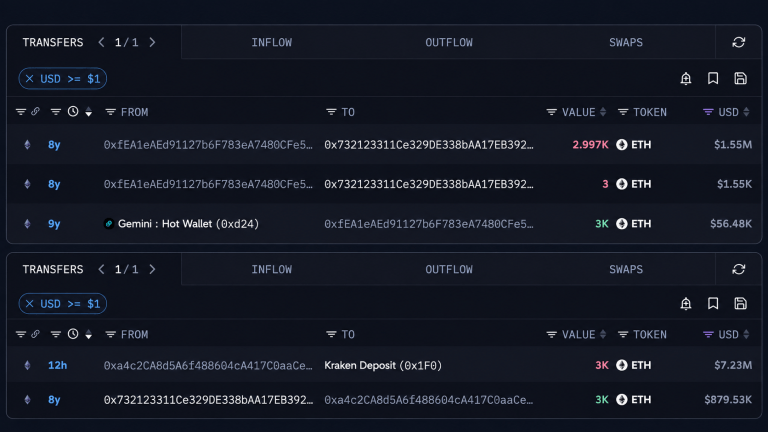
An Ethereum OG Who Bought at $18 Just Cashed out $7.23 Million
An early ether buyer who paid just $18.83 per coin nine years ago has sold 3,000 ETH worth about $7.23 million, a 128x return. The...
Ethereum Delays Glamsterdam Test On Hoodi Over Smart Contract Compatibility Questions
TL;DR: Ethereum developers have removed the planned October 26 Glamsterdam activation on Hoodi while they investigate EIP-8037 int...

Mark Zuckerberg Meta AI Predicts an Insane Run for BTC in Q4
Something potentially seismic could be approaching for Bitcoin by January 1, 2027. Mark Zuckerberg’s Meta AI predicts that if a fu...

Are You Sure Your USDC Rewards Are Safe?
Under the GENIUS Act, the stablecoin law Congress passed in July 2025, companies that issue stablecoins can’t pay interest to the...
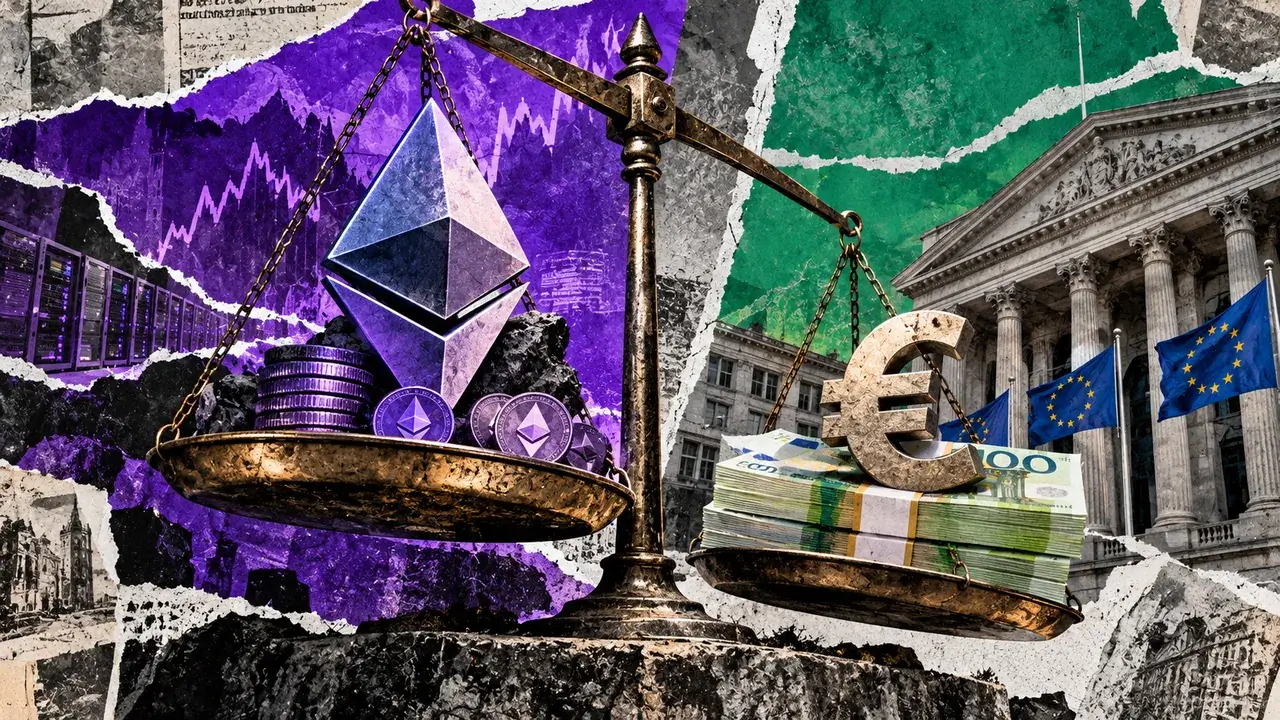
Ethereum staking yield is losing to cash rates, so why are investors still lining up?
Put €10,000 into Ethereum staking at a 2.2% annual return and, if ETH's price stays unchanged, you'll earn about €220 over a year....