Vitalik Buterin Pushes For Ethereum L2 Fee Reform As Wallet Fragmentation Grows
Vitalik Buterin is again pressing on one of Ethereum’s most awkward user-experience problems: Layer 2 networks may be cheaper than mainnet, but the wider ecosystem still feels fragmented, unpredictable, and too hard for...
Archive context
Older archive item. Useful for background and entity history, but not a fresh market-moving signal.

Vitalik Buterin is again pressing on one of Ethereum’s most awkward user-experience problems: Layer 2 networks may be cheaper than mainnet, but the wider ecosystem still feels fragmented, unpredictable, and too hard for normal users to navigate.
Loading Tweet… TL;DR- Vitalik Buterin has floated ideas around Layer 2 gas-fee structure and cross-L2 wallet standards.
- The goal is to make Ethereum scaling feel less fragmented for users.
- The debate comes as L2 networks compete for liquidity while Ethereum tries to preserve a unified ecosystem.
Ethereum’s roadmap has leaned heavily on Layer 2 networks to scale activity. That strategy has worked in one sense: fees are lower, more applications can run, and users have more options. But it has also created a new problem. Moving across L2s often feels like using separate chains rather than one coherent Ethereum economy.
The L2 Problem Is No Longer Just FeesGas costs still matter, but the bigger issue is consistency. A user may hold assets on one rollup, need liquidity on another, and rely on a wallet that handles each network differently. That friction weakens the promise that Ethereum scaling should feel invisible.
Buterin’s comments point toward structural changes around fee handling, wallet standards, and cross-L2 coordination. The market should read that as a sign that Ethereum’s next competition is not only with rival Layer 1s. It is also with its own complexity.
Why This Matters For ETHIf Ethereum can make L2 usage smoother, it strengthens the case that the ecosystem can scale without sacrificing decentralization or liquidity. If it cannot, users may keep treating each rollup as a separate island, and rival chains will keep selling simplicity as a feature.
The good news is that Ethereum developers are talking openly about the problem. The harder part is turning standards into behaviour across wallets, bridges, sequencers, and applications that all have their own incentives.
This article is based on Vitalik Buterin’s public post on X.
This article was written by the News Desk and edited by Samuel Rae.
Why this matters
Ethereum is showing up inside the Layer 2 theme, so this story is worth tracking for follow-through rather than treating it as a one-off headline.
Original source
Read on NewsBTCRelated market context

Vitalik Buterin says AI could accelerate Ethereum’s roadmap by decades
AI's role in Ethereum's development could redefine blockchain innovation timelines, but it also heightens the need for robust secu...
Starknet considers leaving Ethereum for a quantum-resistant Layer 1
Starknet's STRK token more than doubled over seven days while developers considered leaving Ethereum to build an independent Layer...
Ethereum Foundation-linked wallets send 4,393 ETH to Kraken
The Ethereum Foundation's recurring transfers to Kraken may indicate strategic financial maneuvers, impacting market perceptions a...
Buterin outlines ambitious Ethereum upgrade plan for 2030
Buterin's 2030 Ethereum upgrade plan could boost scalability and security, potentially enhancing investor confidence and market ac...
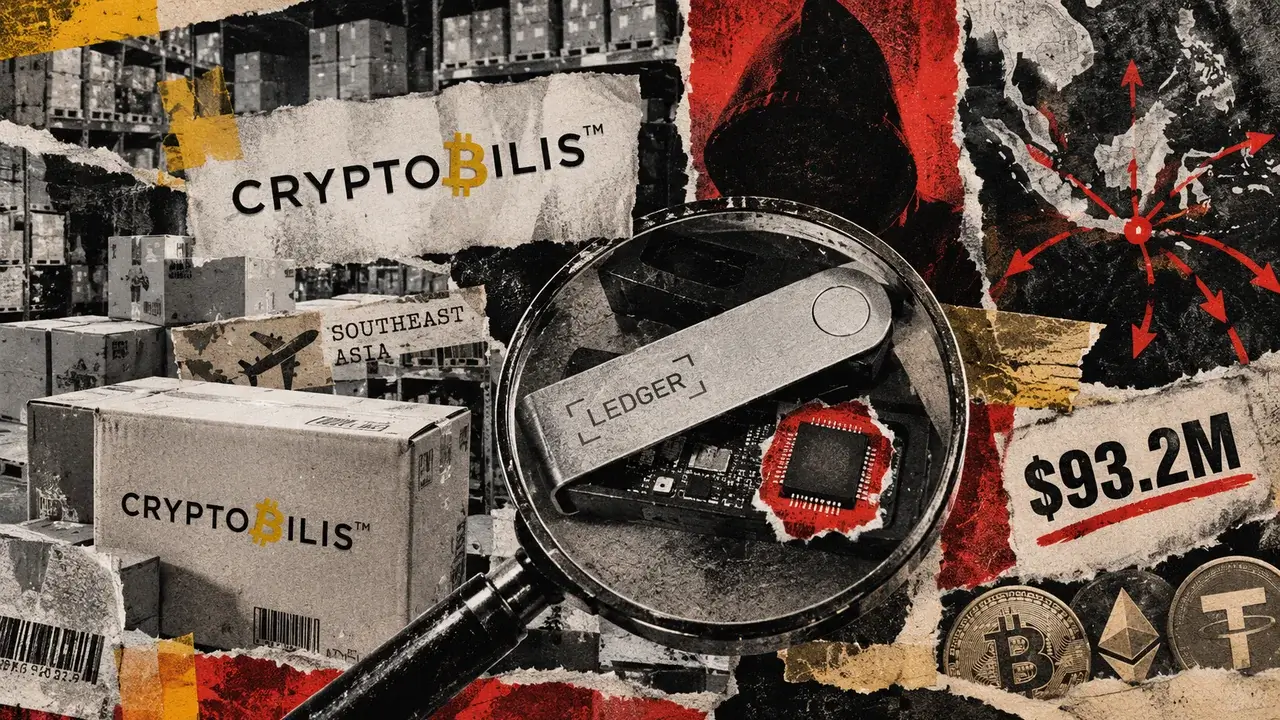
Ledger wallet implant exposes a gap in its authenticity check
Ledger has confirmed an unauthorized hardware implant in one affected customer's wallet as independent investigators estimate $93....

New iPhone spyware can hunt for crypto wallets and extract their data every 15 seconds
Researchers found a new iPhone spyware variant that can remotely extract cryptocurrency wallet data and sensitive credentials from...