Bitcoin’s Mining Difficulty Rises for the First Time in 57 Days, BTC Hashrate Slipped 1.7% Lower in Q2
The mining difficulty tied to the Bitcoin network increased for the first time in 57 days, rising 1.74% higher than the last two weeks. Meanwhile, Bitcoin’s hashrate has been below average as the network’s computational...
Archive context
Older archive item. Useful for background and entity history, but not a fresh market-moving signal.

The mining difficulty tied to the Bitcoin network increased for the first time in 57 days, rising 1.74% higher than the last two weeks. Meanwhile, Bitcoin’s hashrate has been below average as the network’s computational power is down 1.7% lower in the second quarter than in Q1 2022. After reaching 292 exahash per second (EH/s) on June 8, Bitcoin’s hashrate today is coasting along below the 200 EH/s mark at 182 EH/s.
Bitcoin’s Difficulty Increases, Making It More Difficult to Discover Block Rewards for the Next 2 WeeksFollowing the three consecutive difficulty adjustment algorithm (DAA) reductions over the last six weeks, the DAA has shifted upwards for the first time since June 8. On August 4, at block height 747,936, the difficulty increased by 1.74%, bringing the metric up from 27.69 trillion to the current 28.20 trillion.
The DAA, or difficulty epoch, changes every 2,016 blocks or roughly every two weeks. The DAA increases when the 2,016 blocks are discovered too fast and the metric decreases when the discovery time is too slow. Satoshi Nakamoto’s design makes it so roughly every ten minutes, a new BTC block is found as the DAA system is modeled by a Poisson distribution scheme.
Since the 1.74% increase on Thursday, it is now harder to find a bitcoin block than it was during the last two weeks. Prior to the rise, the DAA shifted downwards three times in a row after June 8. Currently, the network’s 28.20 trillion difficulty metric is 9.76% lower than the all-time high in mid-May when it tapped 31.25 million.
With lower BTC prices and the latest difficulty increase, the changes could affect miners negatively during the next two weeks. At press time, the network’s computational power is under the 200 EH/s zone, as it’s coasting along at 182 EH/s today.
The overall Bitcoin hashrate slipped 1.7% lower in Q2 2022 compared to the first quarter, according to statistics compiled by stockapps.com’s fintech expert Edith Muthoni. “In the second half of the second quarter, Bitcoin’s overall hash rate grew more irregular and variable,” Muthoni notes in her research. “This behavior indicates miners are struggling to adapt to the changing market conditions.”
At 182 EH/s, Bitcoin’s hashrate is 37% lower than the 292 EH/s all-time high posted on June 8. Second quarter data indicates that Foundry USA was the top mining pool, capturing 22.27% of Q2’s overall hashrate. Foundry discovered 2,843 BTC blocks out of the 12,766 blocks found in Q2.
Antpool followed Foundry with 14.77% of the global hashrate as the pool discovered 1,885 blocks during the three-month period. The third largest mining pool in Q2 2022 was F2pool, with 14.31% of the global hashrate, as it mined 1,827 out of the 12,766 blocks discovered in the second quarter.
What do you think about Bitcoin’s difficulty rising 1.74% higher? Let us know your thoughts about this subject in the comments section below.
Why this matters
This mining story adds another data point to the current market tape and is useful when read alongside nearby source coverage.
Original source
Read on Bitcoin NewsRelated market context

Blockstream Executive Peter Bain: Institutional Clients Say Bitcoin “Poised for a Big Bull Run”
▶Bitcoin Magazine Blockstream Executive Peter Bain: Institutional Clients Say Bitcoin “Poised for a Big Bull Run” Bitcoin is holdi...
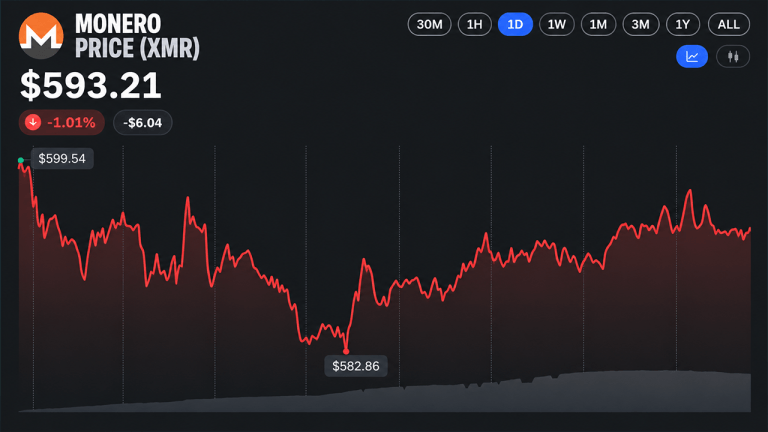
Monero Hashrate Nears Record Highs as XMR Price Gains 70% in a Year
Monero’s network hashrate is hovering near historic highs, but its mining distribution tells an equally compelling story. On Monda...

Bitcoin’s Bear Market Is Over, Galaxy Says
Bitcoin Magazine Bitcoin’s Bear Market Is Over, Galaxy Says Galaxy Research believes bitcoin’s bear market ended in June and that...

Netanyahu Floats Blockchain as a Sanctions Workaround; Israel’s Central Bank Objects
Israeli Prime Minister Benjamin Netanyahu said in a Channel 10 interview on Friday, Oct. 23, that Israel has to get ready for poss...

UNDP And Blockchain For Good Put Public-Service Security Ahead Of New Payment Rails
UNDP and the Blockchain for Good Alliance announced a two-year cybersecurity programme on October 19. The initiative brings a prac...

Bitcoin’s 7-Day Hashrate Returns to 1 ZH/s After Nearly 8 Months
Bitcoin’s computational firepower, measured by its network hashrate, has reclaimed the 1 zettahash per second (ZH/s) threshold, wi...