Data Shows There’s No Profits Left for Bitcoin Miners That Can’t Obtain Cheap Electricity, Run Efficient Mining Rigs
During the last few weeks bitcoin’s cost of production has been higher than the leading crypto asset’s spot market value and in turn, this has put massive pressure on bitcoin miners. On Nov. 30, 2022, statistics show if...
Archive context
Older archive item. Useful for background and entity history, but not a fresh market-moving signal.
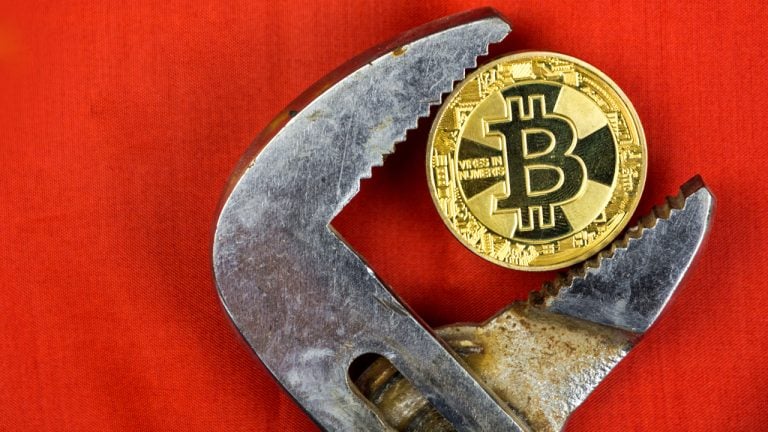
During the last few weeks bitcoin’s cost of production has been higher than the leading crypto asset’s spot market value and in turn, this has put massive pressure on bitcoin miners. On Nov. 30, 2022, statistics show if miners paying for electricity pay roughly $0.12 per kilowatt hour (kWh), only three application-specific integrated circuit (ASIC) mining rigs are profitable. At a rate of $0.07 per kWh, profits begin to increase and data shows 16 different ASIC bitcoin mining devices are profitable with electrical costs at that rate.
At $0.12 per Kilowatt Hour, Only 3 ASIC Miners Gather Profit Using Today’s Bitcoin Exchange RateBitcoin miners are feeling the pain of an extremely high difficulty rating and much lower bitcoin prices than a year ago today. Data from macromicro.me indicates that the cost of bitcoin production ($19,356 per unit) is a lot higher than the spot market value ($16,877 per unit). This means bitcoin miners need to obtain the cheapest electricity they can find on planet earth, and operate with the most efficient bitcoin mining devices on the market today.
Metrics show the world average price for electricity in 2022 is $0.143 per kWh and in specific regions around the world, average businesses and households can spend less than $0.10 per kWh, and some areas as low as $0.01 per kWh. Countries that enjoy cheap electricity rates lower than a U.S. nickel per kWh include Qatar, Russia, Iran, Saudi Arabia, Venezuela, Kyrgyzstan, Cuba, Libya, Uzbekistan, and Kazakhstan.
While cheap electricity is good for bitcoin miners, they also need the most effective ASIC mining units on the market. Statistics show that only three ASIC miners are profitable if the operation has to pay $0.12 per kWh. The machines that still profit under this electricity cost ($0.12 per kWh) include the Bitmain Antminer S19 XP Hyd. which boasts 255 terahash per second (TH/s), the Antminer S19 XP (140 TH/s), and the Antminer S19 Pro+ Hyd. (198 TH/s).
If the electrical cost is slashed down to $0.07 per kWh, 16 different SHA256-compatible ASIC machines will see a profit, according to data collected by asicminervalue.com. At $0.07 per kWh, a Bitmain Antminer S19j (90 TH/s) is estimated to produce $0.21 per day in profit. If electrical costs are cut down even lower at $0.05 per kWh, roughly 43 ASIC bitcoin mining rigs will see a profit.
At that rate ($0.05 per kWh), an Antminer S19 XP Hyd. will get an estimated $9.69 per day, while the Ebang Ebit E12+ with 50 TH/s will produce $0.15 per day in profits, according to asicminervalue.com. Furthermore, SHA256 ASIC machines are the fourth most profitable proof-of-work (PoW) devices behind algorithms like Kadena, Scrypt, and Eaglesong.
At $0.05 per kWh, PoW ASIC machines that are compatible with those three algorithms can make an estimated $20.35 to $42.64 per day in profits depending on the hashrate output of the specific rig. The most dominant two brands on the market today, in terms of high-powered, next-generation bitcoin miners, include Bitmain’s Antminer series and Microbt’s Whatsminer series.
What do you think about the electrical costs bitcoin miners pay and the realized profits they see after obtaining cheap electricity and leveraging high-powered, next-generation ASIC mining rigs? Let us know what you think about this subject in the comments section below.
Why this matters
This mining story adds another data point to the current market tape and is useful when read alongside nearby source coverage.
Original source
Read on Bitcoin NewsRelated market context
Tether Wins Mining Industry Support For Its Open Automation Toolkit
Tether is trying to make Bitcoin mining equipment easier to operate as one system. Its October 24 announcement brings 15 industry...
Bitcoin Hashrate Reclaims One Zettahash As Mining Competition Rebounds
TL;DR: BlocksBridge reported Bitcoin’s seven-day hashrate above one zettahash in the week to October 22. Mining competition has re...
Bitdeer Reports 1,355 Bitcoin Mined In September While Building AI Capacity
TL;DR: Bitdeer says its September Bitcoin production reached 1,355 BTC, highlighting the miner’s expanding hash rate alongside sep...

South Korea Weighs Fourth Delay of Crypto Tax, With 2029 Start Tied to U.S. Data Sharing
Bitcoin Magazine South Korea Weighs Fourth Delay of Crypto Tax, With 2029 Start Tied to U.S. Data Sharing South Korea’s presidenti...

Grayscale Looks Beyond AI Tokens To The Data And Credit Behind Computing
Grayscale’s October 23 research note looks at a more specific crypto-and-AI proposition than a general bet on smarter software: wh...
SEC Examiners Set Sights on Tokenization at Clearing Agencies for Fiscal 2027
The SEC’s Division of Examinations has named tokenization among the “high-risk areas” its staff will focus on when examining clear...