How To Figure Out If You Should Start Mining Bitcoin
This is an opinion editorial by Keaton Reckard, the community engineer at Hiveon, a mining ecosystem that includes an operating system for Bitcoin mining hardware.Bitcoin mining refers to the process through which new bi...
Archive context
Older archive item. Useful for background and entity history, but not a fresh market-moving signal.
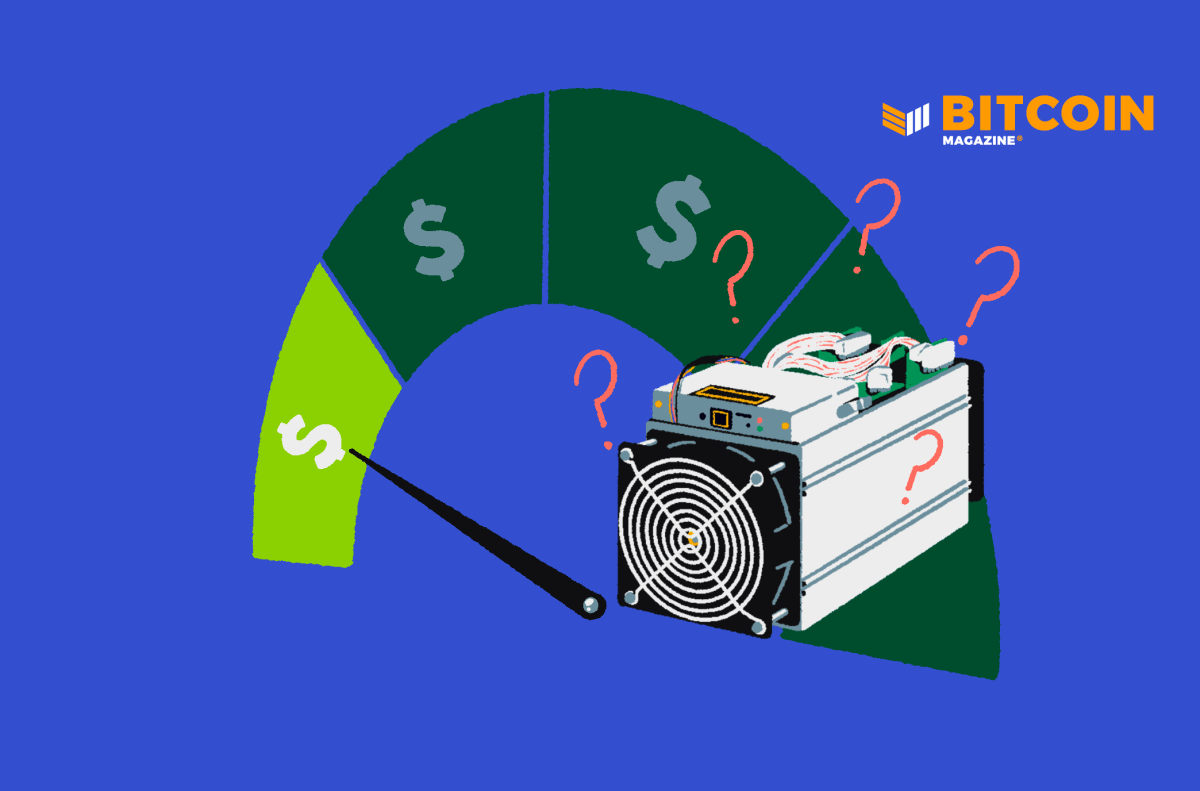
This is an opinion editorial by Keaton Reckard, the community engineer at Hiveon, a mining ecosystem that includes an operating system for Bitcoin mining hardware.
Bitcoin mining refers to the process through which new bitcoin is introduced into circulation. The mining process plays a crucial role in confirming new transactions and maintaining the Bitcoin blockchain ledger as an immutable record of transactions. In essence, miners use ASIC hardware to solve complex computational problems, with the first one to find the solution earning a reward of bitcoin before the cycle restarts.
Though Bitcoin mining can be time-consuming, expensive and can yield inconsistent rewards depending on price volatility, it still holds a strong allure for investors drawn to the idea of earning bitcoin as compensation for their efforts. For tech-savvy individuals and hobbyists, mining can be an intriguing opportunity for many different reasons.
As opposed to traditional investment assets, such as standard bank deposits, real estate property or stocks, bitcoin can offer much higher returns. It’s an environmentally-conscious business that can prevent energy waste by utilizing excess energy, such as the natural gas that gets burned during oil extraction, idle wind turbines and surplus energy from hydroelectric or nuclear power plants.
Hiveon’s long-term predictions are that bitcoin’s value will rise after the halving (more on that below), so we’re accumulating coins now to multiply that money into the future. We also believe that, in the future, an alternative global financial system based on blockchain technology like Bitcoin’s will be dominant, and network validators will be able to make money from processing transactions.
But with mining difficulty and hash rate continuously hitting new highs and fees surging, many may wonder if the practice is still worth investing in.
Is Mining Bitcoin Worth It?To determine if Bitcoin mining will be “worth it” for them, equipment, prospective miners should conduct cost-benefit analyses to determine their break-even points. Factors to consider include power costs, hardware costs and efficiency, time and the market value of bitcoin. You can choose to factor in the current BTC price ($28,190 at the time of writing) or, attempt to extrapolate where you believe the price of BTC will be in the future.
Power CostsAt the time of this writing, Bitcoin mining can be profitable for individuals who pay $0.10 or less per kilowatt hour (kWh) of power.
Access to energy at this price, however, can vary significantly across different regions, with some areas offering notably cheaper electricity than others. In terms of household electricity prices, several Middle Eastern countries would make good homes for Bitcoin miners, including Iran, Qatar and Saudi Arabia. Meanwhile, prices in European countries like Denmark, Germany and the U.K., would make Bitcoin mining a difficult proposition.
Hardware CostsAcquiring ASIC equipment has become relatively easy, although the price of ASICs ranges from a few hundred dollars to five-figure sums. I recently found a used Antminer S19 for sale in the U.K., listed at £2,700 (or about $3,343.38).
Market ValueBitcoin achieved its highest price ever at $67,549 in November 2021. During this period, as the 2021 bull market reached its peak, miners’ bitcoin rewards were naturally more valuable in fiat terms than they are at the time of this writing, with the bitcoin price around $27,600. However, with bitcoin transaction fees rising as a result of ongoing experimentations with block space, miners are benefitting.
A profitability calculator can help potential miners evaluate the cost-benefit ratio of Bitcoin mining. These calculators can vary in complexity and may provide slightly different results.
What Are The ‘Other’ Reasons For Bitcoin Mining?But for some Bitcoin miners, a simple cost-benefit analysis may not be the only factor in deciding whether mining is “worth it” or not in 2023.
Mining is an essential aspect of Bitcoin's decentralized transaction recording and validation process. Bitcoin mining serves a critical purpose by addressing an issue called “double spending,” a problem inherent in any digital currency system. Double spending is the digital equivalent of counterfeiting, which is kept in check in the physical world by middlemen like governments and banks.
For Bitcoin, this need to trust third parties has been replaced largely because of the computational effort provided by miners. Maintaining that freedom from middlemen, in addition to collecting revenue, may be a motivation to contribute to the mining network for some.
Bitcoin Halving Cycles And What to Expect In 2024The next anticipated Bitcoin halving in April 2024 will likely have a significant impact on the mining dynamic.
A Bitcoin halving is an event in which the reward for mining new blocks is reduced by 50%, resulting in miners receiving half as many bitcoin in their reward for solving a block. Scheduled to occur every 210,000 blocks, Bitcoin halvings continue until the maximum supply of 21 million bitcoin has been issued.
The impact of the next halving on Bitcoin's price remains uncertain. Some analysts predict that the price will follow a similar pattern to previous halvings, rising post-event due to the constrained supply of new coins. However, any price increase will ultimately depend on demand for bitcoin and it should be noted that the market has matured significantly since the 2020 halving, and numerous well-established cryptocurrencies now compete for users.
Anyone considering whether Bitcoin mining will be profitable in 2023 will likely want to factor the impact of the next Bitcoin halving into their calculus as well.
Difficult, But Not ImpossibleProfitable Bitcoin mining is a challenge, but it’s not impossible. Bitcoin is priced relatively low at the time of writing, yet an Antminer S19 can run profitably at a maximum power cost of $0.10 per kWh. While this rules out areas of the world like the U.K., there are many global locations where power is cheaper. Naturally, renewable sources of energy (solar panels in particular) really help improve profitability and, as the world transitions from oil and gas to renewable sources of energy, it’s hoped that the price of electricity will fall once again.
Access to cheap electricity, the quickly-evolving nature of Bitcoin and upcoming events like the halving are just some of the many factors to consider when you ask, is Bitcoin mining profitable?
This is a guest post by Keaton Reckard. Opinions expressed are entirely their own and do not necessarily reflect those of BTC Inc or Bitcoin Magazine.
Why this matters
This mining story adds another data point to the current market tape and is useful when read alongside nearby source coverage.
Original source
Read on Bitcoin MagazineRelated market context
Tether Wins Mining Industry Support For Its Open Automation Toolkit
Tether is trying to make Bitcoin mining equipment easier to operate as one system. Its October 24 announcement brings 15 industry...
Bitcoin Hashrate Reclaims One Zettahash As Mining Competition Rebounds
TL;DR: BlocksBridge reported Bitcoin’s seven-day hashrate above one zettahash in the week to October 22. Mining competition has re...

How one of our clients approached estate planning and opened a Kraken account in their trust’s name
TL;DR One family set up a revocable trust, pour-over wills, a guardian and conservator nomination, and powers of attorney with an...

Bitcoin Price Rebounds Again, Peter Schiff Repeats His Crash Warnings
Bitcoin price has once again challenged Peter Schiff’s latest crash warning, after the longtime crypto critic predicted BTC would...

Passport Wallet Maker Foundation Traces Phishing Emails to Backend Breach, Promises Report
Foundation, the company behind the Passport bitcoin hardware wallet, said customer funds and devices are safe after attackers sent...

PHP Hack: How Bitcoin Will Respond to the “Cyber Pandemic”
▶Bitcoin Magazine PHP Hack: How Bitcoin Will Respond to the “Cyber Pandemic” Government websites in France and Finland and hospita...