US Sentences Man to 3 Years in Prison for Defrauding Investors in Crypto Mining Scheme
A U.S. district judge has sentenced a man to three years in prison in a fraudulent cryptocurrency mining scheme. The defendant “misappropriated his victims’ money and failed to provide them with the miners and miner-host...
Archive context
Older archive item. Useful for background and entity history, but not a fresh market-moving signal.
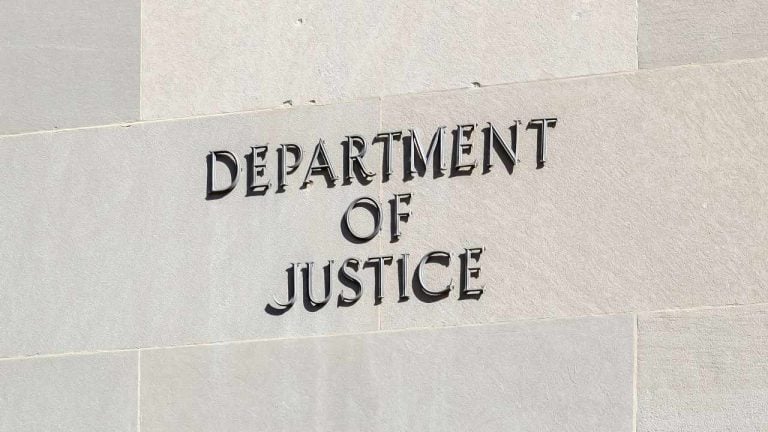
A U.S. district judge has sentenced a man to three years in prison in a fraudulent cryptocurrency mining scheme. The defendant “misappropriated his victims’ money and failed to provide them with the miners and miner-hosting services they had purchased from him,” according to the U.S. Department of Justice (DOJ).
The U.S. Department of Justice (DOJ) announced Thursday that Chester (Chet) Stojanovich has been sentenced to three years in prison “for defrauding purchasers of cryptocurrency miners and miner-hosting services.” He pled guilty in November last year to one count of wire fraud.
The DOJ explained that from at least 2019 until his arrest in April 2022, Stojanovich “allegedly defrauded more than a dozen victims of more than $2 million through fraudulent misrepresentations that he would provide his customers with specialized cryptocurrency-mining computers (‘miners’) and miner-hosting services that would provide the victims with a lucrative stream of ‘hash power’ convertible into cryptocurrency.” The Justice Department added:
Instead, Stojanovich misappropriated his victims’ money and failed to provide them with the miners and miner-hosting services they had purchased from him.
Besides failing to provide the buyers with the cryptocurrency mining equipment and the hosting services they had bought, the DOJ said Stojanovich “employed deceptive practices to create the illusion that such miners had been acquired and were being used to provide hash power to those customers.”
Moreover, Stojanovich allegedly “misappropriated his customers’ funds and spent the funds on unrelated and personal expenditures, including chartered air flights, hotel rooms, limousines, and private parties,” the Department of Justice detailed. Noting that Stojanovich was sentenced on Thursday before U.S. District Judge Denise Cote, the DOJ concluded:
In addition to his prison sentence, Stojanovich … was sentenced today to three years of supervised release, forfeiture of $2,158,927, and restitution to his victims in the amount of $2,108,927.
Do you think Stojanovich should go to prison for more than three years for defrauding investors in this crypto mining scheme? Let us know in the comments section below.
Why this matters
This mining story adds another data point to the current market tape and is useful when read alongside nearby source coverage.
Original source
Read on Bitcoin NewsRelated market context

Stablecoin deposits in DeFi hit $24B, up 560.8% in three years
The surge in DeFi stablecoin deposits highlights growing trust in decentralized finance, yet potential risks and market shifts rem...
Tether Wins Mining Industry Support For Its Open Automation Toolkit
Tether is trying to make Bitcoin mining equipment easier to operate as one system. Its October 24 announcement brings 15 industry...
SEC Examiners Set Sights on Tokenization at Clearing Agencies for Fiscal 2027
The SEC’s Division of Examinations has named tokenization among the “high-risk areas” its staff will focus on when examining clear...
NY Seeks $1.37 Billion Judgment Against Operators of NovaTech Crypto Ponzi Scheme
Bitcoin Magazine NY Seeks $1.37 Billion Judgment Against Operators of NovaTech Crypto Ponzi Scheme New York Attorney General Letit...
Bybit Wins Dubai VARA Approval For Spot Crypto Exchange Services
TL;DR: Bybit says its Dubai entity has secured a VARA virtual-asset service provider licence covering spot exchange activity; deri...

Bitdeer Reports 1,355 Bitcoin Mined In September While Building AI Capacity
TL;DR: Bitdeer says its September Bitcoin production reached 1,355 BTC, highlighting the miner’s expanding hash rate alongside sep...