What Next for PFPs, Art and Big Brand NFTs?
While still far from the kind of dizzying bull run that characterized 2021, NFTs have been enjoying an optimistic start to the year. There’s no froth, at the moment, and the atmosphere is relaxed, but there’s plenty of d...
Archive context
Older archive item. Useful for background and entity history, but not a fresh market-moving signal.

While still far from the kind of dizzying bull run that characterized 2021, NFTs have been enjoying an optimistic start to the year. There’s no froth, at the moment, and the atmosphere is relaxed, but there’s plenty of development, trades are happening, and some collections have seen their prices buoyant and rising.
Underlying all this, there are a couple of prevalent sentiments. First, is that creativity is flowing cleanly, as developers build, artists provide color, and founders seek out more efficient ways of utilizing the tools at hand to produce lasting value. Second, there is a sense that because so much is in motion (in terms of developer and artistic activity), any spark in the wider crypto markets can quickly ignite the NFT space, setting off renewed surges in speculation.
Rewind a couple of years, and NFTs were in a simpler state than they are now, but here in 2023, distinct categories have emerged. Let’s consider how some of those brackets might develop from here.
PFPs
If any category captures NFTs as they have appeared in the public consciousness up to now, then it’s profile pictures (PFPs). These are the generative collections of matching characters, usually facing to one side, but each with its own features and variations, which are utilized as identity markers on social media.
The most famous collections seem capable now of consistently maintaining status as prized assets. CryptoPunks (the original 10,000 item PFP collection) are art objects in their own right. Bored Ape Yacht Club (BAYC) has become the foundation of a budding web3 empire. And several other collections, such as Doodles, which recently acquired the animation studio Golden Wolf, and Azuki, which this month launched its own metaverse space, appear intent, like BAYC, on expanding beyond the parameters of static PFPs.
There are other projects strongly in the running too (one could point to Cool Cats, Renga, and the Nike-affiliated CloneX as realistic contenders), but it appears now that any new PFP collection that wants to stick around long-term needs to have expansion plans ready to go and be meticulously executed.
It was PFPs that brought NFTs to mainstream awareness, but NFTs, it seems, are ready to move past PFPs.
Works of Art
The art section of the NFT space increasingly feels like a market of its own, with its own distinct dynamics, and it has an atmosphere in common with traditional art markets. That said, trade in NFT art is tangibly enhanced by the benefits of working digitally on blockchains.
Still, art NFTs will always revolve around creator credentials, utility and empire-building are secondary considerations, and as long as the artist remains prestigious and collectible, then so do the tokens to which their work is attached.
Something of note around art NFTs is their tie-ins with real-life galleries and physical events. On this note, the famed generative art NFT platform Art Blocks has been busy. Last year, Art Blocks began a partnership with Pace Gallery, and this week, a partnership with Bright Moments was announced. That latter organization, Bright Moments, specializes in organizing NFT minting events in physical, real-world galleries.
This direction, bringing together digital NFT-connected art with physical events and traditional venues, seems likely to continue.
Check out the FMLS22 session on NFTs for Fintechs "From Asset class to the Machinery of Ownership."
Web3 Culture and Big Names
A striking difference between NFTs a couple of years ago and the landscape now is the presence of brands and big names coupled with an emphasis on practical utility. This is in contrast to the niche-tech, almost avant-garde quality of NFTs in 2021 and earlier when tokens seemed like a visual crypto experiment and pixel art JPEGs were swapped on the Ethereum blockchain simply because it was possible to do so.
Now, companies with clout want a professional-looking web3 presence, but brand maneuvers are bringing mixed results. One such big-name launch that didn’t go to script was the Porsche 911 NFT collection, released earlier this week.
The German car manufacturer had planned to sell 7,500 NFTs, based around its iconic 911 model, at 0.911 ETH each. The digital tokens feature a blank white 911, and the promise is that they can be artistically customized in future, and will provide further utility within Porsche’s web3 strategy.
However, demand was lacking and minting ground to a crawl at about 1,500 sales, with secondary sales concurrently taking place at below the official mint cost. Porsche responded with an announcement that the sale would close, which appeared to cause an increase in interest, and by the time minting actually halted, 2,363 NFTs had been sold. At this point, the price tag then surged on secondary markets as it became clear that supply was capped low, and the cheapest that a Porsche NFT could be picked up for rose, for a short time, to over 3 ETH or more than triple the mint cost.
While this was all unfolding, Porsche was taking heavy criticism for overpricing its launch and misunderstanding the ways in which web3 distinguishes itself from traditional models. Currently, a key concept around NFTs is the idea of onboarding users cheaply, or even for free, and then building out an engaged community, but Porsche didn’t take that route.
This story reveals how critical it is for brands to fully immerse themselves in the ideals of web3 and NFTs, including all the quickly evolving idiosyncrasies, before pushing ahead with a launch. After all, that early period when NFTs were camped out on the crypto fringes is not so long ago, and there is an understanding in the NFT space that culture and community are paramount.
What we also see is how rapidly, and with abrupt volatility, an NFT project can turn around. In this case, by halting the mint, the tokens suddenly became prized for their scarcity and the floor price soared. What’s more, while Porsche’s brand presence made it a target for criticism, that presence fueled instant demand when the supply was cut.
Perhaps one more thing we can take away is that NFTs and the broader web3 environment are fickle places in which sentiment can switch rapidly. There’s a unique mindset, distinctive customs and culture, and an ingrained aversion to more traditional ways of doing business.
This article was written by Sam White at www.financemagnates.com.Why this matters
This nft story adds another data point to the current market tape and is useful when read alongside nearby source coverage.
Original source
Read on Finance MagnatesRelated market context
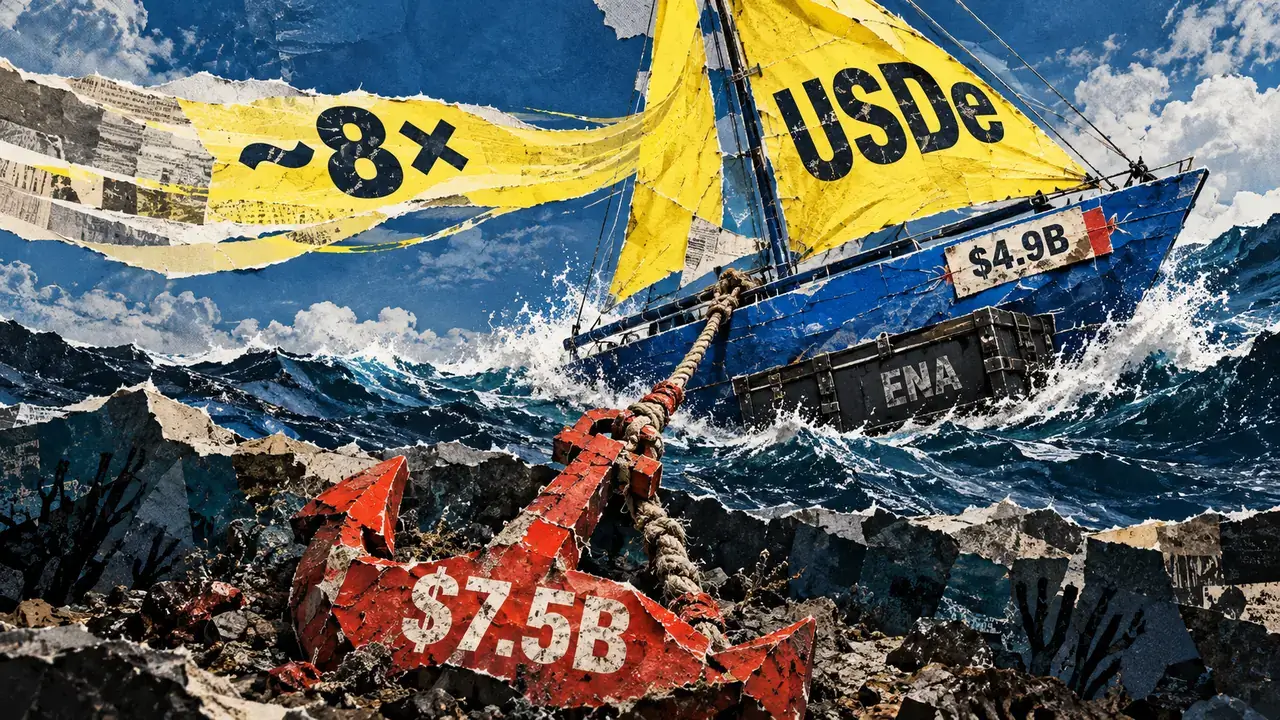
Standard Chartered says Ethena’s ENA could crush Bitcoin and Ethereum returns by 2028
Standard Chartered expects Ethena’s ENA token to rise about sevenfold by 2028, provided the protocol can rebuild its shrinking syn...
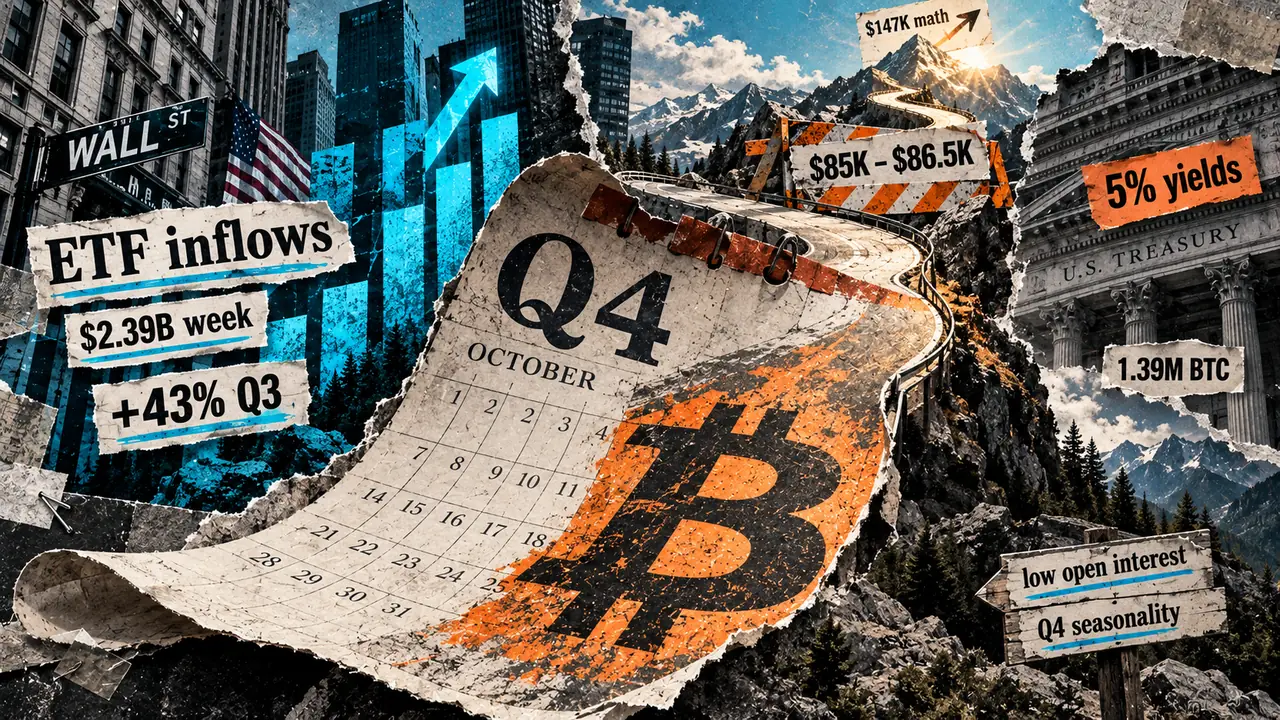
Bitcoin enters its best season after a 43% surge, with $147,000 suddenly on the math
Bitcoin is closing its strongest quarter since 2024 after leaving US stocks and gold far behind despite surging bond yields. The l...
Perplexity AI Predicts Insane $40 Price Target for XRP: How Did It Get There?
Perplexity AI predicts something that few analysts or other AI models do. It has produced an insanely wild bullish prediction for...
Standard Chartered initiates Ethena coverage, sees ENA at $2 by 2028
Ethena's growth in tokenized assets and stablecoins could significantly impact DeFi and traditional finance by 2028, despite poten...

Ethereum Price Prediction: Could Aztec’s zk.money Drive ETH Higher as Zcash Fuels Privacy Narrative?
Ethereum is trading at $2,665, flat over 24 hours, leaving it below the $2,700–$2,735 resistance band as our recent price predicti...

Ethereum (ETH) Price Prediction: Coinbase Buying Picks Up as ETH Eyes a $2,720 Breakout
Ethereum price is consolidating near $2,680 as buyers attempt to maintain the recovery and push through the next resistance zone....