British Security Think Tank’s Report Warns NFTs Could Bolster Money Laundering Schemes
The Royal United Services Institute (RUSI), the British defense and security think tank, questions whether or not non-fungible token (NFT) assets can be used for money laundering purposes. The report determines that in o...
Archive context
Older archive item. Useful for background and entity history, but not a fresh market-moving signal.
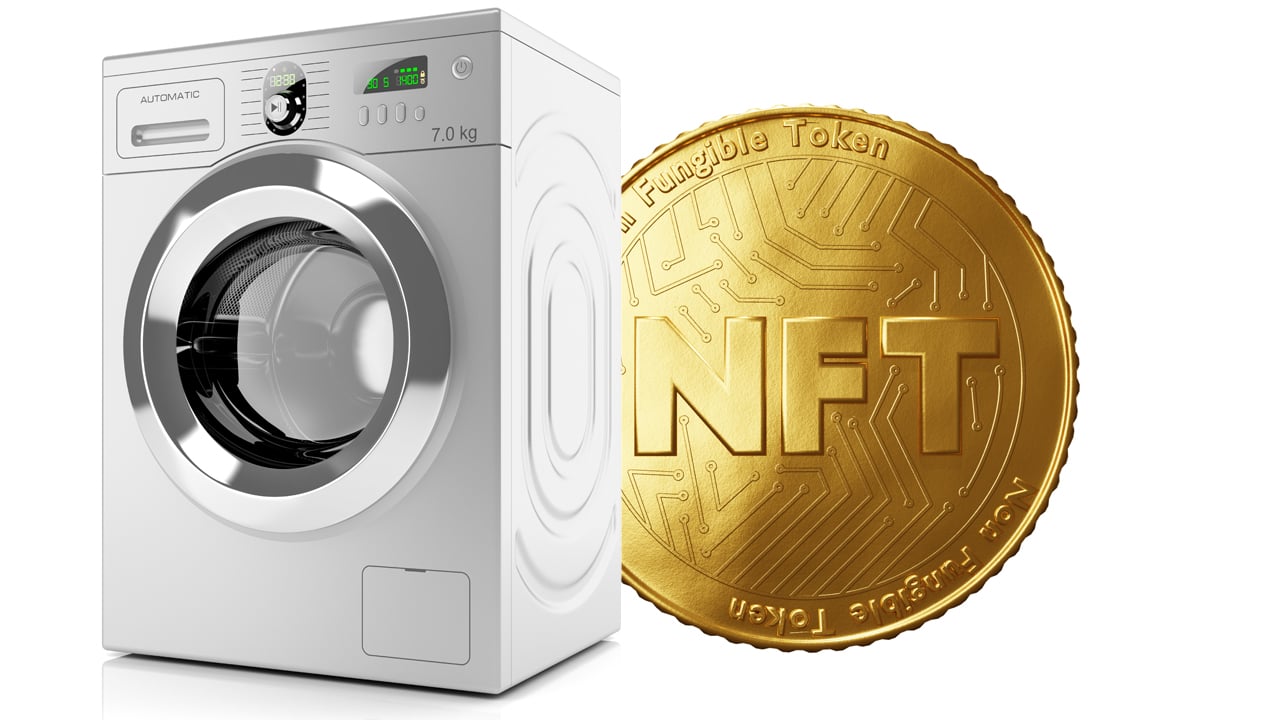
The Royal United Services Institute (RUSI), the British defense and security think tank, questions whether or not non-fungible token (NFT) assets can be used for money laundering purposes. The report determines that in order to mitigate the money laundering risks a ‘know your customer’ monitoring system “needs to be implemented.”
RUSI: ‘NFT Technology Can Raise Alarm Bells From a Money Laundering and Financial Crime Perspective’
The Royal United Services Institute for Defence and Security Studies otherwise known as RUSI, was founded in 1831 and it is the oldest defense and security think tank worldwide. On December 2, RUSI published a report that covers the subject of non-fungible token (NFT) assets and the RUSI researchers ask whether or not NFTs can contribute to money laundering schemes.
“This technology can raise alarm bells from a money laundering and financial crime perspective,” RUSI warns. “To start with, NFTs are most often purchased with cryptocurrencies on online marketplaces. Cryptocurrencies are routinely exploited for malicious means, such as obfuscating the source of criminal proceeds and, despite transactions being traceable, more sophisticated criminal actors use a variety of techniques to disrupt investigations by law enforcement.”
The RUSI report called “NFTs: A New Frontier for Money Laundering?” further states:
A system of ‘know your customer’ policies and ongoing monitoring, similar to those used in the traditional art market and in compliant cryptocurrency exchanges, needs to be implemented.
Money laundering in the traditional art scene has been an ongoing debate for decades. The New York Times investigative reporter Graham Bowley explained on June 19, that U.S. politicians want to investigate the secret art market. “Secrecy has long been part of the art market’s mystique, but now lawmakers say they fear it fosters abuses and should be addressed,” Bowley wrote.
RUSI researchers stress that criminal actors can also infiltrate NFT markets and leverage “novel risks.” “An art heist is also possible within the NFT realm,” the RUSI report adds. “Criminal actors can hack into user accounts on NFT marketplaces and transfer NFTs to their own accounts. After transferring the NFTs, the hacker can quickly sell the stolen token(s) and attempt to launder the proceeds.”
While RUSI researchers believe that money laundering in the NFT art and collectibles world can be deterred, the report also highlights that “NFT forgery and theft can also be mitigated.” RUSI suggests that NFT marketplaces use two-factor authentication (2FA) solutions and maintain “good cyber security.” Furthermore, RUSI suggests developing a registry of stolen NFTs that “would mimic the Art Loss Register.”
What do you think about the RUSI report on NFTs and money laundering risks? Let us know what you think about this subject in the comments section below.
Why this matters
This security story adds another data point to the current market tape and is useful when read alongside nearby source coverage.
Original source
Read on Bitcoin NewsRelated market context
JPMorgan Expands Tokenized Money Market Funds To Solana
TL;DR: J.P. Morgan Asset Management says qualified U.S. investors can now access MONY and JLTXX tokenized money market funds on So...
JPMorgan Brings Tokenized Money Funds to Solana for US Investors
J.P. Morgan Asset Management has expanded its tokenized money market funds MONY and JLTXX onto Solana, giving qualified U.S. inves...
SEC Flags AI 'Super Intelligence' and Tokenization as Systemic Market Risks
The regulator's Division of Examinations named "super intelligence and other advanced technologies" as a focus area alongside toke...

Wells Fargo and five others object to OKX-ICE tokenized stock listings: Report
As of Friday, 22 companies had filed objections as part of the joint venture’s proposed tokenized stock platform under the SEC’s i...
CMCC Global Plans Tokenized Bitcoin Funds With Tether And Bitfinex Securities
TL;DR: CMCC Global is bringing two existing fund strategies into tokenized securities issued through Tether’s Hadron infrastructur...
SEC Puts Tokenization On Its 2027 Examination Agenda
TL;DR: The SEC has named tokenization among its fiscal 2027 examination priorities, bringing the systems behind blockchain securit...