Sanctioned States Exploit Crypto to Fuel Weapons—FATF Warns of “Exponential” Surge
The Financial Action Task Force (FATF) has issued a sharp warning about the growing use of cryptocurrencies by sanctioned states to fund weapons programs.In a report published June 20, the global financial crime watchdog...
Archive context
Older archive item. Useful for background and entity history, but not a fresh market-moving signal.
The Financial Action Task Force (FATF) has issued a sharp warning about the growing use of cryptocurrencies by sanctioned states to fund weapons programs.
In a report published June 20, the global financial crime watchdog urged countries to close regulatory gaps that are allowing illicit finance to thrive in the digital asset space.
According to the FATF, weaknesses in the global financial system are being exploited by states and networks involved in the proliferation of weapons of mass destruction (WMDs).
FATF Warns of Crypto-Driven Sanctions Evasion as Threats MultiplyThe new report, titled Complex Proliferation Financing and Sanctions Evasion Schemes, shows that many countries are still falling short in meeting international standards for countering this type of finance.
Only 16% of countries assessed by FATF and its Global Network were found to be effective in applying targeted financial sanctions under the United Nations Security Council’s resolutions on proliferation.
FATF report reveals significant vulnerabilities across the global financial system in countering the financing of weapons of mass destruction.
Illicit actors are employing increasingly sophisticated methods to evade sanctions and circumvent export controls.#CPF pic.twitter.com/CyZMamRwPy
The report warns that unless both public and private sectors act quickly to strengthen compliance, those behind WMD programs will continue to bypass controls.
“This is a serious and growing threat,” the FATF warned, adding that “countries must act now or risk being exploited by actors seeking to fund catastrophic weapons.”
The report highlights how sanctioned entities are evolving their tactics. It details how sanctioned entities are setting up front companies, manipulating beneficial ownership data, and using digital assets to hide transactions.
These networks often rely on intermediaries to move funds and materials while hiding their true identities from financial institutions.
One of the most pressing concerns identified is the growing role of virtual assets. The FATF points to North Korea as the most active state actor in proliferation financing.
The country’s increasing digital connectivity, combined with a wide range of revenue streams, has made it harder to detect and disrupt. In February 2025, the DPRK was linked to the theft of $1.5 billion in crypto from the exchange ByBit.
FATF also noted that North Korea continues to generate income through overseas IT workers and illegal activities across multiple sectors. These funds are being funneled into its weapons development efforts.
“Illicit actors are adapting quickly,” the report stated. “They are using technology, exploiting legal loopholes, and taking advantage of inconsistent enforcement across jurisdictions.”
The FATF identified four major strategies used in sanctions evasion, which include intermediaries, obscured ownership, the use of crypto and other technologies, and manipulation of the maritime sector.
The report notes that these strategies are often layered together to create complex evasion networks that are difficult to track.
FATF Issues Urgent Call for Global Coordination as Crypto Crime Surges 66% in 2024To help countries respond, the FATF included practical guidance in its report.
This includes risk indicators such as mismatched IP addresses or irregular shipping routes, and enforcement recommendations like stronger public-private collaboration and improved reporting of suspicious transactions.
The watchdog stressed that enforcement must keep pace with the evolving threat. It also highlighted the importance of sharing timely intelligence across borders and sectors.
The FATF emphasized the urgency of a coordinated global response. It warned that without tighter controls and faster information sharing, the misuse of digital assets for sanctions evasion will continue to rise. The consequences, it said, could be dire.
“The failure to act could fuel the very programs that threaten global security,” the report concluded.
The FATF urged all jurisdictions to review their compliance frameworks, increase oversight of crypto-related activities, and apply pressure where needed.
The group’s warning follows growing concern among international regulators over the use of crypto by state-backed threat actors.
The crypto industry’s growth has opened doors for innovation and for scammers. In 2024, Americans lost a record $9.3 billion to crypto-related crimes, a 66% jump from 2023.
FBI: Americans aged 60 and older reported losing almost $3 billion to crypto fraud last year. In total, Americans reported being scammed out of around $9.3 billion via crypto, out of a total $16.6 billion in total reported losses that year. pic.twitter.com/xupom9DeUn
— Molly White (@molly0xFFF) April 23, 2025The FBI received nearly 150,000 complaints, signaling that crypto fraud has become a widespread threat.
Chainalysis reported that North Korean hackers stole $1.34 billion last year, accounting for 61% of all stolen crypto funds.
Despite over $3 billion lost to hacks, Binance’s Financial Intelligence Unit reports illicit crypto activity still accounts for under 1% of total volume.
Major schemes included ransomware, pig butchering scams costing $3.6 billion, and attacks from state-backed groups.
The post Sanctioned States Exploit Crypto to Fuel Weapons—FATF Warns of “Exponential” Surge appeared first on Cryptonews.
Why this matters
This security story adds another data point to the current market tape and is useful when read alongside nearby source coverage.
Original source
Read on CryptonewsRelated market context
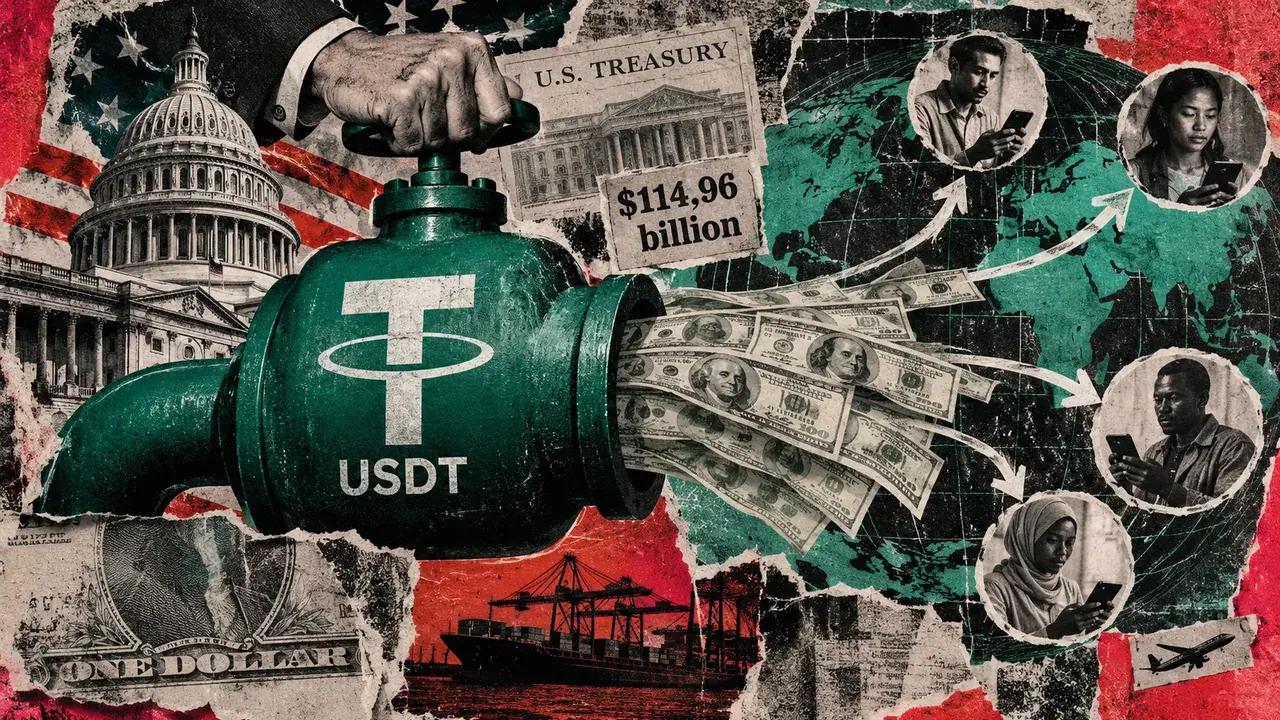
Washington has $114 billion reasons to want Tether around
Not that long ago, Washington fined Tether for misleading people about the dollars behind its tokens. Today, the company's insatia...

Visa cuts reported stablecoin volume but there’s no proof payments fell
Visa’s September 18 data refresh lowered its adjusted stablecoin volume measure, while its adjusted transaction count fell by less...

Kraken’s parent Payward is betting billions on becoming financial infrastructure, not just a crypto exchange
Kraken parent Payward is unifying trading, payments, asset management and institutional services on common rails, co-CEO Arjun Set...

Kalshi Loses Again as Sixth Circuit Says States Can Police Its Sports Contracts
Prediction markets like Kalshi have argued that because the Commodity Futures Trading Commission regulates their exchanges, state...
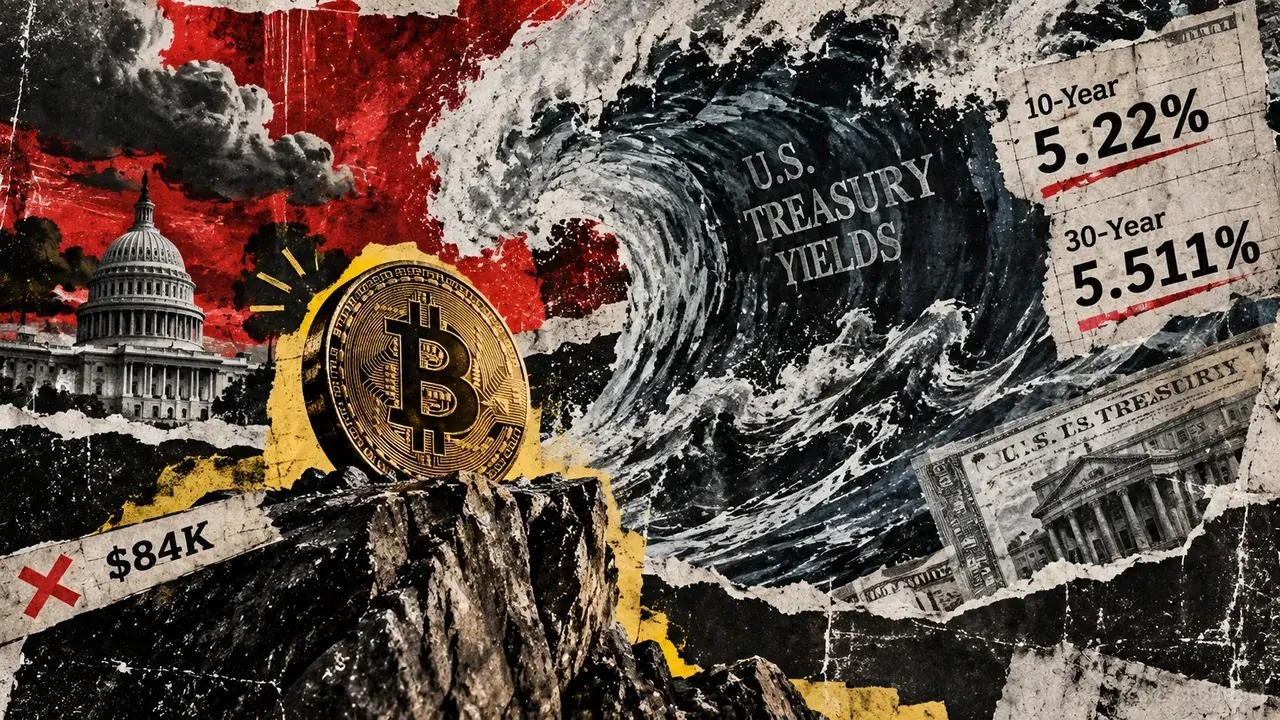
Bitcoin survives a 5.2% Treasury shock as traders slash $1.7 billion in leverage
Bitcoin is holding near $84,000 even as a historic US bond selloff pushes Treasury yields to decades-high levels. The benchmark 10...

Bitfinex reports massive surge in ETH short positions as bearish bets pile up
The surge in ETH short positions on Bitfinex could lead to heightened market volatility, potentially triggering a significant shor...