Strategy’s Quantum Security Push Meets The Rise Of $BMIC Innovation
What to Know: Bitcoin and Ethereum are rebounding, but the broader ‘crypto winter’ narrative and volatility keep positioning cautious and tactical. ETF flow whiplash suggests institutions are trading exposure actively, n...
Archive context
Older archive item. Useful for background and entity history, but not a fresh market-moving signal.

- Bitcoin and Ethereum are rebounding, but the broader ‘crypto winter’ narrative and volatility keep positioning cautious and tactical.
- ETF flow whiplash suggests institutions are trading exposure actively, not committing,raising the value of defensive narratives like security.
- Strategy-linked quantum security discussions highlight a long-dated threat model that can influence product decisions before quantum attacks exist.
- BMIC targets post-quantum wallet security with ERC‑4337 smart accounts and ‘zero public-key exposure,’ aligning with today’s risk mindset.
‘Quantum security’ is having a moment again. And no, not just as a sci-fi talking point. The latest drop in risk appetite has made security narratives feel less optional and more existential. Bitcoin is fighting to stabilize and headlines this week have leaned into the idea of a fresh ‘crypto winter,’ with risk assets wobbling and ETF positioning turning fragile.
Against that backdrop, Strategy (the firm long associated with aggressive Bitcoin accumulation) is getting pulled deeper into the quantum-security conversation. If Bitcoin is the ‘hard money’ thesis, then the long-dated threat model is where the real debate sits.
It isn’t just ‘Will $BTC go up next week?’ It’s ‘What happens to security assumptions over a decade?’ That’s where quantum uncertainty, specifically those ‘harvest now, decrypt later’ concerns, keep popping up in institutional discussions. In its Q4 earnings call, Strategy addressed that it intends to be proactive and that quantum threats are a challenge they are preparing to face in the future.
Right now, the tape is sending mixed signals. Bitcoin is bouncing hard on a 24‑hour basis, hovering around $66K, while Ethereum sits near $1.9K, a sharp risk-on snapback after heavy selling. Yet, ETF flows show how jumpy capital remains. Reports from early February highlight massive swings between outflows and one-day rebounds, implying positioning is tactical rather than conviction-driven.
That distinction matters. Security is one of the few narratives that can attract attention even when price action is nauseating. And that bridge, security as a product, not just a slogan, is exactly where BMIC ($BMIC) is trying to land.
Quantum Security Shifts From Theory To Product RequirementsMost coverage treats ‘quantum risk’ like a distant cliff. It isn’t. The data points to something subtler: markets don’t need quantum computers to break wallets tomorrow for the fear premium to start shaping buyer behavior today. That’s especially true for enterprises dealing with compliance checklists and long-lived treasury policies.
That explains why Strategy’s quantum-security framing resonates. When drawdowns compress speculative appetite, investors and builders tend to rotate toward primitives: custody, key management, account abstraction, and threat detection. The second-order effect? Competitive pressure on wallets. Because the wallet is where risk becomes personal.
BMIC positions itself directly in that path. It’s pitching a quantum-secure finance stack that combines wallet, staking, and payments under post-quantum cryptography, with Zero Public-Key Exposure and AI‑Enhanced Threat Detection layered in. The design is explicitly built around ‘harvest now, decrypt later’ threats and legacy wallet risk, two angles that land better when markets are stresse,d and users are reassessing their op-sec.
A key implementation detail is the use of ERC‑4337 smart accounts, which fits the broader industry shift toward programmable accounts and safer UX (seedless flows, policy controls, session keys). If quantum uncertainty is the long-tail threat, post-quantum wallet architecture becomes a near-term procurement question.
BMIC Presale Gains Traction As Security Narratives LeadSpeculation is fickle. But presales tied to a clear macro narrative can still cut through, particularly when that narrative is defensive. The market is trading like a coiled spring: sharp rallies, violent reversals, and a constant search for reality.
That’s the setup where security-focused tokens often find traction. $BMIC is currently in presale priced at $0.049474, and has raised over $433K. Those aren’t blow-off numbers yet, but they represent a meaningful signal in a market where attention is fragmented, and liquidity is selective.
The utility pitch feels more concrete than the average ‘next big thing’ funnel. BMIC frames $BMIC around ecosystem fuel, staking and governance, and a burn-to-compute mechanic, tying token demand to usage rather than pure hype. Staking is described as quantum-secure staking with no exposed keys (notably, no APY is specified, so expectations should stay grounded).
In a period where ETF flows can swing hundreds of millions in days, product-grade security narratives tend to outperform meme narratives on durability, provided shipping keeps pace.
For readers tracking Strategy’s quantum-security angle, the practical takeaway is simple: the market is starting to reward projects that treat quantum risk as an engineering constraint, not a marketing garnish. BMIC is betting big on that shift.
Not financial advice. Crypto is volatile; presales are high risk, and security claims require independent verification and audits.
Why this matters
Bitcoin is showing up inside the Regulation theme, so this story is worth tracking for follow-through rather than treating it as a one-off headline.
Original source
Read on NewsBTCRelated market context

AI to reshape crypto markets by 2028, impacting platforms like Hyperliquid: Fortune
AI's growing role in crypto markets may redefine trading dynamics, creating both opportunities and uncertainties for platforms lik...

Allora’s Forge launches Hyperliquid log return topic for AI price predictions
Allora's Forge's dynamic market approach and stringent accuracy criteria could redefine AI model credibility and strategic forecas...

Anthropic’s Claude AI Predicts a Wild Price for Chainlink (LINK)
Anthropic’s Claude AI predicts that in a peak bull-market setup, Chainlink (LINK) could hit $150–$250 by January 1, 2027, with a s...

Meta AI Predicts 7-Figure BTC in 2026, But How?
Mark Zuckerberg’s Meta AI predicts that if a full-blown crypto bull market returns in Q4 and a landmark catalyst turbocharges it,...
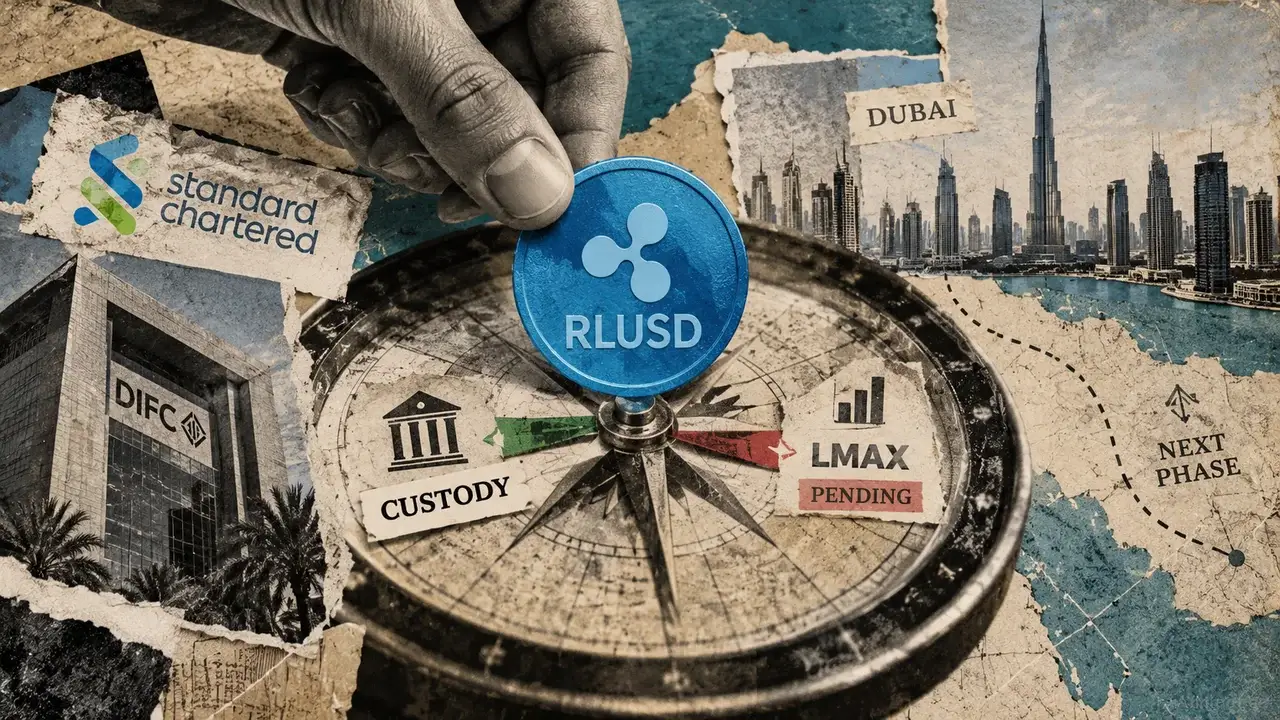
Standard Chartered brings Ripple’s RLUSD into banking custody after $765 million quarterly surge
Standard Chartered has launched custody for Ripple's RLUSD stablecoin as it prepares to expand its use as collateral for instituti...

Bitcoin’s rebound approaches the $85,000 zone where past buyers may sell
Bitcoin and Ethereum extended their weekend recovery, although on-chain indicators and derivatives positioning suggest the rebound...